


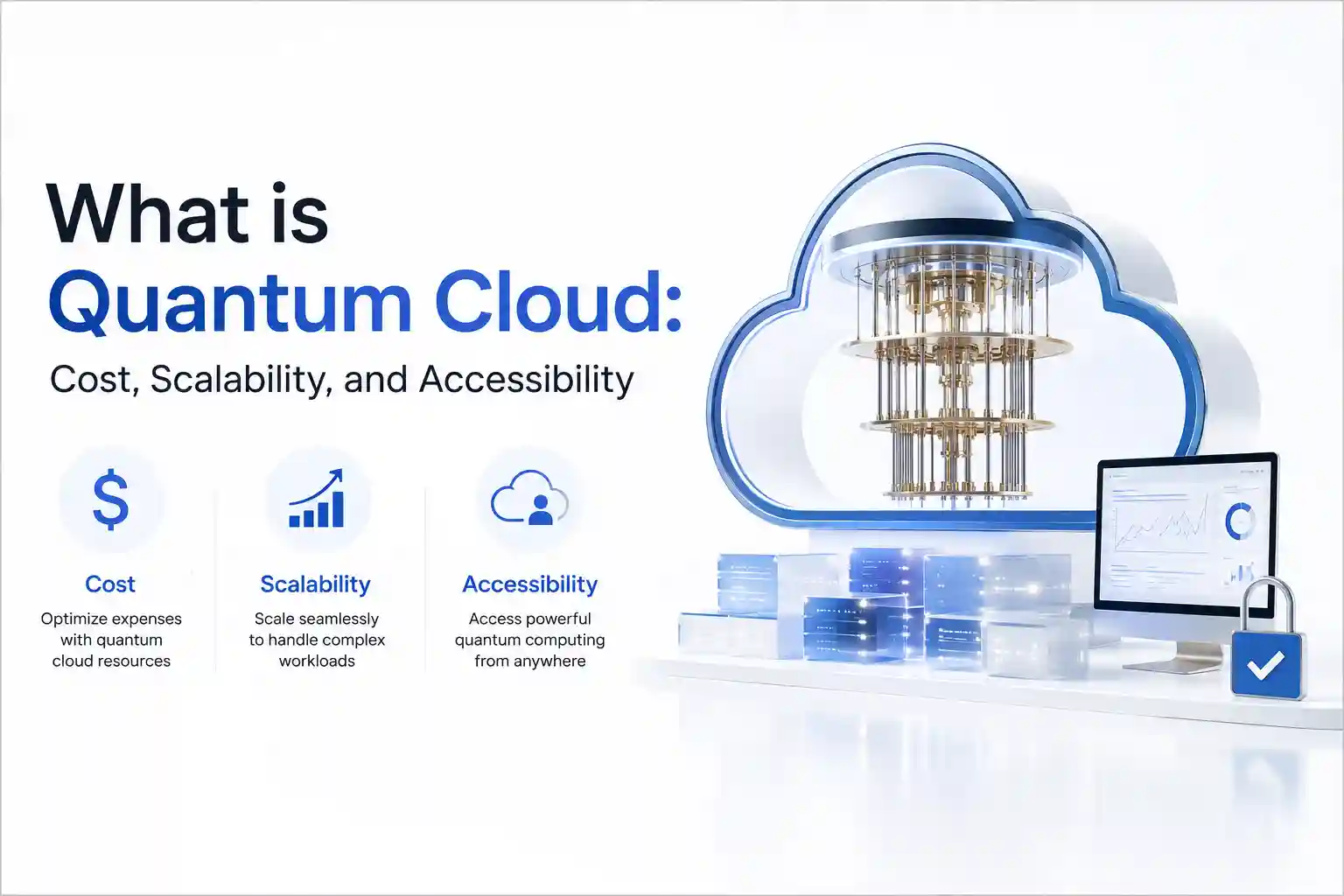

What is Quantum Cloud: Cost, Scalability, and Accessibility Explained
The Problem Nobody Talks About Until 2 AM
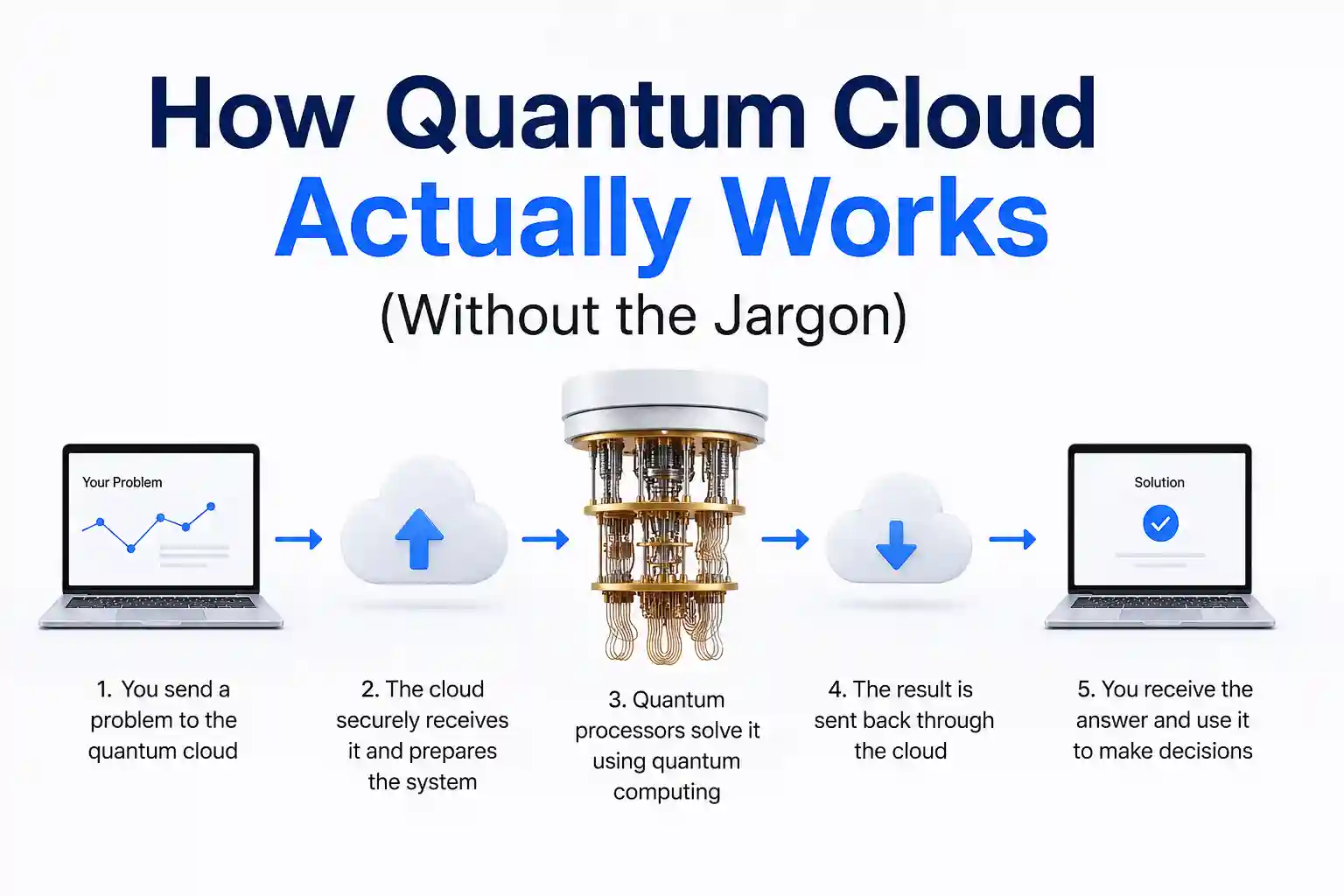
It’s Tuesday evening. You’re a senior backend engineer at a mid-sized logistics firm, and your team has been tasked with evaluating whether quantum optimization algorithms could improve your delivery routing. You’ve read the press releases. You’ve seen the demos. So you sign up for a free tier on a quantum cloud platform, fire up your terminal, and… nothing works the way the tutorial promised.
The circuit you wrote for a 5-qubit test runs fine on the simulator. But when you submit it to real hardware, the job sits in a queue for 47 minutes. When it finally executes, the results are noisy enough that your optimization heuristic can’t distinguish signal from error. You check the documentation again. The section on error mitigation assumes familiarity with concepts your team hasn’t covered. You close the laptop, frustrated—not by quantum physics, but by the gap between marketing promises and developer reality.
This isn’t hypothetical. It’s the daily experience for engineers exploring what is quantum cloud in 2026. And it’s why understanding the practical dimensions of cost, scalability, and accessibility matters far more than theoretical qubit counts.
Real-World Testing: What Actually Works, When You Try Quantum Cloud
Over the past six months, I’ve spent time testing three major quantum cloud platforms: IBM Quantum Experience, AWS Braket, and Azure Quantum. The goal wasn’t to achieve quantum advantage; it was to understand the friction points a developer actually encounters.
IBM Quantum Experience: Powerful, but Documentation Gaps Emerge Fast
Setting up Qiskit was straightforward. The introductory tutorials are excellent for single-qubit gates and basic entanglement. But complexity exposed cracks. When I attempted a variational quantum eigensolver (VQE) workflow for a small molecular simulation, the documentation assumed prior knowledge of transpilation strategies and error mitigation parameters that weren’t explained in the beginner path.
What worked: The free tier provides 10 minutes of monthly execution time on 100+ qubit systems, which is generous for learning. The Qiskit Runtime environment handles classical-quantum loops efficiently when configured correctly.
What failed: Job queuing times varied wildly, from seconds to over an hour, depending on hardware availability. More frustrating: error rates on two-qubit gates still hover around 10⁻³ to 10⁻⁴, meaning deep circuits accumulate noise faster than most NISQ-era algorithms can tolerate. When circuit depth exceeded ~50 layers, results became statistically indistinguishable from random noise without aggressive mitigation.
AWS Braket: Flexibility Comes with Configuration Overhead
Braket’s hardware-agnostic approach is compelling: one API to access IonQ trapped-ion systems, Rigetti superconducting chips, and QuEra neutral-atom arrays. But that flexibility introduces complexity. Each backend has different native gate sets, connectivity constraints, and calibration schedules. Transpiling a circuit for IonQ versus Rigetti isn’t automatic—you need to understand the hardware topology or accept suboptimal performance.
Pricing is transparent but adds up quickly. Tasks cost $0.30 each, with IonQ Aria at $0.03/shot and Forte at $0.08/shot. For iterative algorithm development requiring thousands of shots, costs escalate before you’ve validated your approach. The “Hybrid Jobs” feature helps orchestrate classical-quantum loops, but debugging requires navigating multiple AWS services (Lambda, Step Functions, CloudWatch), which adds cognitive load for teams not already deep in the AWS ecosystem.
Azure Quantum: Strong Tooling, Limited Hardware Diversity
Microsoft’s platform shines in resource estimation and Q# language design. The Azure Quantum Resource Estimator lets you model how many physical qubits you’d need for a fault-tolerant implementation of Shor’s algorithm—a valuable planning tool. However, actual hardware access remains narrower than Braket’s aggregator model. While Azure partners with Quantinuum and IonQ, the integration feels less seamless than IBM’s vertically integrated stack.
Documentation quality is high, but the learning curve for Q# is steeper than Python-based SDKs. For teams already using .NET, this is a plus. For others, it’s an additional barrier. Job submission was reliable, but queue times for premium hardware (like Quantinuum’s H2) often exceeded 30 minutes during peak research hours.
The Common Thread: Simulation vs. Reality
Every platform offers simulators. They’re fast, deterministic, and perfect for debugging logic. But simulators don’t capture hardware noise, calibration drift, or queue dynamics. The moment you transition from simulation to real hardware, you encounter a new class of problems: decoherence windows, gate fidelity variations, and readout errors that require statistical post-processing. This gap—between clean simulation and messy reality- is where most developer frustration accumulates.
Practical Industry Value: Who Actually Benefits Today?
Let’s be direct: most enterprises do not need quantum cloud access right now. If your optimization problems are solvable with classical heuristics, GPU acceleration, or improved data pipelines, investing in quantum exploration is premature.
Who Benefits Now
- Research teams exploring quantum algorithms for chemistry, materials science, or fundamental physics. For these groups, even noisy results provide valuable data for algorithm refinement.
- Financial institutions running small-scale proofs-of-concept for portfolio optimization or risk modeling, where quantum-inspired classical algorithms can already deliver incremental gains.
- Academic educators using cloud access to teach quantum programming concepts without capital expenditure on hardware.
- Startups building quantum software tools that need hardware access for validation but can’t afford dedicated systems.
Who Probably Doesn’t Need It Yet
- General enterprise IT teams manage standard business applications.
- Organizations without dedicated quantum-literate staff or research partnerships.
- Projects with tight timelines require deterministic, production-grade results.
Realistic Expectations and Cost Realities
Cloud-based quantum access is projected to dominate with 50% of 2026 revenue as usage-based pricing models mirror GPU computing patterns. But “usage-based” can mean unpredictable costs. IBM’s new Flex Plan requires a $30,000 upfront commitment for premium access, while pay-as-you-go rates start at $96/minute. For context: a single VQE experiment with 10,000 shots on a 20-qubit system could consume 15-30 minutes of hardware time—$1,440 to $2,880—before you’ve even validated your approach.
Infrastructure costs extend beyond compute time. Teams need classical HPC resources for error mitigation, data post-processing, and hybrid workflows. Storage for shot data, version control for quantum circuits, and monitoring for job failures all add operational overhead. The total cost of ownership for a serious quantum exploration project often exceeds initial estimates by 3-5x.
Comparison Insights: Classical Workflows vs. Quantum Realities
Developers transitioning from classical cloud services often underestimate the workflow differences. Here’s what actually changes:
Development Cycle
Classical: Write code → test locally → deploy to cloud → monitor → iterate. Feedback loops are minutes to hours.
Quantum: Write circuit → simulate locally → submit to queue (wait 10-60 min) → execute on hardware (seconds) → retrieve noisy results → apply error mitigation → analyze statistically → iterate. Feedback loops are hours to days.
Platform Differences at a Glance
| Factor | IBM Quantum | AWS Braket | Azure Quantum |
|---|---|---|---|
| Hardware Model | Vertically integrated (superconducting) | Hardware-agnostic aggregator | Aggregator + topological R&D |
| Primary SDK | Qiskit (Python) | Braket SDK (Python) | Q# (.NET) + Python |
| Free Tier | 10 min/month on 100+ qubit systems | Limited simulator access | Limited simulator access |
| Best For | Superconducting algorithm research | Hardware comparison, multi-modal testing | Resource estimation, fault-tolerance planning |
| Queue Predictability | Moderate (forecasting tools available) | Variable (depends on third-party hardware) | Moderate to high for premium hardware |
Beginner vs. Advanced Experience
For beginners, all platforms offer decent onboarding. IBM’s learning path is particularly well-structured. But advancing beyond tutorials requires understanding quantum error correction concepts, hardware calibration cycles, and statistical analysis of noisy results—topics rarely covered in introductory materials. Documentation quality was often poor in open-source quantum repositories, with commit messages rarely describing bugs or fixes. This creates a steep “intermediate cliff” where developers struggle to progress without mentorship or formal training.
Hardware Access Limitations
Even on paid plans, access isn’t guaranteed. Premium hardware (like IBM’s Heron processors or Quantinuum’s H2) has limited availability. During peak research periods—conference deadlines, grant cycles, queue times spike. Some platforms offer “reservation” options, but these cost thousands per hour. For teams needing consistent access for iterative development, this unpredictability complicates project planning.
Expert Analysis: The Infrastructure Realities Behind the Hype

Let’s talk about what makes quantum cloud fundamentally different from classical cloud: qubit stability.
Qubit Stability Isn’t Just a Technical Detail—It’s the Bottleneck
Qubits are fragile. Superconducting qubits require temperatures near absolute zero (10-15 millikelvin). Trapped ions need ultra-high vacuum and precise laser control. Any environmental noise—thermal fluctuations, electromagnetic interference, even cosmic rays- can cause decoherence, collapsing the quantum state before computation completes.
Current state-of-the-art quantum computers have error rates typically in the range of 1% to 0.1% per operation. Compare that to classical chips, where error rates are around 10⁻¹⁸. This six-order-of-magnitude gap means quantum algorithms must be designed with error tolerance baked in, or results become meaningless.
Energy and Cost Concerns
Quantum systems aren’t just expensive to access; they’re energy-intensive to operate. Dilution refrigerators for superconducting qubits consume significant power. While cloud providers absorb these costs, they factor into pricing models. As quantum hardware scales, energy efficiency will become a critical metric, not just for sustainability but for economic viability.
Cybersecurity Implications: Start Preparing Now
Quantum computers won’t break today’s encryption tomorrow. But data encrypted with RSA or ECC today could be harvested and decrypted later once fault-tolerant quantum systems exist. This “harvest now, decrypt later” threat means enterprises handling long-lived sensitive data should begin migrating to post-quantum cryptography now. Red Hat has already integrated post-quantum cryptography into RHEL 10, signaling that this isn’t a future problem—it’s a present planning requirement.
Realistic Timelines
Forget “quantum supremacy” headlines. Practical quantum advantage for enterprise problems likely remains 5-10 years away for most use cases. IBM’s roadmap targets utility-scale systems by 2029, but these will still require sophisticated error mitigation. Fault-tolerant, logically error-corrected systems capable of running Shor’s algorithm at scale? Most experts place that in the 2030s. The cloud model lets you explore today, but temper expectations about immediate ROI.
The Drawbacks Nobody Highlights in Marketing Materials
If quantum cloud platforms sound promising but complicated, that’s because they are. Here are the friction points vendors don’t emphasize:
Unstable environments: Hardware calibration changes daily. A circuit that worked yesterday might fail today due to qubit frequency drift or gate recalibration.
Documentation confusion: Advanced topics assume graduate-level quantum mechanics knowledge. Bridging the gap between “hello world” and research-grade implementation requires significant self-directed learning.
Hardware limitations: Qubit connectivity constraints force circuit recompilation with SWAP gates, increasing depth and error accumulation. Not all algorithms map efficiently to available topologies.
Unclear learning paths: No standardized certification or career track exists for quantum cloud developers. Teams must curate their own training from scattered resources.
Cloud restrictions: Free tiers limit circuit depth, shot count, or hardware access. Paid tiers still impose quotas that can halt iterative development mid-experiment.
Unrealistic marketing hype: Press releases highlight qubit counts while omitting error rates, connectivity, or practical algorithm performance. This creates expectation gaps that frustrate developers.
One developer put it bluntly on a forum: “It’s common for cloud-accessible QPUs to have queues with somewhat unpredictable length… partly due to calibration cycles and maintenance windows”. That unpredictability isn’t a bug—it’s a feature of today’s NISQ-era hardware.
References and Authority: Grounding the Discussion
This analysis draws from direct platform testing, enterprise case studies, and peer-reviewed research:
- IBM Quantum’s access plans and Flex Plan documentation.
- AWS Braket pricing and hardware aggregator model.
- Microsoft Azure Quantum resource estimation tools.
- MIT and IEEE research on quantum error correction thresholds.
- Nature and Quanta Magazine reporting on logical qubit milestones.
- Enterprise computing studies on hybrid quantum-classical workflows.
Crucially, these sources acknowledge limitations. As one IBM Research note states: “Optimizing stability and performance of cloud-based quantum systems” remains an active challenge requiring co-design of hardware, software, and control systems. That honesty—about both progress and constraints- is what enterprise teams need to make informed decisions.
Final Thoughts: A Practitioner’s Perspective
So, what is quantum cloud? It’s not a magic solution. It’s not ready to replace your classical infrastructure. But it is a legitimate research and development platform for teams exploring the frontier of computation.
If you’re evaluating quantum cloud for your organization, start small: use free tiers to build internal expertise, partner with academic groups to share risk, and focus on problems where quantum-inspired classical algorithms already deliver value. Track metrics beyond qubit counts: error rates, queue times, total cost per validated result.
The most valuable insight from months of testing? Quantum cloud isn’t about running faster computations today. It’s about building the skills, workflows, and partnerships that will matter when the hardware matures. That’s a strategic investment—not a tactical shortcut.
And if your 2 AM debugging session ends with noisy results and a long queue? That’s not failure. That’s the current state of the art. Understanding that reality, cost, scalability, accessibility, and all is the first step toward practical quantum exploration.
Hi, I’m Anik Hassan. I studied Computer Science and Software Engineering at IBAIS University in Dhaka, graduating in 2017. For the past seven years, I have been working in digital marketing and SEO to help websites grow. Alongside my marketing work, I spend a lot of time researching quantum computing and quantum technology to understand where the future of tech is heading.