



The Truth About Deep-Sea ROVs Nobody Talks About (And Why It Matters in 2026)
Forget what you’ve read. Most articles about remotely operated vehicles paint a picture of sleek, unstoppable machines gliding through the abyss, capturing stunning footage, and solving ocean mysteries with effortless precision. That narrative sells. It’s also incomplete.
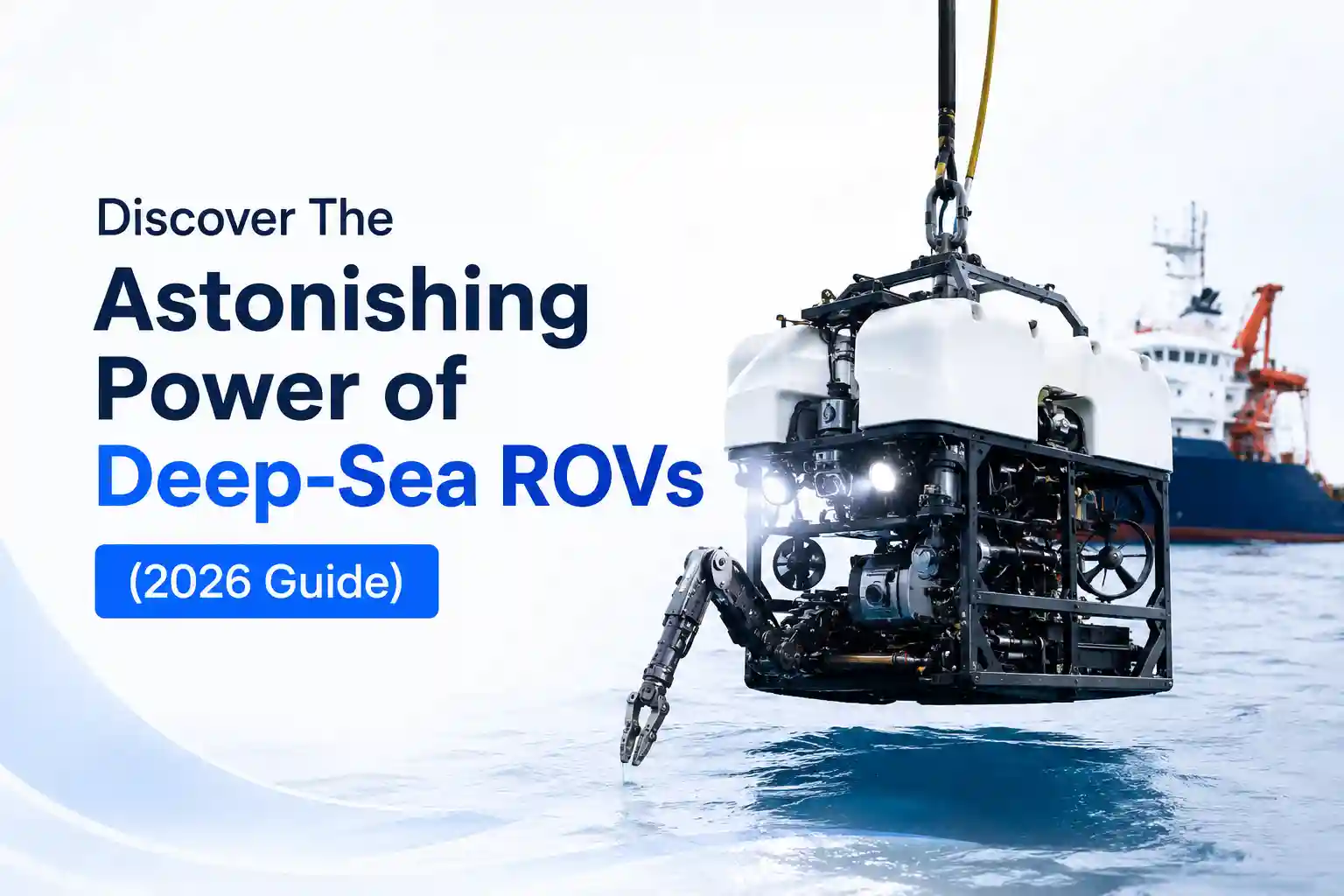
The reality of deep-sea ROV operations in 2026 is messier, more constrained, and frankly more interesting. These aren’t just underwater drones. They’re complex, fragile, expensive systems operating in one of Earth’s most hostile environments—and understanding their actual limitations tells you far more about the future of marine technology than any glossy promotional video ever could.
Here’s what’s actually happening beneath the surface. and discover the astonishing power of deep-sea ROVs in 2026.
What Deep-Sea ROVs Really Are (Beyond the Definition)
At their core, remotely operated vehicles are tethered robotic platforms designed to function where humans cannot. But that simple description obscures the engineering complexity underneath.
Think of a modern work-class ROV less as a “submarine robot” and more as a floating data center with propulsion. Every meter of descent adds roughly one atmosphere of pressure. At 3,000 meters—where many scientific and industrial operations occur—the hull experiences 300 times the pressure at sea level. That’s not just “strong materials.” That’s systems engineering, where a single seal failure means total loss.
The tether itself deserves attention. It’s not just a cable. It’s a fiber-optic lifeline carrying power, control signals, and gigabytes of sensor data simultaneously. Latency matters. Bandwidth matters. And when you’re managing a vehicle in real-time from a ship rolling in 3-meter swells, the control loop becomes a dance of prediction, compensation, and constant adjustment.
In practical deployments, engineers typically run into a cascade of secondary challenges that spec sheets never mention: biofouling on sensor housings, unexpected current shear at depth, or the way sediment plumes from manipulator arms can blind cameras precisely when you need visibility most.
The Application Gap: Where ROVs Actually Add Value
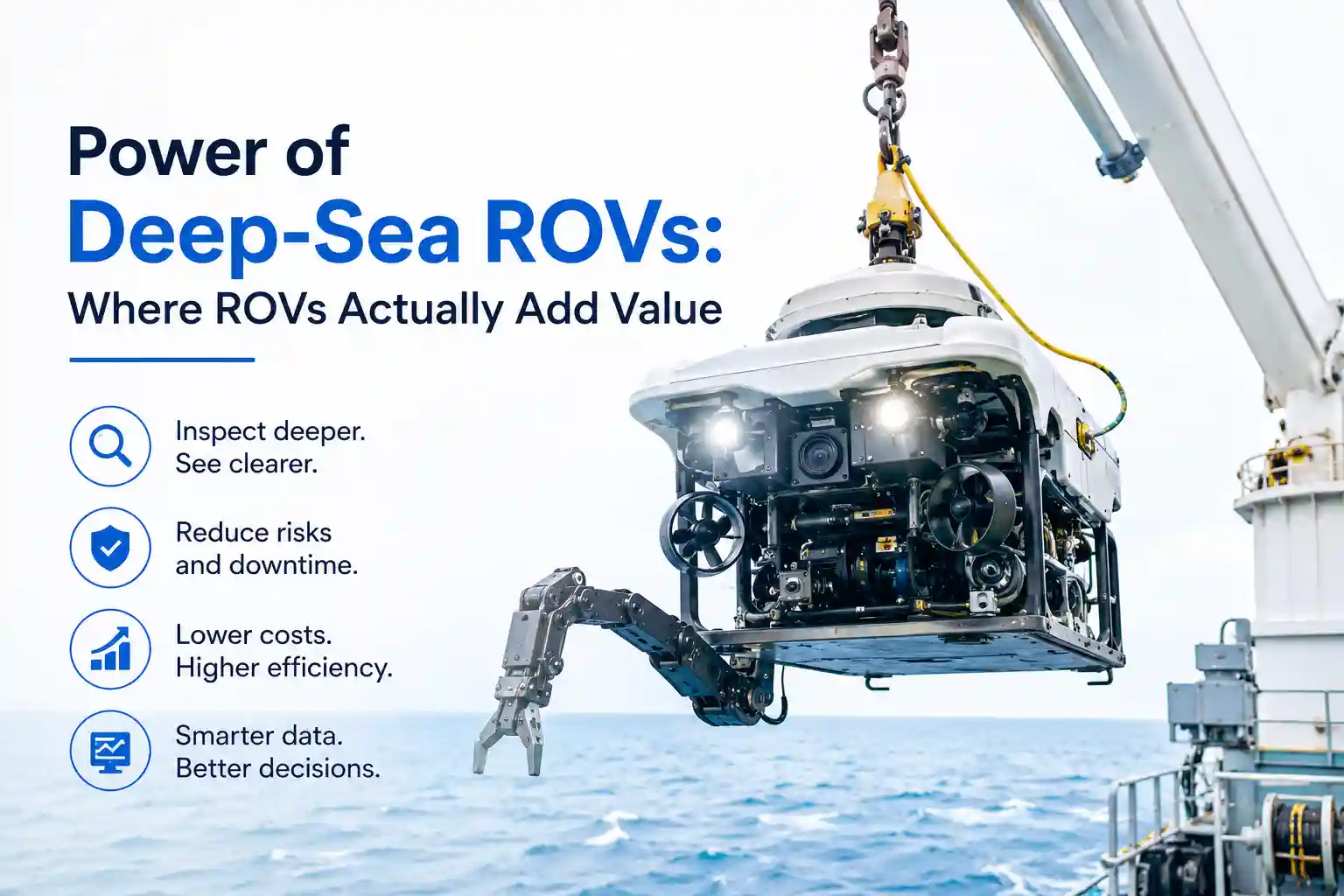
Most coverage focuses on exploration—discovering new species, mapping uncharted trenches. Important work, certainly. But the real commercial and scientific momentum in 2026 lies elsewhere.
Offshore renewable infrastructure represents the fastest-growing application sector. As wind farms expand into deeper waters, ROVs handle cable burial verification, foundation inspection, and post-storm damage assessment. Unlike oil and gas work, these operations demand high-frequency, lower-cost interventions. That pressure is driving a shift toward smaller, electric-powered ROVs with modular tooling.
Subsea carbon monitoring is emerging as a quiet but critical use case. With several pilot projects now testing deep-ocean carbon sequestration, ROVs provide the only practical means of long-term site verification. They deploy sensors, collect sediment cores, and monitor for leakage tasks requiring both precision and endurance.
Telecommunications maintenance has quietly become ROV-dependent. Undersea cables carry over 95% of international data traffic. When faults occur, specialized ROVs with cable-grabbing manipulators perform repairs at depths exceeding 4,000 meters. The economic stakes, millions per hour of downtime, justify equipment costs that would be prohibitive for pure research.
Here’s what this means in practice: adoption isn’t about technological capability alone. It’s about whether the operational model—ship time, crew training, maintenance logistics—aligns with the value being created. That calculus is changing, but unevenly.
The Friction Layer: What Limits Deep-Sea ROV Deployment
Let’s address the constraints most articles gloss over.
Power and endurance remain fundamental bottlenecks. Hydraulic systems deliver high torque but require complex surface support. Electric systems are cleaner and more efficient, but struggle with high-power manipulator tasks. Battery technology improvements help, but deep-sea operations still demand surface vessels for sustained missions. That’s a cost driver that no amount of automation can fully eliminate.
Bandwidth limitations shape what’s possible. Even with fiber-optic tethers, real-time 4K video from multiple cameras, plus sonar, LiDAR, and sensor telemetry, pushes communication limits. Operators often work with compressed feeds or delayed high-resolution data. This isn’t a minor inconvenience—it affects decision-making speed and mission flexibility.
Environmental unpredictability introduces operational risk. Currents don’t follow forecasts perfectly. Visibility can drop to zero in seconds due to sediment disturbance. Temperature gradients affect sensor calibration. In early-stage testing of new ROV platforms, these variables often reveal themselves only after significant investment.
Cost structures favor established players. A work-class ROV system—vehicle, tether management, control van, support equipment—can exceed $5 million. Add vessel charter, crew, and insurance, and daily operational costs reach six figures. That creates a barrier to entry that limits innovation to well-funded organizations.
A limitation often overlooked is the human factor. Piloting a deep-sea ROV requires months of specialized training. Maintaining situational awareness through a camera feed, managing multiple sensor inputs, and making real-time decisions under pressure is cognitively demanding. Automation helps, but full autonomy in unstructured deep-sea environments remains a research challenge, not a deployed reality.
Scenario Thinking: Where ROVs Shine—and Where They Don’t
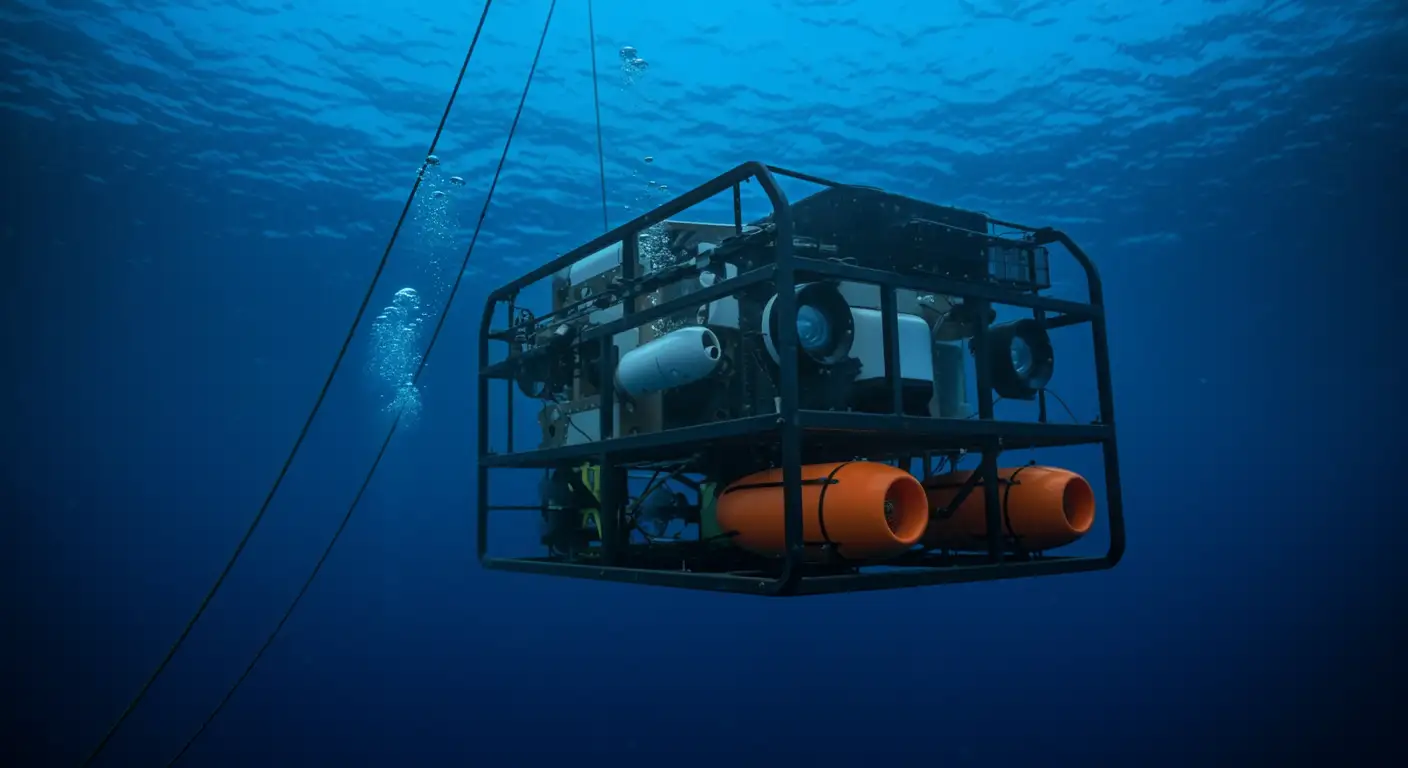
Understanding when to deploy an ROV matters as much as knowing how it works.
Best-use scenarios:
- Repetitive inspection tasks on known infrastructure (pipelines, cables, wind foundations)
- Operations requiring manipulator precision in stable conditions
- Missions where real-time human oversight adds clear value over autonomous systems
- Environments where recovery of physical samples is essential
Problematic scenarios:
- Rapid-response operations in unpredictable weather windows
- Large-area surveys where autonomous underwater vehicles (AUVs) offer better coverage efficiency
- Missions requiring extreme maneuverability in tight, unstructured spaces
- Budget-constrained projects where vessel time dominates total cost
The overhyped zone: Fully autonomous deep-sea exploration. Despite impressive lab demonstrations, real-world deployment of AI-driven ROVs in complex, unstructured environments remains limited. The combination of communication latency, sensor uncertainty, and the cost of failure makes human-in-the-loop architectures the pragmatic choice for most high-value operations in 2026.
What Most Tech Articles Miss About Deep-Sea ROVs
Here’s the uncomfortable truth: the most significant advances in ROV capability aren’t coming from vehicle design alone.
The real innovation is in the support ecosystem. Better tether management systems reduce deployment risk. Improved simulation tools let pilots train on virtual missions before committing expensive hardware. Cloud-based data pipelines turn raw sensor feeds into actionable insights faster. These “unsexy” improvements often deliver more operational value than a slightly faster thruster.
Interoperability matters more than raw specs. An ROV that can’t easily swap tools, integrate with third-party sensors, or share data formats with other systems creates friction that compounds over time. The industry is slowly moving toward modular architectures, but legacy systems and proprietary interfaces still dominate.
Maintenance logistics determine uptime. A brilliant ROV sitting in port waiting for a specialized part delivers zero value. Forward-deployed spares, regional service centers, and predictive maintenance algorithms are becoming competitive differentiators. This operational layer rarely makes headlines but directly impacts mission success.
Consider a real-world example: a recent offshore wind inspection campaign in the North Sea. The ROV itself performed flawlessly. But unexpected biofouling on a sensor housing degraded data quality. The team had to surface, clean the housing, and redeploy—losing six hours of weather-limited operational time. The fix was simple. The cost was substantial. This is the kind of operational reality that shapes procurement decisions far more than peak depth ratings.
Practical Takeaways for Decision-Makers
If you’re evaluating ROV technology for research, commercial, or policy purposes, focus on these factors:
Match capability to mission profile, not maximum specs. A vehicle rated for 6,000 meters offers no advantage if your work occurs at 500 meters and may carry unnecessary cost and complexity.
Factor in total operational cost, not just acquisition price. Vessel time, crew training, maintenance, and data processing often exceed the initial equipment investment over a system’s lifecycle.
Prioritize data workflow integration. The value of an ROV mission lies in the insights extracted, not just the footage captured. Ensure your platform supports efficient data transfer, processing, and archiving.
Plan for environmental variability. Build weather buffers into schedules. Design missions with redundancy for sensor failures. Assume conditions will be worse than forecasts suggest.
Invest in operator training and simulation. Skilled pilots multiply vehicle capability. Simulation tools reduce risk during training and mission rehearsal.
In simple terms, the best ROV for your application isn’t the one with the most impressive brochure. It’s the one that integrates smoothly into your operational workflow, delivers reliable data under real-world conditions, and can be maintained without excessive downtime.
The Failure Insight
At first glance, deep-sea ROVs seem like a solved problem: build a tough robot, attach a camera, send it down. But once you look at implementation constraints, the interplay of power, bandwidth, human factors, and environmental unpredictability—the complexity becomes obvious. The gap between laboratory capability and field reliability remains the industry’s central challenge. Recognizing that gap isn’t pessimism. It’s the starting point for meaningful innovation.
Who Should Care About This?
Marine researchers planning deep-sea campaigns: understanding operational constraints helps design feasible, cost-effective missions.
Offshore industry professionals: ROV capabilities directly impact inspection, maintenance, and construction timelines and budgets.
Policy makers overseeing ocean governance: realistic assessments of monitoring technology inform regulatory frameworks.
Technology investors: the highest-value opportunities may lie in support systems and data infrastructure, not just vehicle hardware.
Students and early-career engineers: the field needs talent that understands both robotics and ocean operations.
Quick Answers to Common Questions
How deep can modern ROVs operate? Work-class systems routinely reach 3,000–4,000 meters. Specialized scientific vehicles exceed 6,000 meters. But depth rating is just one parameter—manipulator capability, sensor payload, and tether length often impose more practical limits.
Are ROVs replacing human divers? In deep water (>50 meters), absolutely. In shallow, complex environments, divers still offer dexterity and adaptability that robots struggle to match. The trend is toward hybrid operations where each handles tasks suited to their strengths.
What’s the biggest near-term advancement to watch? Improved autonomy for routine tasks. Not full replacement of human pilots, but smarter systems that handle station-keeping, obstacle avoidance, and basic inspection patterns—freeing operators to focus on high-value decisions.
How do ROVs handle extreme pressure? Through a combination of pressure-compensated oil-filled housings for electronics, syntactic foam for buoyancy, and precision-machined metal components for structural elements. Every seal, connector, and moving part requires specialized engineering.
Can small organizations afford ROV operations? Increasingly, yes. The growth of observation-class ROVs (under $100k) and shared-service models through research consortia or commercial providers has lowered entry barriers. But complex, deep-water work still demands significant resources.
Summary: The Real State of Deep-Sea ROV Technology
Deep-sea remotely operated vehicles represent a remarkable convergence of robotics, materials science, and ocean engineering. But their true value emerges not from technical specifications alone, but rather from how well they integrate into operational workflows, deliver reliable data under unpredictable conditions, and adapt to evolving mission requirements.
The industry in 2026 is characterized by pragmatic innovation: incremental improvements in power efficiency, sensor fusion, and support infrastructure that collectively expand what’s possible. The next breakthrough won’t be a single “game-changing” vehicle. It will be the cumulative effect of better training tools, smarter data pipelines, and more resilient system architectures.
For anyone engaging with marine technology, whether as a researcher, operator, investor, or policymaker, the most valuable perspective is a clear-eyed one. Acknowledge the constraints. Understand the trade-offs. Focus on total mission value, not just peak performance. That’s how deep-sea ROVs move from impressive demonstrations to indispensable tools.
About the Author
Howard Craven is a technology researcher and digital analyst focused on emerging systems, innovation trends, and practical tech adoption. With four years of experience spanning AI applications, marine technology, and systems engineering, his work centers on breaking down complex technologies into clear, decision-focused insights for readers navigating fast-changing industries. His analysis has informed procurement strategies for research institutions and technology assessments for industry stakeholders.
This article is based on current industry reports, engineering research, and operational case studies from 2024–2026. No proprietary or confidential information is disclosed.