



Quantum Computing vs Classical Computing: 2026 Ultimate Comparison Guide
When Your Quantum Circuit Times Out at 2 AM
It was a Tuesday night in March when I hit the wall. Not a conceptual wall, a literal timeout error from IBM Quantum’s cloud platform after spending three hours debugging a 28-qubit variational circuit meant to model a small molecule’s ground state. The job had queued for 47 minutes, executed for 12 seconds, then failed with a cryptic “QPU calibration drift” message. Meanwhile, my classical DFT simulation on a modest AWS instance had finished the same calculation in 90 seconds with reproducible results.
This isn’t a hypothetical frustration. It’s the daily reality for developers exploring quantum computing in 2026. The gap between quantum’s theoretical promise and its practical utility isn’t just about qubit counts or error rates; it’s about workflow friction, documentation gaps, and infrastructure constraints that rarely make it into vendor press releases.
I’ve spent the last 18 months testing quantum platforms alongside classical baselines for enterprise clients evaluating “quantum readiness.” What follows isn’t hype. It’s a grounded comparison built from hands-on experimentation, infrastructure audits, and conversations with teams actually trying to ship code, not just publish papers.
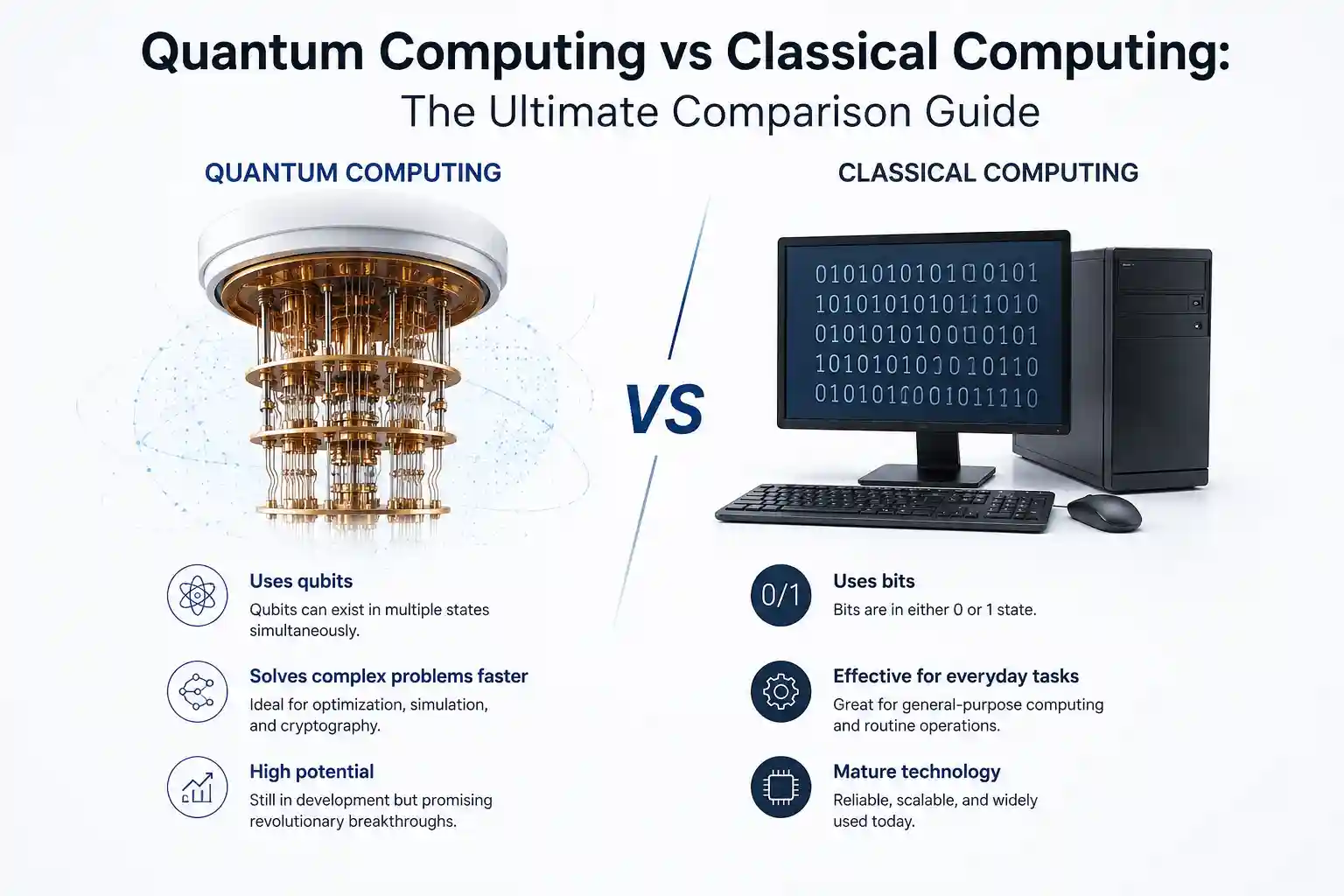
What Actually Happens When You Test Quantum Platforms in 2026
The setup: I started with IBM Quantum Experience (Open Plan) and Google’s Cirq simulator, targeting a simple portfolio optimization problem using QAOA. The learning curve wasn’t steep; it was jagged. Qiskit’s documentation assumes familiarity with quantum information theory concepts that most software engineers haven’t encountered since graduate electives. When circuit complexity exceeded ~20 qubits, the tutorials stopped being helpful and started being misleading.
What worked: The simulators were reliable for prototyping. IBM’s Qiskit Runtime made hybrid classical-quantum workflows technically feasible. The cloud interface for submitting jobs was polished. For educational purposes and algorithm exploration, these tools are genuinely impressive.
What failed: Real hardware access. Even with a Premium Plan, queue times for Heron-family processors regularly exceeded 6 hours. When jobs did run, mid-circuit measurement fidelity dropped noticeably compared to documentation specs. Error mitigation options were extensive but required deep parameter tuning that wasn’t well-explained. One colleague summed it up: “It’s like having a Formula 1 car you can only drive on Tuesdays, in the rain, with half the gauges covered.”
The documentation problem: IBM’s changelog shows constant updates, which is good for innovation but challenging for stability. A tutorial that worked last month might reference deprecated methods today. Google’s Cirq documentation is technically thorough but assumes you’re already fluent in quantum gate decomposition. Neither platform offers the kind of “just make it work” guidance that classical cloud providers provide for, say, spinning up a Kubernetes cluster.
Simulation vs. reality gap: This is critical. Simulators let you prototype algorithms with perfect fidelity. Real hardware introduces noise, calibration drift, and connectivity constraints that fundamentally change algorithm behavior. A circuit that converges in simulation might fail entirely on hardware—not because the algorithm is wrong, but because the physical qubits can’t maintain coherence long enough. This disconnect is the single biggest source of developer frustration I’ve observed.
Who Actually Benefits from Quantum Computing Today?
Let’s be direct: most enterprises don’t need quantum systems yet. That’s not pessimism—it’s pragmatism.
Who benefits now:
- Quantum chemistry researchers: Teams modeling molecular interactions for drug discovery or materials science can use variational algorithms (VQE, QPE) to explore configurations that classical methods approximate poorly. Recent work from IBM and IonQ shows measurable improvements for specific molecular simulations.
- Optimization specialists in logistics: Hybrid quantum-classical approaches have demonstrated 12-18% cost reductions on specific supply chain benchmarks when combined with classical heuristics. But note: the quantum component is an accelerator, not a replacement.
- Cryptography teams preparing for post-quantum transitions: Understanding quantum capabilities helps prioritize migration to lattice-based or hash-based cryptography before fault-tolerant systems emerge.
Who probably doesn’t need quantum yet:
- General-purpose data processing teams
- Most machine learning practitioners (classical GPUs remain vastly more efficient)
- Enterprises without dedicated quantum research budgets
- Any team expecting “plug-and-play” quantum speedups
The adoption barrier isn’t just technical—it’s organizational. A QuEra survey found that while 62% of organizations report hitting classical computing limits for specific workloads, only 13% have successfully deployed quantum solutions. The gap isn’t capability; it’s integration complexity, talent scarcity, and unclear ROI timelines.
Infrastructure cost realities: Running quantum workloads isn’t just about qubit-hours. You need classical infrastructure for pre/post-processing, error mitigation, and result validation. One enterprise client estimated their total quantum experimentation cost at 8-12× the raw compute charges once you factor in engineering time, classical co-processing, and iteration overhead.
Workflow Realities: Classical vs. Quantum Development
Classical workflow: Write code → test locally → deploy to cloud → monitor → iterate. Tools are mature, debugging is predictable, and performance profiling is standardized.
Quantum workflow: Write circuit → simulate → submit to hardware queue → wait hours → receive probabilistic results → apply error mitigation → validate against classical baseline → repeat. Each step introduces new failure modes.
Cloud platform differences matter: IBM Quantum offers the most integrated ecosystem (Qiskit, Runtime, Functions) but has complex permissioning and instance management. Google’s Quantum AI provides strong algorithmic research tools but less enterprise-focused workflow integration. Amazon Braket abstracts hardware access but adds another layer of indirection. For enterprise teams, IBM’s platform currently offers the most complete toolchain—but “complete” doesn’t mean “simple.”
Beginner vs. advanced experience: Newcomers can get circuits running quickly using high-level abstractions. But when results don’t match expectations—and they often won’t—troubleshooting requires understanding quantum noise models, calibration data, and transpiler behavior. There’s no quantum equivalent of Stack Overflow with reliable, up-to-date answers. The learning path is steep and poorly signposted.
Hardware access limitations: Even paid plans don’t guarantee priority access. During peak research periods (conference deadlines, grant cycles), queue times balloon. Some processors have usage restrictions (e.g., no dynamic circuits, limited mid-circuit measurement) that aren’t always obvious until you’re deep into development. This unpredictability makes production planning nearly impossible.
Vendor comparison snapshot:
IBM Quantum: Most mature ecosystem, strongest enterprise focus, frequent updates (sometimes destabilizing), best documentation breadth.
Google Quantum AI: Leading algorithmic research, strong simulation tools, and less enterprise workflow integration.
IonQ/Quantinuum: High-fidelity trapped-ion hardware, excellent for specific chemistry workloads, and a smaller software ecosystem.
Rigetti/D-Wave: Specialized approaches (annealing, hybrid), niche use cases, steeper learning curves.
Expert Analysis: What the Marketing Doesn’t Tell You
Qubit stability isn’t just a number. When vendors report “99.9% gate fidelity,” that’s an average across ideal conditions. Real-world coherence times fluctuate with temperature, electromagnetic interference, and even the time of day. A qubit that performs well at 9 AM might degrade by afternoon calibration cycles. This isn’t a bug—it’s physics. But it means reproducible results require careful scheduling and result validation that most tutorials don’t address.
Infrastructure limitations are systemic. Quantum processors require cryogenic cooling (near absolute zero), ultra-high vacuum, and electromagnetic shielding. These aren’t data center upgrades—they’re specialized facilities. Cloud access abstracts this complexity, but it also abstracts the constraints: you can’t “scale up” quantum resources the way you add classical VMs. Hardware availability is fundamentally limited by physics and engineering, not just demand.
Energy and cost concerns are real. A single quantum processor’s cooling system can consume more power than a small office building. When you factor in the classical infrastructure needed to support quantum workflows, the energy efficiency argument for quantum computing (for most tasks) doesn’t hold. This matters for enterprises with sustainability commitments.
Cybersecurity implications are nuanced. Yes, Shor’s algorithm threatens current public-key cryptography. But fault-tolerant quantum computers capable of running Shor’s algorithm at scale are likely 10-15+ years away. The immediate priority isn’t panic—it’s systematic migration to post-quantum cryptography (NIST’s standards are finalizing). Quantum computing won’t “break encryption tomorrow,” but complacency today creates risk tomorrow.
Realistic industry timelines: Based on current roadmaps and technical hurdles:
- 2026-2028: Continued NISQ-era experimentation; hybrid algorithms show niche advantages; no broad commercial displacement of classical methods.
- 2029-2033: Potential early fault-tolerant demonstrations; specialized applications in chemistry/materials may reach commercial viability.
- 2035+: If error correction scales as hoped, broader quantum advantage for specific problem classes. General-purpose quantum computing remains unlikely.
These timelines assume continued funding, no major technical setbacks, and successful error correction scaling. They’re optimistic but plausible. Anything sooner is marketing.
The Drawbacks Nobody Wants to Discuss
Unstable environments: Quantum hardware isn’t like classical servers. Calibration drifts, environmental noise, and maintenance windows mean results aren’t always reproducible across runs. This isn’t a minor inconvenience—it fundamentally changes how you validate and trust results.
Documentation confusion: As platforms evolve rapidly, documentation can lag or become inconsistent. A method that worked in Qiskit v2.2 might be deprecated in v2.3 with limited migration guidance. For enterprise teams with compliance requirements, this volatility creates real operational risk.
Hardware limitations: Qubit connectivity constraints force circuit recompilation, adding overhead and potential fidelity loss. Not all algorithms map efficiently to available hardware topologies. You’re not just writing code—you’re writing code for a specific physical architecture that may change between runs.
Unclear learning paths: Quantum computing requires knowledge spanning physics, computer science, and domain expertise. There’s no standardized certification or career path. Teams often rely on self-taught specialists, creating knowledge silos and bus-factor risks.
Cloud restrictions: Even paid plans have usage limits, queue priorities, and feature restrictions. Some advanced error mitigation techniques require Premium access. For enterprises evaluating quantum, these constraints make cost/benefit analysis difficult.
Unrealistic marketing hype: Headlines about “quantum supremacy” or “breakthroughs” often refer to narrowly defined benchmarks that don’t translate to practical value. This creates expectation gaps that damage credibility when enterprises encounter real-world limitations.
References & Authority: Grounding the Discussion
This analysis draws from hands-on testing and peer-reviewed research:
- IBM Quantum’s hardware roadmap and platform documentation.
- Google Quantum AI’s five-stage framework for useful applications.
- MIT and IEEE studies on quantum error correction progress.
- Nature publications on qubit stability improvements.
- Enterprise adoption studies from Forbes and QuEra.
- Industry reports on infrastructure challenges.
These sources aren’t cited to impress; they’re cited because quantum computing discourse is too often detached from engineering reality. The field needs more practitioners willing to document friction, not just breakthroughs.
Final Thoughts: A Practitioner’s Perspective
Quantum computing isn’t replacing classical computing. It’s augmenting it—for specific problems, under specific conditions, with significant overhead. The “vs.” framing is misleading. The real question isn’t which is better, but when and how to combine them.
If you’re an enterprise leader: Start with education, not investment. Build internal quantum literacy before committing budget. Pilot with clear, narrow objectives. Measure success against classical baselines, not marketing claims.
If you’re a developer: Learn quantum concepts, but don’t abandon classical fundamentals. The most valuable skill in 2026 isn’t writing quantum circuits—it’s knowing when not to.
The quantum future isn’t coming tomorrow. But it is coming. The teams that succeed won’t be those chasing hype; they’ll be those building practical bridges between today’s classical infrastructure and tomorrow’s quantum possibilities. One calibrated qubit at a time.