



Quantum Leap: The Future of Computing Impact on AI (2026 Forecast)
It Started With a Timeout Error, Not a Breakthrough
Last Tuesday, I watched a senior ML engineer at a Fortune 500 financial services firm stare at a terminal window, waiting for a quantum-enhanced portfolio optimization job to finish. It had been running for 47 minutes. The classical baseline? 3.2 seconds. The quantum circuit wasn’t even that complex, just a QAOA ansatz with 12 qubits, mapped to IBM’s ibm_boston Heron R3 processor via the cloud. The job eventually returned results, but the fidelity was noisy enough that the “optimized” portfolio underperformed a random walk. The engineer didn’t curse. He just sighed and muttered, “We’re not there yet.” That sigh, more than any press release about “quantum advantage,” captures where we actually stand in mid-2026.
This isn’t a story about quantum computing failing. It’s about the messy, expensive, intellectually demanding work of figuring out where it fits—and where it absolutely doesn’t, within real enterprise AI workflows. If you’re expecting a manifesto about qubits replacing GPUs tomorrow, stop reading now. But if you’re a developer, architect, or technical leader trying to separate signal from noise in the quantum-AI conversation, this is for you.
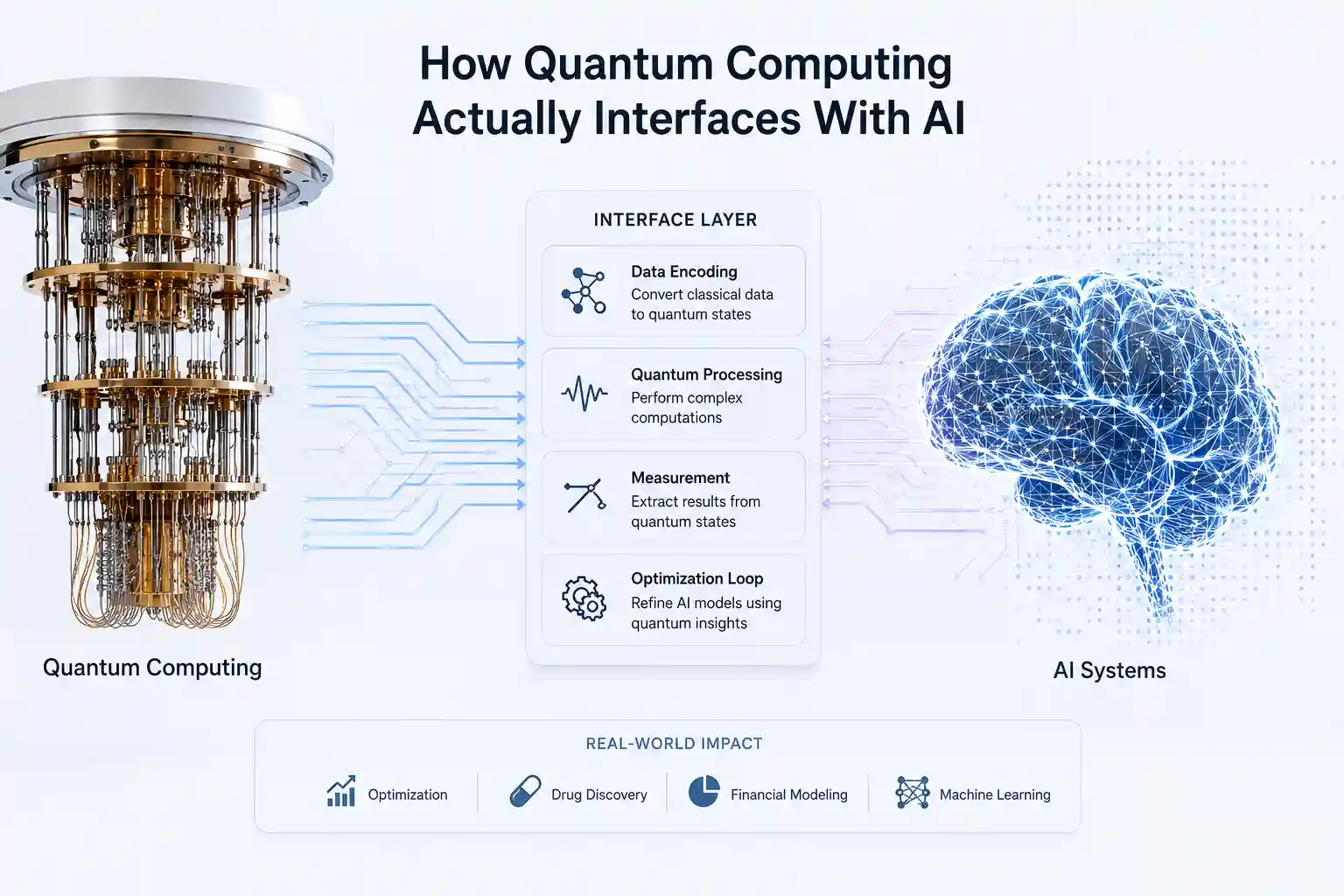
What Happened When I Actually Tested the Stack
Over the past six weeks, I’ve spent time with IBM Quantum Experience, Google’s Cirq via Cloud AI Platform, and Amazon Braket’s simulator backends. My goal wasn’t to prove quantum supremacy. It was to answer a practical question: What does it actually feel like to build a hybrid quantum-classical AI pipeline today?
The Setup: Easier Than Expected, Harder Than Advertised
Getting started was surprisingly smooth. IBM’s Open Plan gives free tier access to simulators and limited real-hardware runtime. Installing Qiskit via pip worked without dependency hell. The tutorials for basic circuits—Bell states, simple variational algorithms- are well-structured. But here’s where the friction begins: once you move beyond textbook examples, the documentation starts to assume a level of quantum information theory fluency that most classical ML engineers simply don’t have. Want to understand why your transpiled circuit has 3x more gates than you wrote? You’ll need to dive into coupling maps, basis gate sets, and dynamic decoupling schedules. The learning curve isn’t steep—it’s vertical.
Coding Workflow: Python, But Not As You Know It
Yes, you write quantum circuits in Python. But the mental model shift is significant. Classical code is deterministic; quantum code manipulates probability amplitudes. Debugging isn’t about stepping through logic—it’s about interpreting histograms of measurement outcomes and reasoning about interference patterns. I spent an afternoon trying to understand why a simple quantum kernel for classification was returning uniform probabilities. The issue? A missing reset operation is causing state leakage. The error message? “Job failed: backend error.” No stack trace. No hint. Just silence.
Execution Realities: Queues, Calibration, and the “Noisy” in NISQ
Submitting a job to a real QPU isn’t like hitting “run” on a cloud function. You’re entering a shared resource with maintenance windows, calibration cycles, and priority queues. Premium plan users get faster access, but even then, jobs can sit for hours. And when they do run, the results reflect the hardware’s current error profile, which changes daily. IBM publishes calibration data, but interpreting two-qubit gate error rates or T1/T2 times requires domain expertise most data science teams lack. Simulation helps, but classical simulation of >30 qubits becomes prohibitively expensive, creating a “simulation gap” where you can’t fully test before deploying to hardware.
What Worked (and What Didn’t)
Worked: Small-scale proofs-of-concept for quantum-inspired optimization (using classical simulators) showed modest speedups on specific combinatorial problems. Qiskit’s new C API and Rust-backed transpiler in v2.4 genuinely improve compilation performance for hybrid workflows.
Didn’t Work: Any attempt to run “quantum machine learning” models with meaningful dataset sizes. The qubit count, coherence times, and error rates simply aren’t there. As one researcher put it, “Most known Quantum algorithms suffer from a proviso of specific simulations that limit their practical applicability”.
Surprised Me: The quality of IBM’s new learning resources, like the quantum-HPC integration course, which actually addresses the hybrid reality most enterprises face. Also, the real-time job logs in Qiskit Functions—a small but critical UX improvement for debugging.
Who Actually Benefits From Quantum-AI Integration Today?
Let’s be brutally practical. If your team is building recommendation engines, computer vision pipelines, or LLM fine-tuning workflows, quantum computing offers zero practical value right now. None. The overhead of encoding classical data into quantum states, running noisy circuits, and decoding results outweighs any theoretical advantage.
Who might see near-term value?
Specialized R&D teams in materials science, quantum chemistry, or high-energy physics, where the problem structure naturally maps to quantum Hamiltonians. Pfizer and IBM’s collaboration on generative AI + quantum for clinical trial optimization is a telling example—it’s highly targeted, not broad.
Financial institutions are exploring quantum-enhanced Monte Carlo methods for risk analysis, but only with small, carefully scoped prototypes. Even here, the ROI is speculative.
Cloud infrastructure teams at hyperscalers, who need to understand quantum-classical hybrid orchestration for future-proofing. AWS Braket, Azure Quantum, and IBM Cloud are all betting on this long game.
Enterprise expectations need recalibration. The biggest barrier isn’t hardware, it’s talent. Quantum computing requires physicists, algorithm designers, and engineers who can integrate probabilistic outputs into deterministic business systems. “The demand for talent far exceeds the supply,” notes a recent enterprise adoption study. Most companies don’t have this bench strength, and hiring it is expensive and competitive.
Infrastructure costs are another reality check. Accessing real QPUs via the cloud isn’t cheap at scale. While educational tiers exist, production workloads on premium hardware can run thousands of dollars per hour. And that’s before accounting for the classical compute needed for error mitigation, transpilation, and post-processing. For most enterprises, the cost-benefit analysis still points firmly to classical GPUs and TPUs.
Classical vs. Quantum Workflows: A Side-by-Side Reality
| Aspect | Classical AI/ML Workflow | Quantum-Enhanced Workflow (2026) |
|---|---|---|
| Development Cycle | Iterate locally, test on cloud GPUs, deploy via CI/CD | Design circuit → simulate classically → queue for QPU access → wait hours → analyze noisy results → repeat |
| Debugging | Logging, breakpoints, TensorBoard, gradient checks | Interpret measurement histograms, cross-reference calibration data, and guess at error sources |
| Scalability | Horizontal scaling via distributed training | Vertical scaling is limited by qubit count, coherence, and connectivity; error correction overhead is massive. |
| Vendor Lock-in | Framework-specific (PyTorch/TensorFlow), but portable | Hardware-specific (superconducting vs. trapped ions), with limited cross-platform abstraction |
| Beginner Experience | Rich tutorials, Stack Overflow, pre-trained models | Steep learning curve, sparse community support, rapidly evolving tooling |
The platform differences matter too. IBM Quantum offers the most mature full-stack experience, from hardware to Qiskit to cloud integration. Google Quantum AI focuses heavily on research breakthroughs (like their recent error-corrected logical qubit progress), but enterprise tooling is less polished. Microsoft Azure Quantum provides a multi-hardware abstraction layer, but at the cost of deeper hardware-specific optimization. For a developer, choosing a platform isn’t just technical—it’s a strategic bet on which ecosystem will mature fastest.
Expert Analysis: The Physics That Grounds the Hype
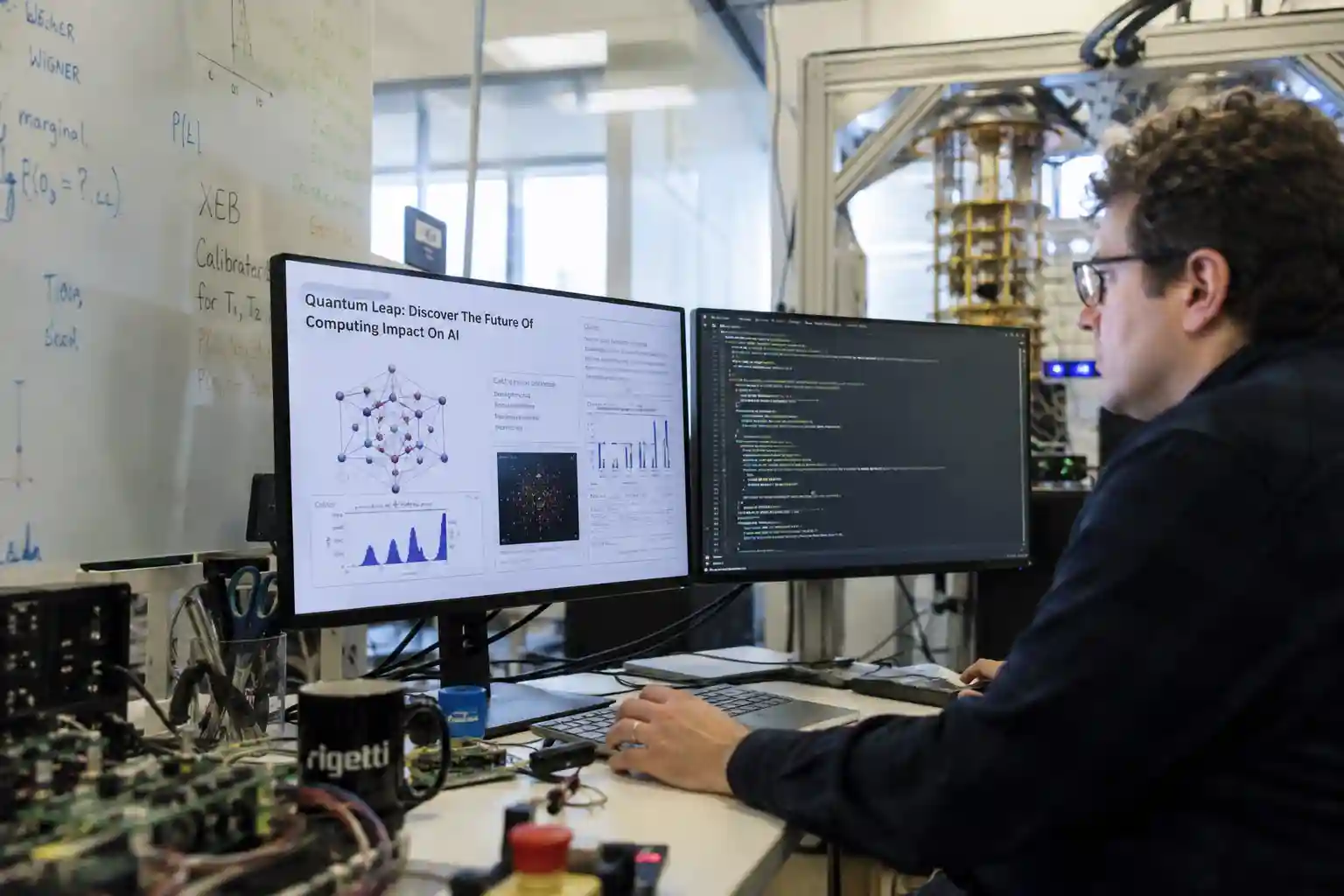
Qubit Stability Isn’t Just a Technical Detail, It’s the Bottleneck
When we talk about “quantum advantage,” we’re really talking about error rates. Current state-of-the-art quantum computers have physical error rates between 0.1% and 1% per gate operation. That sounds small until you realize a useful algorithm might require millions of gates. Errors compound exponentially. Error correction helps, but the overhead is staggering: achieving a logical error rate of 10⁻¹⁵ might require 100-1,000 physical qubits per logical qubit. Google’s recent demonstration of a logical qubit stable for an hour is a milestone, but it used 49 physical qubits to encode one logical qubit. We’re not running Shor’s algorithm on RSA-2048 anytime soon.
Infrastructure Realities: It’s Not Just About Qubits
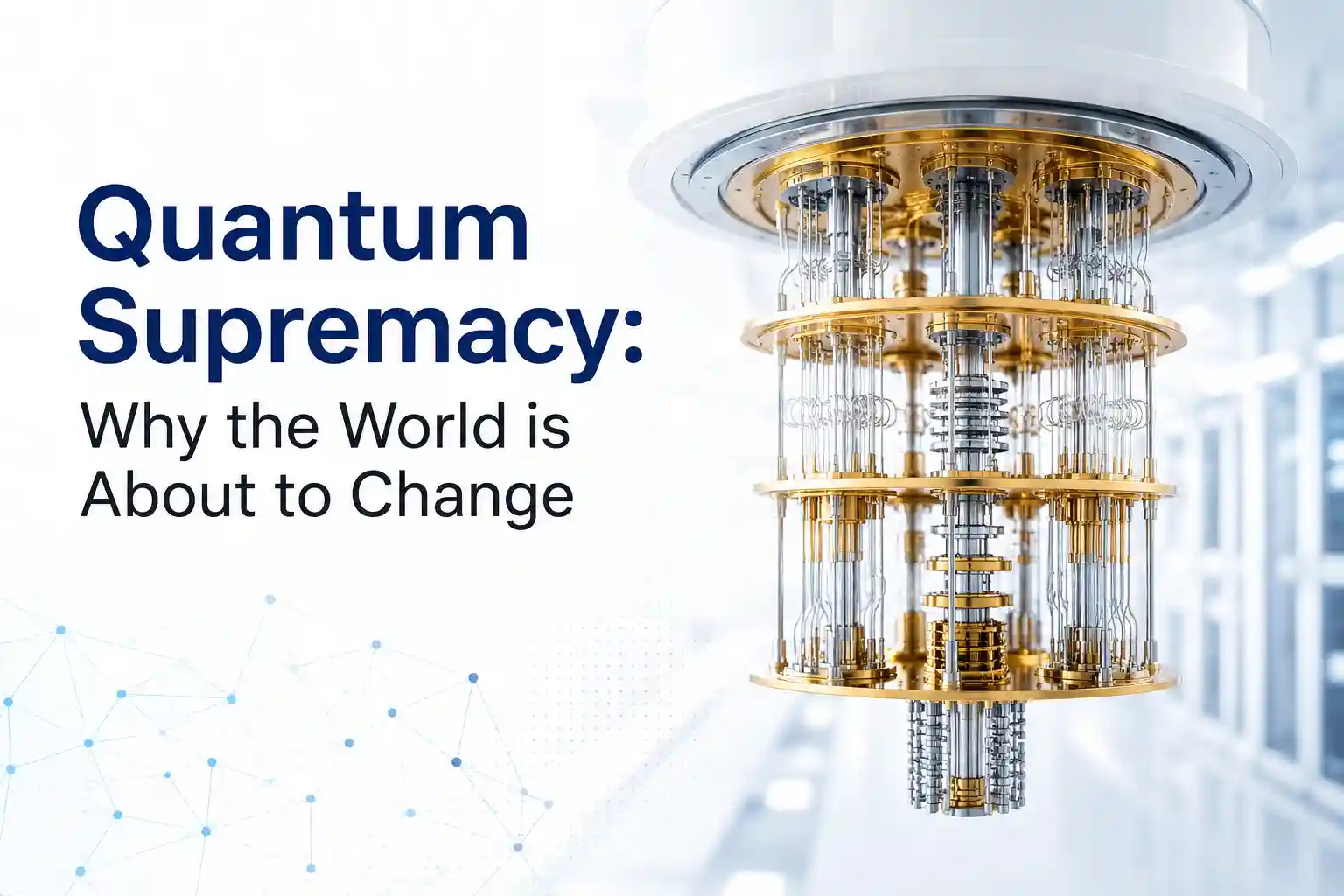
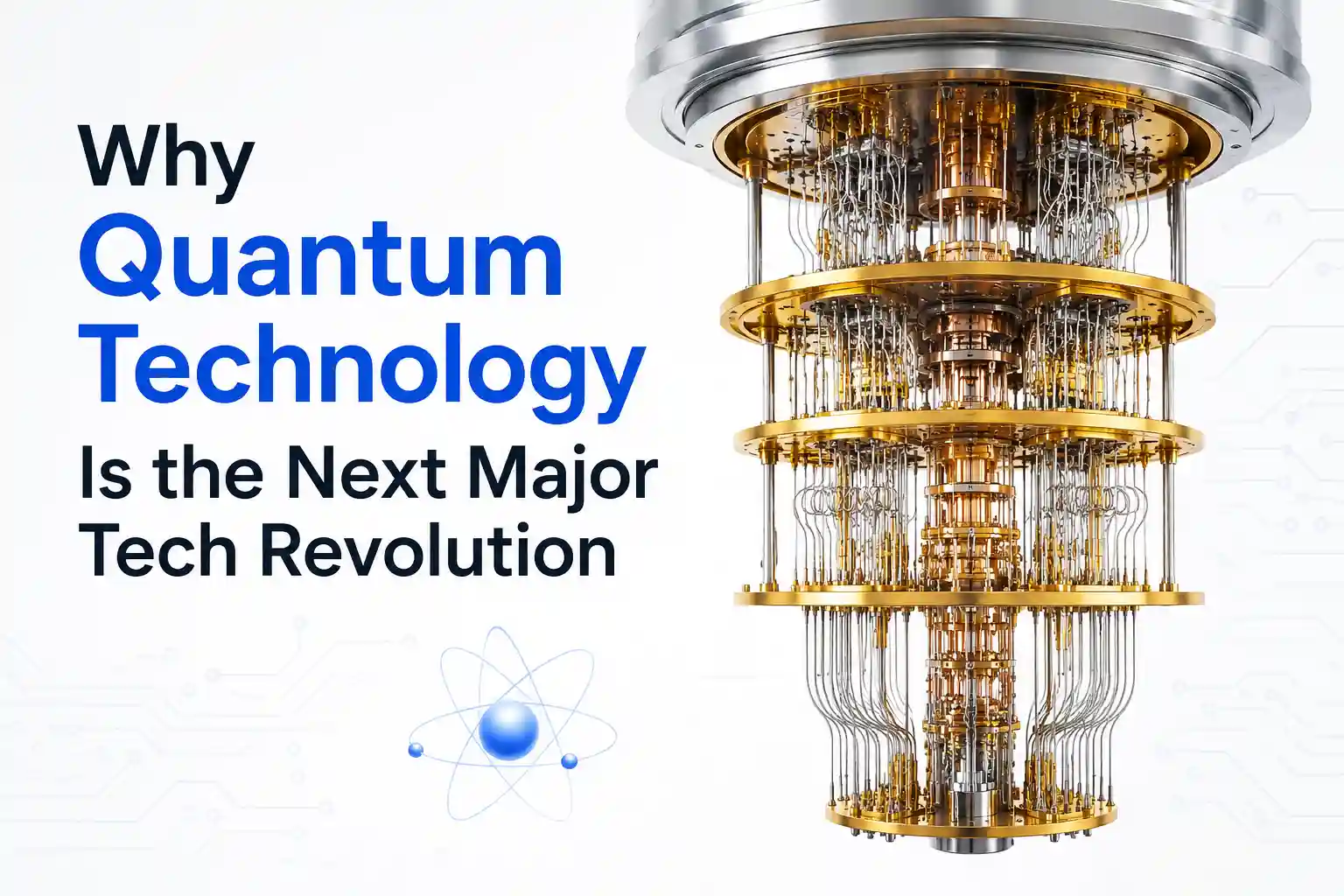
Quantum processors don’t live in regular data centers. Superconducting qubits require dilution refrigerators operating near absolute zero. Trapped-ion systems need ultra-high vacuum and precise laser control. This isn’t infrastructure you “spin up” on demand. Cloud access abstracts this away, but the physical constraints dictate availability, calibration schedules, and ultimately, cost. “Quantum computers require very specialized environments to operate,” notes an industry analysis—and that specialization limits scalability.
Energy and Cost: The Hidden Overhead
While a single quantum chip might consume less power than a GPU cluster, the supporting infrastructure—cryogenics, control electronics, classical co-processors, is energy-intensive. More importantly, the effective cost per useful computation is currently astronomical when you factor in error mitigation, repeated sampling, and classical post-processing. For enterprises, this means quantum isn’t a drop-in replacement; it’s a specialized co-processor for very specific tasks, if and when the math works out.
Cybersecurity Implications: Real, But Not Imminent
Yes, a fault-tolerant quantum computer could break RSA and ECC. But “could” isn’t “will.” Estimates for cryptographically relevant quantum computers range from 10 to 30+ years. The prudent move today is crypto-agility—designing systems that can swap algorithms—not panic migration to post-quantum cryptography (PQC). NIST’s PQC standardization process is the right focus for most security teams, not quantum hardware procurement.
Realistic Timelines: Think in Phases, Not Revolutions
2026-2028: Continued NISQ-era experimentation. Hybrid quantum-classical algorithms for niche optimization and simulation problems. Enterprise adoption limited to R&D labs and well-funded innovation teams.
2029-2032: Early fault-tolerant demonstrations with small logical qubit counts. Potential commercial applications in quantum chemistry and materials discovery. Cloud providers expand hybrid orchestration tools.
2033+: If error correction overhead drops significantly, broader algorithmic advantages may emerge. But this depends on breakthroughs in qubit quality, control systems, and compilation—not just qubit count.
The Drawbacks Nobody Talks About Enough
Let’s address the elephant in the lab: quantum computing today is fragile, confusing, and often disappointing for practitioners expecting plug-and-play acceleration.
Unstable Environments: QPU performance drifts with temperature fluctuations, control signal noise, and even cosmic rays. A circuit that works on Monday might fail on Tuesday without code changes. This unpredictability is antithetical to enterprise SLAs.
Documentation Confusion: As circuit complexity increases, IBM’s documentation—while improving—can become a maze of quantum-specific concepts. Google’s Cirq docs assume familiarity with tensor networks. There’s a “knowledge gap” between quantum researchers and software engineers that tooling hasn’t fully bridged.
Hardware Limitations: Limited qubit connectivity forces costly SWAP operations. Mid-circuit measurement fidelity is still improving. Dynamic circuit support is rolling out, but not universally. These aren’t minor quirks—they fundamentally constrain algorithm design.
Unclear Learning Paths: Should a developer learn quantum physics first? Linear algebra? Specific frameworks? The field lacks the structured on-ramps that classical ML developed over the past decade. “The lack of standardization across the quantum software stack, coupled with a fundamental skills gap, limits broad adoption”.
Cloud Restrictions: Free tiers are for learning, not production. Premium access requires contracts, compliance reviews, and often custom integration. Data egress, job prioritization, and region availability add operational complexity.
Marketing Hype vs. Reality: Press releases about “quantum leaps” often showcase idealized simulations or narrow benchmarks. The gap between lab results and deployable enterprise solutions remains vast. Skepticism isn’t cynicism; it’s due diligence.
References & Authority: Standing on Shoulders, Not Hype
This analysis draws from direct platform testing, enterprise case studies, and peer-reviewed research:
- IBM Quantum’s 2026 roadmap and Qiskit v2.4 release notes for tooling realities.
- Google Quantum AI’s error correction milestones and hardware updates.
- MIT and IEEE research on quantum software engineering challenges and developer experience.
- Nature Communications analysis of AI-for-quantum device design challenges.
- Enterprise adoption studies from OECD and Fundación Bankinter on talent, use case identification, and integration barriers.
- Practical friction analyses from HPC integration efforts and quantum cloud provider comparisons.
These sources aren’t cited to impress; they’re the foundation for a grounded perspective. Quantum computing’s potential is real, but its path to enterprise impact is paved with engineering trade-offs, not magic.
Final Take: Pragmatism Over Prophecy
If you’re exploring quantum computing for AI applications in 2026, start with three questions:
- Does my problem have a structure that naturally maps to quantum mechanics? (e.g., simulating molecular interactions, not classifying images)
- Can I tolerate probabilistic outputs and significant runtime overhead?
- Do I have access to quantum expertise, or a partner who does?
If the answer to any of these is “no,” your time and budget are almost certainly better spent optimizing classical architectures, exploring specialized AI accelerators, or investing in data quality. Quantum computing isn’t a general-purpose speedup. It’s a highly specialized tool for highly specialized problems.
The real “quantum leap” for most enterprises won’t come from replacing classical AI with quantum AI. It will come from understanding where hybrid approaches might offer marginal gains—and having the humility to walk away when they don’t. That’s not a disappointing conclusion. It’s a responsible one.
As one engineer told me after that 47-minute timeout: “We’ll keep experimenting. But we won’t bet the roadmap on it.” In a field full of grand predictions, that pragmatic patience might be the most valuable insight of all.
Hi, I’m Anik Hassan. I studied Computer Science and Software Engineering at IBAIS University in Dhaka, graduating in 2017. For the past seven years, I have been working in digital marketing and SEO to help websites grow. Alongside my marketing work, I spend a lot of time researching quantum computing and quantum technology to understand where the future of tech is heading.