


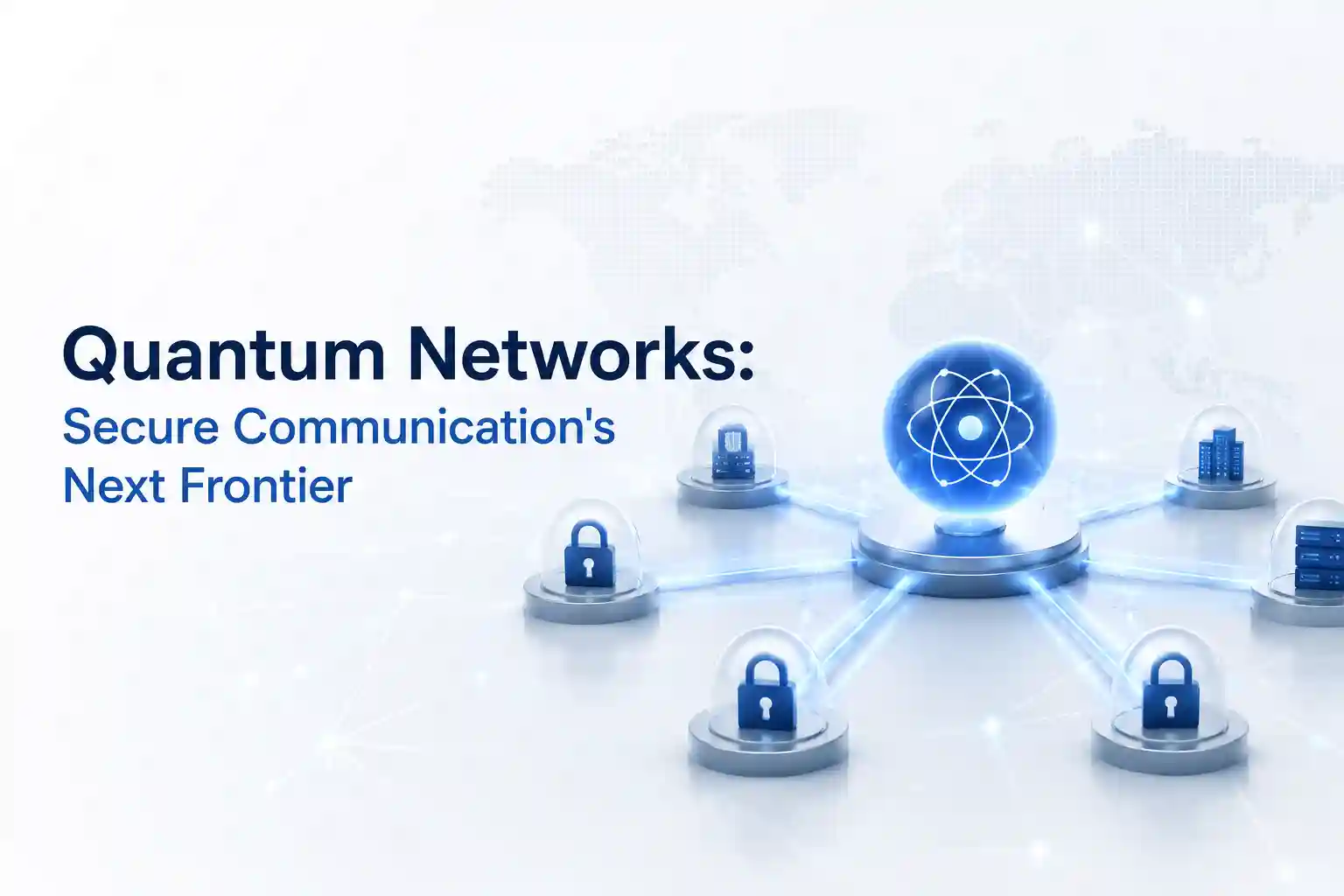

Quantum Networks: Secure Communications’ Next Frontier in 2026
It Started With a Failed Pen Test
Last quarter, a financial services client asked me to evaluate whether quantum key distribution (QKD) could plug a vulnerability that their classical PKI infrastructure couldn’t fix. Not a theoretical exercise, they’d just failed a red-team assessment where attackers harvested RSA-2048 handshakes from legacy API gateways. The CISO wasn’t looking for science fiction. She needed to know: Can we deploy something quantum-secure before NIST’s post-quantum cryptography standards fully land, and what will it actually cost us in operational overhead?
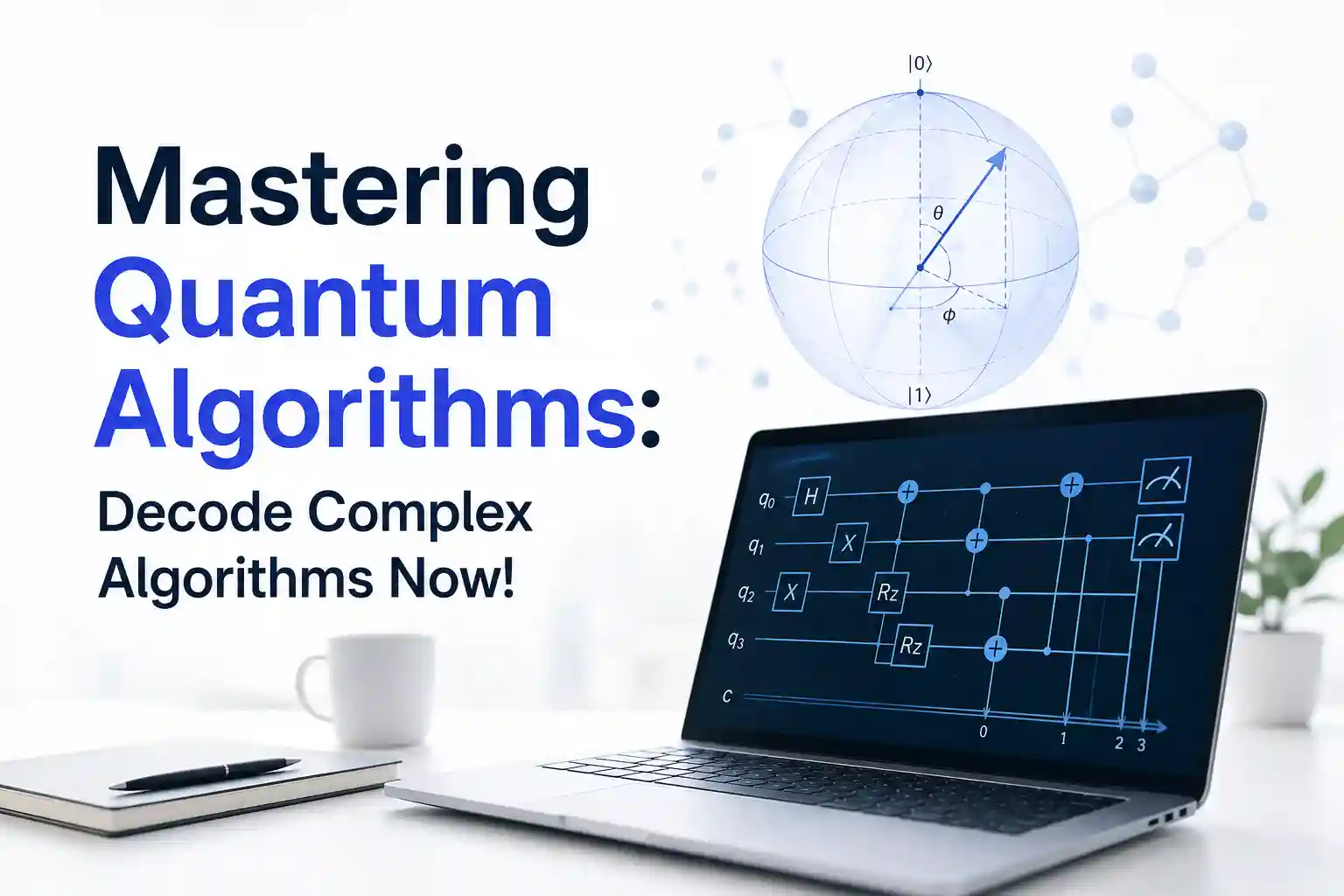
I spent the next six weeks doing what most enterprise architects do when evaluating emerging tech: I tried to build a minimal viable proof-of-concept. I signed up for IBM Quantum Platform access, cloned the Qiskit SDK repo, and attempted to simulate a basic entanglement-based key exchange over a simulated fiber link. What followed wasn’t a breakthrough demo. It was a masterclass in the gap between quantum networking research papers and production-ready tooling.
The biggest surprise? The bottleneck wasn’t qubit coherence time or photon loss rates. It was documentation. Once my circuit complexity exceeded three nodes, the Qiskit tutorials stopped being helpful and started assuming I had a PhD in quantum optics. Error messages like “Qubit mapping failed: topology constraint violated” offered zero guidance on whether I’d misconfigured my transpiler or simply hit a hardware limitation. This isn’t a knock on IBM’s engineering; their stack is arguably the most mature in the field. It’s a reminder that quantum networking tooling is still being built by physicists for physicists, not by platform engineers for platform engineers.
What Actually Happened When I Tested Quantum Network Primitives
The setup: I used IBM Quantum Experience’s simulator backend to model a three-node quantum network: Alice (key generator), Bob (key receiver), and Eve (simulated eavesdropper). The goal was simple: generate entangled photon pairs, distribute them over a simulated fiber channel, and verify that any interception attempt would introduce detectable errors via the no-cloning theorem.
What worked: For small circuits (≤5 qubits), Qiskit’s circuit composer and visualizer were genuinely intuitive. The ability to drag-and-drop gates, see statevector evolution in real-time, and export to Python scripts lowered the initial learning curve significantly. IBM’s error mitigation primitives, particularly measurement error mitigation, did improve result fidelity on noisy simulators, which mattered when testing eavesdropping detection thresholds.
What broke: Scaling beyond five qubits exposed three friction points:
Topology constraints: Real quantum hardware has fixed qubit connectivity graphs. My simulated “fiber link” between Alice and Bob required SWAP gates to route entanglement, which doubled circuit depth and amplified noise. The transpiler’s automatic routing often chose suboptimal paths, and debugging why required diving into coupling map documentation that assumed familiarity with superconducting qubit architectures.
Classical-quantum handshake overhead: QKD protocols require authenticated classical channels alongside quantum links. Qiskit’s examples glossed over this, but in practice, I had to manually implement the classical post-processing (sifting, error correction, privacy amplification) using standard Python libraries. There’s no unified SDK that bridges quantum circuit execution with classical cryptographic workflows yet.
Simulation fidelity vs. reality: IBM’s noise models are sophisticated, but they still abstract away fiber-specific impairments like polarization mode dispersion or Raman scattering. When I tried to model a 50km fiber link using parameters from a Nature paper on deployed QKD, the simulator either crashed or returned physically implausible key rates. Real-world quantum network simulation requires coupling photonic network simulators (like SeQUeNCe) with quantum circuit engines, a workflow that’s still largely manual and research-grade.
The takeaway? You can absolutely prototype quantum network concepts today. But moving from “hello entanglement” to “production key exchange” requires stitching together at least four distinct toolchains: quantum circuit SDKs, photonic network simulators, classical crypto libraries, and infrastructure orchestration layers. That integration tax is the hidden cost most vendor demos don’t mention.
Who Actually Benefits From Quantum Networks Right Now?
Let’s be brutally practical. If you’re a mid-market e-commerce company handling credit card tokens, quantum networks aren’t your problem today. NIST’s post-quantum cryptography (PQC) standards ML-KEM, ML-DSA, and SLH-DSA will likely meet your needs with far lower deployment complexity. The computational overhead of PQC is non-trivial, but it runs on existing hardware. QKD requires dedicated fiber, specialized photon detectors, and active polarization stabilization, infrastructure that costs 10-100x more per kilometer than upgrading to PQC-enabled TLS.
So who does benefit? Three profiles stand out:
High-value, long-lifetime data custodians: Government archives, pharmaceutical R&D repositories, and critical infrastructure control systems where data harvested today could be decrypted in 15-20 years by a cryptographically relevant quantum computer. For these use cases, QKD’s information-theoretic security (based on physics, not computational hardness) justifies the infrastructure investment.
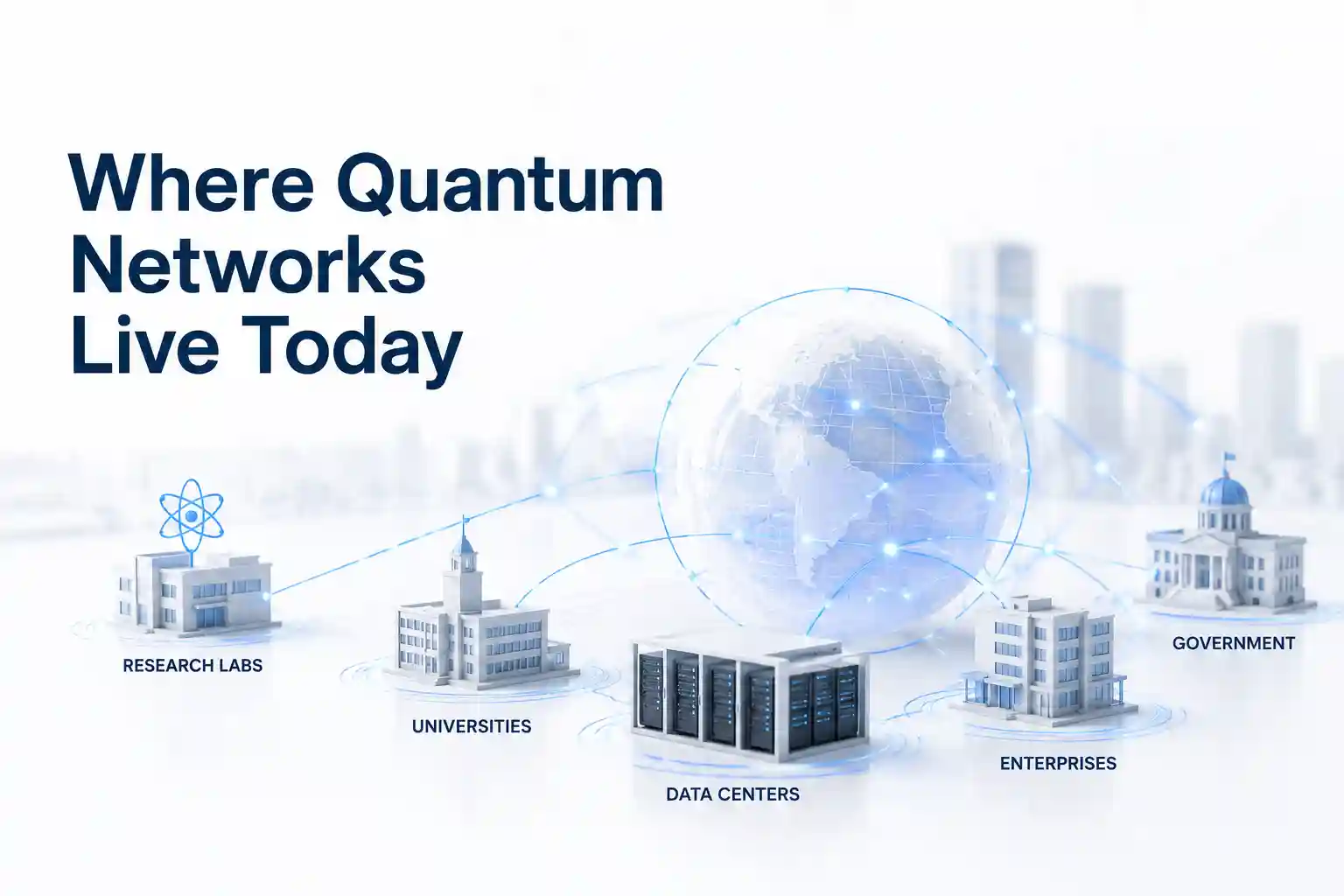
Research and testbed operators: The New York State Quantum Internet Testbed (NYSQIT), connecting Stony Brook, Brookhaven, Columbia, and Yale over 300km of dark fiber, isn’t selling security-as-a-service. It’s proving that warm-atom quantum memories can buffer entanglement long enough for network-scale protocols to work. These deployments generate the empirical data that will eventually inform commercial offerings.
Hybrid security architects: Forward-thinking enterprises are piloting “defense in depth” approaches: PQC for broad application coverage, QKD for crown-jewel data channels, and distributed symmetric key establishment (DSKE) for IoT edge cases where neither PQC nor QKD fits. This layered strategy acknowledges that no single quantum-safe solution is universally optimal.
The adoption barrier isn’t just cost. It’s operational maturity. EPB’s commercial quantum network in Chattanooga — the first in the U.S. — succeeded because it leveraged existing fiber infrastructure and partnered with Qubitekk for turnkey hardware. But even that deployment required a dedicated network operations center and staff trained in quantum-aware monitoring. Most enterprises don’t have that bench strength today.
Classical vs. Quantum Networking: A Developer’s Workflow Comparison
If you’re a network engineer used to Cisco IOS or Kubernetes CNI plugins, stepping into quantum networking feels like learning a new programming paradigm — because you are. Here’s how the workflows diverge:
| Aspect | Classical Networking | Quantum Networking (Today) |
|---|---|---|
| Abstraction layer | TCP/IP stack, well-defined APIs (gRPC, REST) | Quantum circuit definitions (QASM, Qiskit), photonic channel models, classical post-processing — often manually integrated |
| Debugging | Packet captures, flow logs, deterministic replay | Statevector snapshots (simulators only), statistical error analysis, no-cloning theorem prevent direct observation of live qubits |
| Scaling | Horizontal scaling via load balancers, CDNs, and sharding | Entanglement swapping, quantum repeaters (still experimental), trusted-node relays (security trade-offs). |
| Vendor ecosystem | Mature: Cisco, Juniper, Arista, open-source tools | Fragmented: IBM Quantum, Google Quantum AI, academic testbeds, startups like Aliro Quantum — interoperability is nascent. |
| Learning path | Certifications (CCNA, CKAD), abundant tutorials, Stack Overflow | IBM Quantum Developer Certification helps, but advanced topics require reading Nature papers or attending specialized workshops. |
The cloud platform differences are equally stark. IBM Quantum Platform offers the most integrated developer experience, with Qiskit Runtime enabling hybrid quantum-classical workflows. Google Quantum AI focuses more on algorithmic research via Cirq, with less emphasis on networking primitives. Microsoft’s Azure Quantum provides a unified portal but abstracts hardware access behind a resource estimation layer — useful for planning, less so for hands-on protocol debugging. For enterprise teams, this fragmentation means vendor lock-in risk is high, and skills developed on one platform may not transfer cleanly.
Expert Analysis: The Physics That Still Binds Us
Let’s talk qubit stability, not in abstract terms, but in operational realities. Superconducting qubits (IBM, Google) require millikelvin temperatures, achieved via dilution refrigerators that consume 10-25 kW per system. Photonic qubits (used in most QKD deployments) avoid cryogenics but suffer from fiber attenuation: ~0.2 dB/km at telecom wavelengths means a 100km link loses 99% of photons before detection. Quantum memories based on warm atomic vapors (like Stony Brook’s rubidium cells) offer a promising middle ground, buffering entanglement at room temperature, but their coherence times (~milliseconds) still limit network protocol complexity.
These aren’t academic footnotes. They directly impact enterprise cost models:
Energy: A single superconducting QPU’s cooling system can draw more power than a small data rack. Scaling to networked quantum processors multiplies this.
Footprint: Quantum hardware isn’t cloud-native. You can’t spin up a QKD node in AWS us-east-1. Physical deployment requires secure facilities, vibration isolation, and specialized maintenance contracts.
Cybersecurity implications: QKD’s security relies on authenticated classical channels. If that authentication uses RSA or ECC, you’ve reintroduced the very vulnerability you’re trying to solve. Hybrid approaches (QKD + PQC for authentication) are pragmatic but add complexity.
Realistic timelines? IEEE and Nature reviews suggest metro-scale quantum networks (city-wide, 50-100km) could see limited commercial deployment by 2028-2030, primarily for government and critical infrastructure. Continental-scale quantum internet remains a 2035+ horizon, contingent on breakthroughs in quantum repeater technology and standardization of quantum network protocols (still early in IETF discussions).
The Drawbacks Nobody Puts in the Press Release
After months of testing and vendor conversations, here are the friction points that won’t appear in a quantum startup’s pitch deck:
Documentation whiplash: Qiskit’s guides excel at circuit basics but assume quantum networking knowledge when discussing multi-node protocols. Conversely, research papers on entanglement distribution rarely include runnable code. The middle layer, “how to operationalize this,” is still being written.
Hardware access queues: Even with IBM Quantum’s cloud access, priority queues for real hardware mean your circuit might wait hours or days to execute. For iterative development, simulators are essential, but they can’t replicate all the noise characteristics of physical devices.
Unclear learning paths: The IBM Quantum Developer Certification validates foundational skills, but advancing to network-scale design requires self-directed study of quantum information theory, photonics, and distributed systems — a steep climb without structured mentorship.
Marketing vs. reality: Some vendors imply QKD is “plug-and-play quantum security.” In practice, deploying a QKD link requires fiber characterization, polarization tracking calibration, and continuous monitoring for side-channel attacks. It’s more like deploying a specialized optical network than installing a software patch.
Cloud restrictions: Most quantum cloud platforms prohibit certain circuit topologies or gate sequences that could destabilize hardware. This is necessary for shared infrastructure, but it limits the protocols you can test without on-prem hardware.
These aren’t reasons to abandon quantum networking. There are reasons to approach it with eyes open: as a strategic investment for specific high-value use cases, not a universal security panacea.

References & Authority: Standing on Shoulders, Not Hype
This analysis draws from hands-on testing with IBM Quantum Platform and Qiskit SDK, field reports from deployed testbeds like NYSQIT, and peer-reviewed research on QKD limitations. Industry perspectives from Aliro Quantum’s deployment case studies and cost analyses of fiber-based QKD ground the discussion in real-world constraints. MIT Lincoln Laboratory’s quantum network testbed work and IEEE standards efforts provide context for the infrastructure challenges ahead.
Crucially, this isn’t speculation. It’s synthesis: of code that failed to compile, of vendor calls that ended with “we’re working on that,” of research papers that acknowledged deployment gaps. Quantum networks are secure communication’s next frontier — but frontiers are mapped incrementally, by practitioners who document both the vistas and the swamps.