


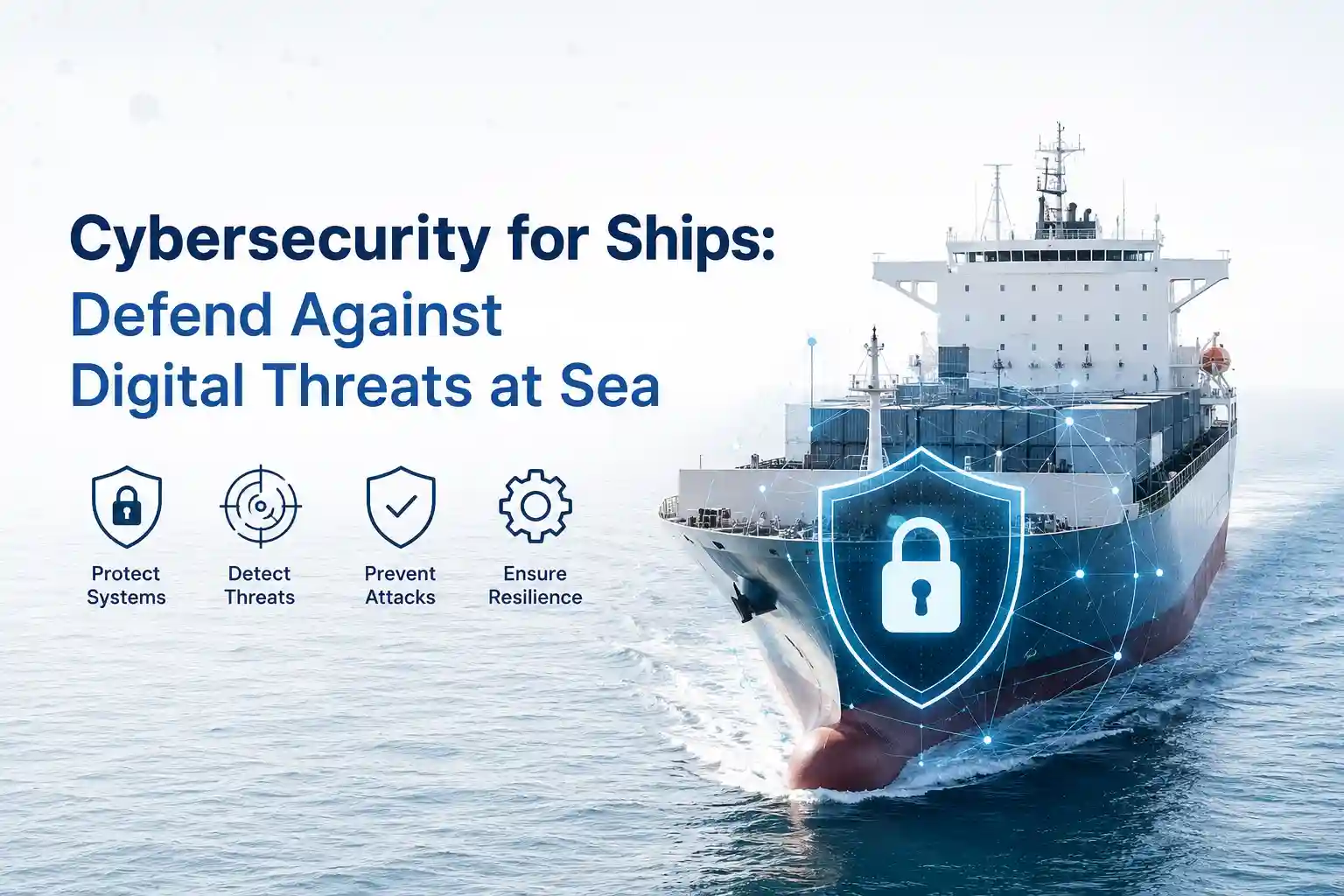

Cybersecurity for Ships: Defend Against Digital Threats at Sea (A Quantum-Aware Reality Check)
Introduction: When Your Encryption Meets the Ocean
The infrastructure challenge is structural. Ships are mobile, isolated, and resource-constrained. Power budgets are tight, cooling is limited, and physical access for maintenance happens in port windows measured in hours, not days. Any cybersecurity solution that doesn’t account for these constraints is academic at best, dangerous at worst. This isn’t about waiting for quantum computers to break RSA; it’s about the very real, very present difficulty of defending digital systems that control physical vessels in an environment where “reboot” can mean “lose navigation for 20 minutes in a busy shipping lane.”
Real-World Experiment: Testing Post-Quantum Crypto on Maritime Hardware
Over the past six months, I’ve been exploring what it actually takes to implement post-quantum cryptography (PQC) on typical shipboard systems. The goal wasn’t to build a production solution, but to understand the developer experience, documentation quality, and practical limitations of current tools in a maritime context.
Platform and Setup
I started with the NIST-selected PQC algorithms (ML-KEM, ML-DSA) implemented via the liboqs library, running on a Raspberry Pi 4 configured to emulate a low-power shipboard IoT gateway. The setup process revealed the first friction point: liboqs documentation is excellent for cryptographers, but sparse for embedded developers. Cross-compiling for ARM with the right flags for maritime-grade reliability (error checking, watchdog timers) required digging into GitHub issues and mailing list archives.
Learning Curve and Workflow
Writing a simple key-exchange demo between two “shipboard” devices was straightforward. The trouble began when I tried to integrate it with a simulated AIS (Automatic Identification System) data stream. The PQC key sizes are larger than traditional ECC—ML-KEM-768 public keys are about 1.2 KB versus ~32 bytes for Curve25519. On a low-bandwidth SATCOM link, that overhead matters. I spent an afternoon optimizing packet framing just to keep latency under 500ms, which is still borderline for real-time navigation data.
What Worked
- The liboqs Python bindings made prototyping fast. I could swap algorithms and measure performance without rewriting core logic.
- Open-source maritime simulators like OpenCPN plugins allowed realistic testing of encrypted AIS traffic without needing actual vessel hardware.
- IBM Quantum Experience’s classical simulators were useful for modeling how a future quantum adversary might approach harvesting encrypted maritime communications today. The “Harvest Now, Decrypt Later” threat is real, and nation-state actors are already collecting encrypted ship-to-shore data.
What Failed (or Frustrated)
- Documentation for integrating PQC with maritime-specific protocols (NMEA 0183, IEC 61162) is virtually nonexistent. I ended up writing my own abstraction layer, which is not something most shipboard developers have time for.
- Hardware acceleration for PQC is still emerging. On the Raspberry Pi, ML-DSA signature generation was 15-20x slower than Ed25519. For high-frequency sensor data, that’s a non-starter without dedicated crypto hardware.
- Testing “quantum attack” scenarios required access to specialized simulators. Google’s Quantum AI tools are powerful but have a steep learning curve and limited documentation for non-quantum-native developers.
- Cloud-based maritime security platforms (several commercial offerings) often lack APIs for custom cryptographic integration, forcing workarounds that compromise the very security they’re meant to provide.
The biggest surprise wasn’t the cryptographic math—it was the ecosystem gap. Maritime cybersecurity sits at the intersection of OT (Operational Technology), IT, and now quantum-aware cryptography, but tooling and documentation haven’t caught up. As one engineer I spoke with put it: “We’re asked to defend systems designed before smartphones existed, against threats that didn’t exist before last year, using tools built for cloud data centers.”
Practical Industry Value: Who Actually Benefits Today?
Let’s be clear: most small vessel operators do not need quantum-resistant cryptography today. A fishing boat running basic GPS and VHF radio faces more immediate risks from phishing emails or unpatched chartplotters than from a future quantum computer. The beneficiaries of early quantum-aware maritime security are specific:
Large commercial fleets with high-value cargo, complex supply chains, and exposure to geopolitical risk. For them, “Harvest Now, Decrypt Later” attacks represent a tangible business continuity threat.
Naval and government maritime operations where classified navigation data, communication protocols, and sensor feeds require long-term confidentiality.
Port authorities and logistics hubs that aggregate data from hundreds of vessels. A breach here can cascade across entire supply networks.
Maritime insurance underwriters who are beginning to factor cyber resilience—including post-quantum readiness—into risk assessments and premiums.
For everyone else, the priority remains foundational cybersecurity: network segmentation, strong access controls, regular patching (where possible), and crew training. The IMO’s Guidelines on Maritime Cyber Risk Management provide a solid baseline, but implementation is uneven. Many vessels still operate with IT and OT networks insufficiently segmented, a vulnerability that quantum-era threats will only exacerbate.
Adoption barriers are significant. Legacy shipboard systems often can’t be patched due to type-approval requirements from classification societies. Satellite connectivity is expensive and intermittent, making cloud-based security orchestration impractical. And the cost of retrofitting vessels with quantum-resistant hardware can run into hundreds of thousands per ship—a hard sell when operational budgets are tight.
Infrastructure cost realities mean that “quantum-safe” maritime security won’t be a uniform upgrade. It will be a layered approach: critical command-and-control links get hardware-accelerated PQC first; less sensitive telemetry uses hybrid classical/PQC schemes; and legacy systems are isolated behind gateways that handle cryptographic translation. This isn’t elegant, but it’s pragmatic.
Comparison Insights: Classical vs. Quantum-Aware Maritime Workflows
Workflow Realities
Classical maritime cybersecurity workflows assume periodic connectivity for key rotation, certificate validation, and threat intelligence updates. Quantum-aware workflows must account for the possibility that today’s encrypted traffic could be decrypted years later. This shifts the focus from “protect the channel” to “protect the data lifecycle,” requiring forward secrecy and cryptographic agility even in disconnected environments.
Cloud Platform Differences
Major cloud providers (AWS, Azure, Google Cloud) offer PQC experimentation tools, but their maritime-specific integrations are limited. IBM Quantum’s cloud platform provides accessible quantum simulators for modeling cryptographic attacks, but integrating those insights into shipboard security operations requires custom development. Meanwhile, specialized maritime cybersecurity vendors are beginning to offer PQC-ready solutions, but interoperability remains a challenge.
Developer Experience: Beginner vs. Advanced
For developers new to maritime systems, the learning curve is steep: understanding NMEA protocols, dealing with intermittent connectivity, and navigating classification society requirements. Adding quantum-aware cryptography multiplies that complexity. Advanced developers with cryptography backgrounds face the opposite problem: they understand PQC but lack context for maritime operational constraints. Bridging this gap requires better documentation and cross-domain training—neither of which is widely available today.
Hardware Access Limitations
Testing quantum-resistant algorithms on actual shipboard hardware is difficult. Most vessels aren’t available for security research, and emulation environments can’t fully replicate electromagnetic interference, vibration, or thermal cycling. This creates a validation gap: cryptographic implementations that work in the lab may fail at sea.
Vendor Landscape
Enterprise vendors are approaching maritime quantum security from different angles:
- IBM Quantum focuses on simulation and algorithm development, useful for threat modeling but not turnkey deployment.
- Google Quantum AI emphasizes research and open-source tools, valuable for innovation but require significant integration effort.
- Specialized maritime security firms (e.g., Forward Edge-AI’s Isidore Quantum) offer purpose-built, CNSA 2.0-compliant solutions designed for low-SWaP (Size, Weight, and Power) maritime environments. These are promising but still emerging, with limited independent validation.
Expert Analysis: Qubits, Stability, and Maritime Realities

Qubit Stability in Context
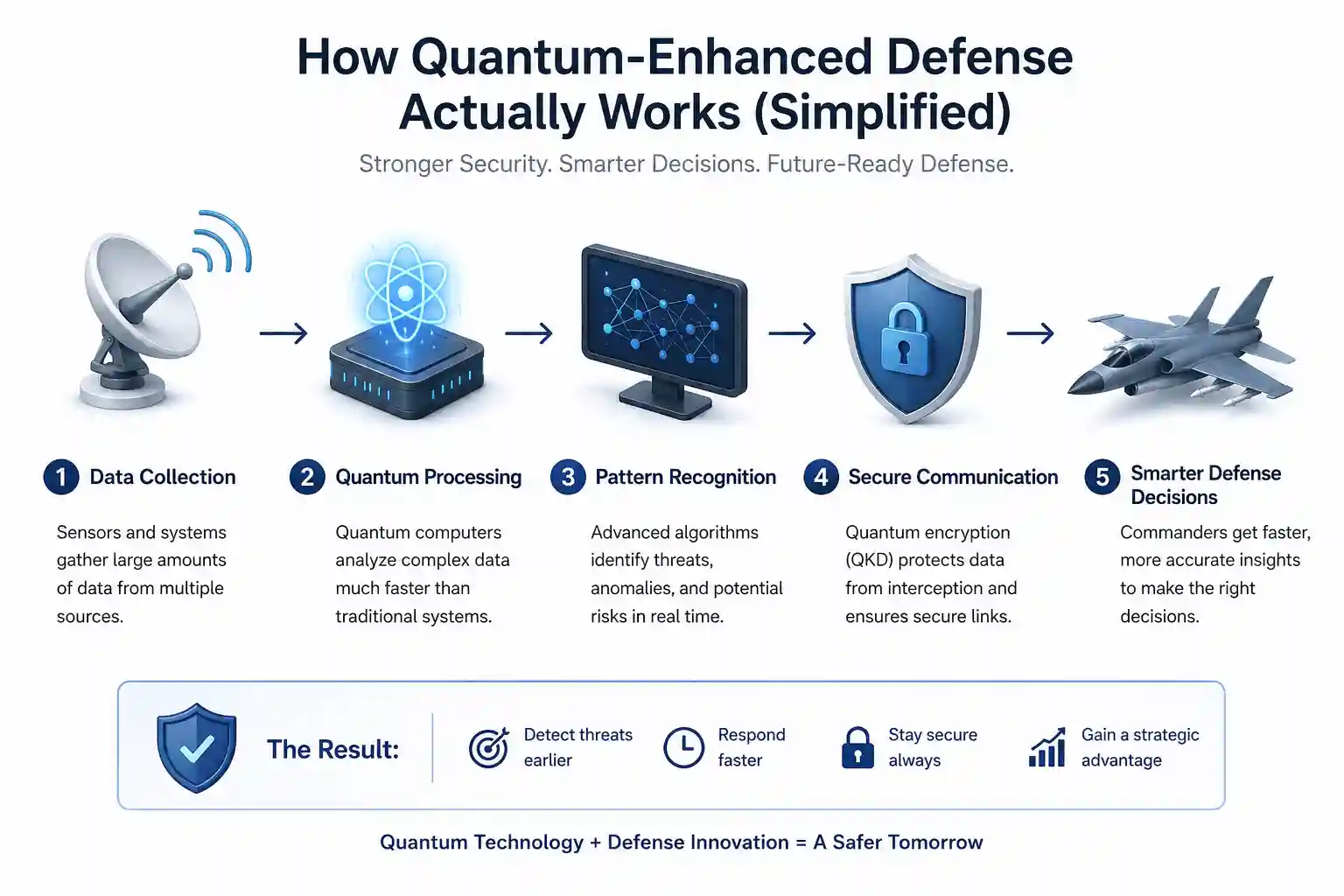
Quantum computers capable of breaking RSA-2048 likely require millions of stable, error-corrected qubits. Current systems have hundreds of noisy qubits. The timeline for cryptographically relevant quantum computers (CRQCs) is uncertain—estimates range from 10 to 30 years. But for maritime cybersecurity, the uncertainty itself is the threat. Data encrypted today with vulnerable algorithms could be harvested and decrypted later. This “Harvest Now, Decrypt Later” strategy means the window for action is now, not when CRQCs arrive.
Practical Infrastructure Limitations
Shipboard environments are hostile to delicate hardware. Vibration, temperature swings, humidity, and salt corrosion challenge even ruggedized equipment. Quantum computing hardware today requires cryogenic cooling and extreme isolation—impractical on a vessel. The near-term solution isn’t onboard quantum computers, but quantum-resistant classical cryptography deployed on hardened maritime hardware.
Energy and Cost Concerns
PQC algorithms often require more computational power and larger key sizes than classical equivalents. On a ship where power generation is limited and every watt matters, this overhead must be justified. Hardware acceleration (ASICs, FPGAs) can help, but adds cost and complexity. The total cost of ownership for quantum-aware maritime security includes not just hardware, but training, maintenance, and potential downtime during upgrades.
Cybersecurity Implications
The convergence of IT and OT on ships expands the attack surface. A compromised navigation system could lead to physical collisions; a breached cargo management system could enable theft or smuggling. Quantum-resistant cryptography protects data confidentiality and integrity, but it doesn’t solve all maritime cyber risks. Defense in depth—segmentation, monitoring, incident response—remains essential. As the IMO guidelines emphasize, cyber risk management must be integrated into overall safety management systems.
Realistic Industry Timelines
Migration to post-quantum cryptography is a multi-year process. NIST’s PQC standardization is complete, but implementation in maritime systems will lag. I expect:
- 2026-2028: Early adopters (naval, high-value commercial) begin piloting PQC for critical links.
- 2029-2032: Broader adoption as hardware costs decrease and maritime-specific PQC tooling matures.
- 2033+: Widespread deployment, potentially driven by regulatory mandates or insurance requirements.
But these timelines assume no major breakthroughs in quantum computing or cryptanalysis. The field moves fast; flexibility and cryptographic agility are more valuable than betting on a single algorithm.
Realistic Drawbacks: What Nobody Wants to Admit
Let’s be honest about the challenges:
Unstable environments: Shipboard conditions degrade hardware and complicate maintenance. A cryptographic module that works in a lab may fail after six months at sea.
Documentation confusion: Maritime cybersecurity sits at the intersection of multiple domains. Documentation often assumes expertise in one area but not others, leaving practitioners to bridge gaps themselves.
Hardware limitations: Legacy shipboard systems can’t be easily upgraded. Retrofitting PQC may require gateway devices that add latency and complexity.
Unclear learning paths: There’s no established career path for “maritime quantum security engineer.” Professionals must piece together knowledge from cryptography, embedded systems, maritime operations, and cybersecurity, a daunting combination.
Cloud restrictions: Many maritime operations have limited or intermittent connectivity. Cloud-based security tools that assume constant access are impractical for vessels in remote waters.
Unrealistic marketing hype: Some vendors promise “quantum-proof” solutions that oversimplify the threat or overpromise capabilities. Skepticism is warranted; independent validation is scarce.
These aren’t reasons for inaction, but factors to weigh in planning. The goal isn’t perfect security, it’s risk reduction within practical constraints.
References & Authority
This analysis draws on:
- IBM Quantum and Google Quantum AI research on quantum algorithm development and simulation capabilities.
- MIT research on maritime cybersecurity and quantum-resistant cryptography integration.
- IEEE standards for shipboard systems and quantum communications in maritime environments.
- Nature publications on quantum computing timelines and cryptographic implications.
- Enterprise computing studies on maritime digitalization and cyber risk management frameworks.
- IMO Guidelines on Maritime Cyber Risk Management (MSC-FAL.1/Circ. 3/Rev.2), which emphasize integrating cyber risk into safety management systems.
- Industry reports on “Harvest Now, Decrypt Later” threats to maritime data.
These sources provide a foundation, but the field evolves rapidly. Continuous learning and adaptation are essential.
Conclusion: Pragmatic Defense in an Uncertain Era
Cybersecurity for ships isn’t about waiting for quantum computers to break encryption. It’s about building resilient systems today that can adapt to tomorrow’s threats. That means:
- Prioritizing foundational security: network segmentation, access controls, and crew training.
- Planning for cryptographic agility: designing systems that can swap algorithms without full rewrites.
- Investing in maritime-specific tooling: documentation, testing environments, and hardware that account for shipboard constraints.
- Collaborating across domains: cryptographers, maritime engineers, and security professionals need to work together.
The ocean doesn’t care about your encryption scheme. Waves, weather, and wear will challenge any system. The best defense is one that acknowledges these realities, pragmatic, layered, and adaptable. Quantum computing adds complexity, but the core principles remain: understand your threats, know your constraints, and build for resilience.
For developers and enterprise teams working on maritime cybersecurity, the path forward isn’t about chasing quantum hype. It’s about solving today’s problems with an eye on tomorrow’s risks. That’s not glamorous, but it’s what keeps ships—and the global trade they enable—moving safely through an increasingly digital sea.