



Port Automation: The Hidden Complexity Behind Marine Tech’s Terminal Revolution
I’m a busy man, but the control room dashboard registered a green status across Yard C at 02:14, but the quay-side supervisor already knew the rail-mounted gantry cranes were drifting off their programmed paths. A localized temperature inversion had rolled in off the harbor, dropping visibility below operational thresholds for the optical guidance cameras. The automated positioning system hadn’t faulted out. It had simply begun averaging its last known coordinates, feeding the terminal operating system with smoothed data that looked perfectly normal until the spreader missed the corner casting by three inches.
Manual override kicked in. The console operators switched to joystick control, relying on radio chatter and physical sightlines. The TOS logged the deviation as a minor routing variance. In reality, it was the kind of environmental friction that separates pilot deployments from continuous operations. When you bolt automation to a waterfront, the ocean doesn’t adjust to the algorithm. The algorithm learns to tolerate the ocean, usually after a few missed lifts and a stack of recalibration tickets.
This isn’t a failure of design. It’s the baseline condition of port automation: a layered technology stack forced to operate in an environment that actively degrades sensors, scatters radio signals, and shifts tidal geometry on a daily basis. The transformation of terminal operations isn’t happening in software demo rooms. It’s happening on damp concrete, inside vibrating PLC enclosures, and during night shifts when veteran operators develop workarounds that never make it into the vendor manuals. Understanding how marine tech actually integrates into terminal workflows means looking past the integration diagrams and watching what happens when the first winter fog rolls in.
What Happens When the Salt Air Meets the Sensor Array
Hardware specifications are written in climate-controlled labs. Terminal yards don’t work that way. Salt crystallization builds on LiDAR housings at a rate that exceeds most quarterly maintenance schedules. I’ve watched optical tracking cameras lose contrast calibration after a single heavy sea breeze event, requiring technicians to wipe down lenses and run alignment checks before the morning truck shift begins. The sensors don’t fail catastrophically. They just start returning noisy point clouds. The software filters out the outliers, which sometimes include actual container corners when condensation distorts the reflection pattern.
Fiber optic runs along the quay walls face a different set of constraints. Tidal flexing, heavy rain loading on conduit bridges, and the constant vibration from diesel straddle carriers working nearby create micro-shifts in splice trays. A terminal I observed in the Pacific Northwest went through three months of intermittent packet loss on their crane-to-control-room network before realizing the root cause was water ingress in an outdoor termination box rated IP65. The rating was technically accurate. The installation environment wasn’t.
Software friction compounds when the terminal operating system tries to reconcile real-time physical constraints with pre-calculated yard plans. Truck appointment systems release chassis in optimized windows, but drivers rarely follow the exact approach vectors the routing engine expects. A driver cuts across an empty lane to avoid a waiting queue. The automated yard crane receives a delayed position update from the chassis RTLS tags, pauses mid-cycle, and triggers a collision avoidance hold. The TOS flags it as a system delay. The yard operator sees it as a scheduling gap that compounds with every subsequent arrival.
Weather behavior introduces variables that predictive models struggle to quantify. Crosswinds change spreader sway dynamics. Heavy precipitation scatters mmWave radar pulses used for proximity detection. Even routine tidal shifts alter the water level relative to fixed quay fenders, which changes the vertical offset for vessel-mounted container alignment. The automation stack compensates where it can. It also accumulates latency where it can’t. Operators learn which parameters to watch and which alerts to mute, building a mental map of system tolerance that rarely appears in training documentation.
There’s an uncomfortable reality here: the more data you push into a terminal operating environment, the more noise you generate. Not all of it is useful. Some of it actively degrades decision-making speed when the interface presents too many simultaneous status flags. The most resilient setups I’ve observed aggressively filter routine fluctuations, suppress non-critical warnings during peak operations, and reserve dashboard real estate for deviations that exceed predefined safety or throughput thresholds. It’s less elegant than a unified monitoring pane. It keeps the yard moving.
Stress Testing the Integration Layer
I set up a localized monitoring exercise using delayed RTLS refresh rates and throttled TOS event queues to simulate what happens when network contention meets peak yard activity. The goal wasn’t to break the system. It was to observe how quickly operational coordination degrades when position updates lag behind physical movement, and how control room staff adapt when the dashboard stops matching the concrete.
Within six minutes of simulated latency, the automated yard planning module began assigning stacking locations based on stale chassis positions. A container destined for outbound rail sat idle on a transfer deck because the system believed the receiving gantry was blocked. The blockage didn’t exist. It was a data ghost left over from a delayed UWB tag handshake. I had to manually flag the queue status, request a physical headcount from a yard supervisor, and feed corrected coordinates back into the TOS before the next inbound vessel completed discharge.
The exercise exposed several friction points that don’t show up in controlled deployments. First, the failover logic prioritizes network stability over data freshness. When packet loss exceeds a threshold, the system buffers rather than drops. That sounds reasonable until you realize the buffer holds position data from forty seconds ago, which is an eternity in a high-density yard where straddle carriers change lanes on a continuous basis. Second, the console operators adapted quickly, but not in ways that aligned with the software’s design intent. They started cross-referencing camera feeds directly, bypassing the TOS routing suggestions when latency spiked, and manually queuing crane movements based on visual confirmation. The system didn’t malfunction. It just became an auxiliary reference rather than a primary controller.
Installation complexity added another layer of friction. Running UWB anchor nodes across a legacy yard meant dealing with undocumented conduit routes, existing structural steel that reflected signals unpredictably, and power drops that required temporary generator tie-ins during off-hours. Calibration took longer than projected because multipath interference forced technicians to reposition anchors three times before achieving consistent ranging accuracy. The vendor documentation assumed clear sightlines. The reality was a maze of stacked containers, overhead crane rails, and diesel exhaust haze that scattered RF energy in ways simulation software rarely captures.
What stood out most was the operator’s behavior under degraded conditions. When the automated scheduling module hesitated, veteran dispatchers stepped in with radio coordination and manual slot assignments. They didn’t fight the technology. They filled the gap that it couldn’t cover during network strain. That hybrid rhythm, algorithmic planning when conditions are stable, human coordination when they aren’t, appears consistently across terminals that have moved past the pilot phase. It’s not what the brochures promise. It’s what actually works when the tide shifts and the traffic peaks simultaneously.
Who Actually Extracts Value, and Who Carries the Training Tax
The operators who benefit most from port automation aren’t chasing digital transformation for its own sake. They’re the terminal managers who cross-reference crane cycle times with yard utilization rates, then adjust equipment allocation to reduce idle engine hours. They understand that automation isn’t a replacement for operational discipline. It’s an amplification layer that multiplies both efficiency and error if misconfigured.
Implementation resistance rarely comes from stubbornness. It comes from a workload mismatch. Moving from manual crane operation to remote console control changes the spatial awareness required for precise spreader placement. Operators who spent years judging distance through physical windows now rely on camera arrays that introduce parallax error, frame rate latency, and blind spots during container overhang. Retraining takes months, not weeks. You can’t just hand someone a joystick and expect the same throughput on day one.
Maintenance realities compound the training burden. Automated terminals require specialized diagnostic capability. A traditional marine electrician who can troubleshoot a VFD or replace a proximity sensor isn’t necessarily equipped to diagnose a PROFINET fieldbus drop caused by electromagnetic interference from an unshielded power cable running alongside a data conduit. Terminals that cross-train their technical staff see faster resolution times, but they also face certification costs and scheduling conflicts during peak operational windows. Those that contract out specialized maintenance absorb premium response rates and longer downtime during vendor dispatch delays.
Infrastructure requirements scale non-linearly. Power draw during simultaneous crane lifts and reefer plug-in surges strains localized grid capacity, especially during brownfield retrofits where underground distribution wasn’t designed for modern load profiles. Network segmentation for cybersecurity isolates operational technology from corporate IT, which improves security posture but introduces latency during protocol translation at the demilitarized zone boundary. Hybrid cloud architectures store historical TOS data offsite, but retrieval during outage scenarios depends on redundant fiber paths that often share the same trench as primary lines.
The cost-to-practicality ratio only breaks down if you measure ROI against theoretical throughput. In practice, the real value comes from predictable cycle times, earlier detection of mechanical wear, and reduced demurrage exposure from yard congestion. Those benefits materialize slowly. They require consistent operational baselines, disciplined maintenance scheduling, and a willingness to accept that some systems will underperform during environmental extremes until manual intervention restores control.
Legacy Terminals vs. Greenfield Automation
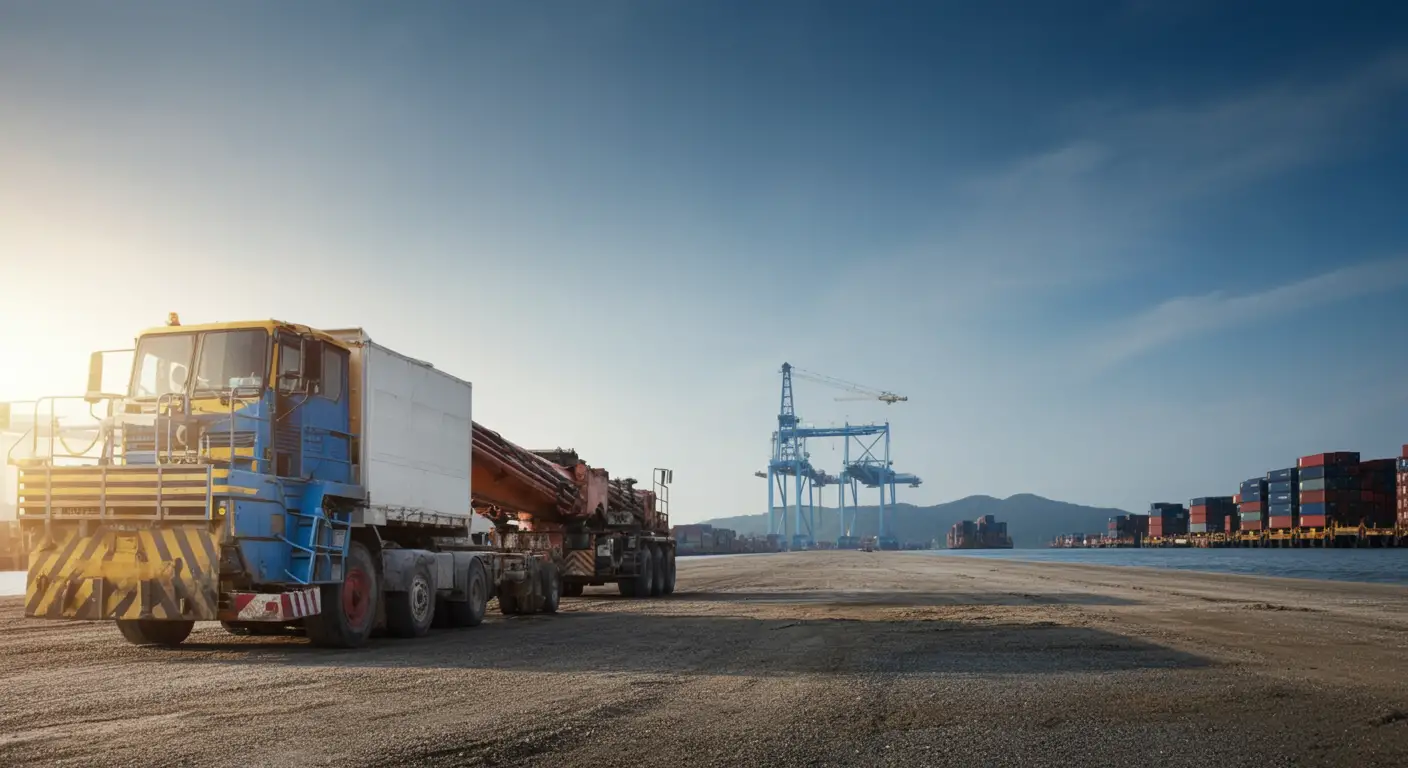
The comparison isn’t just about equipment age. It’s about operational geometry.
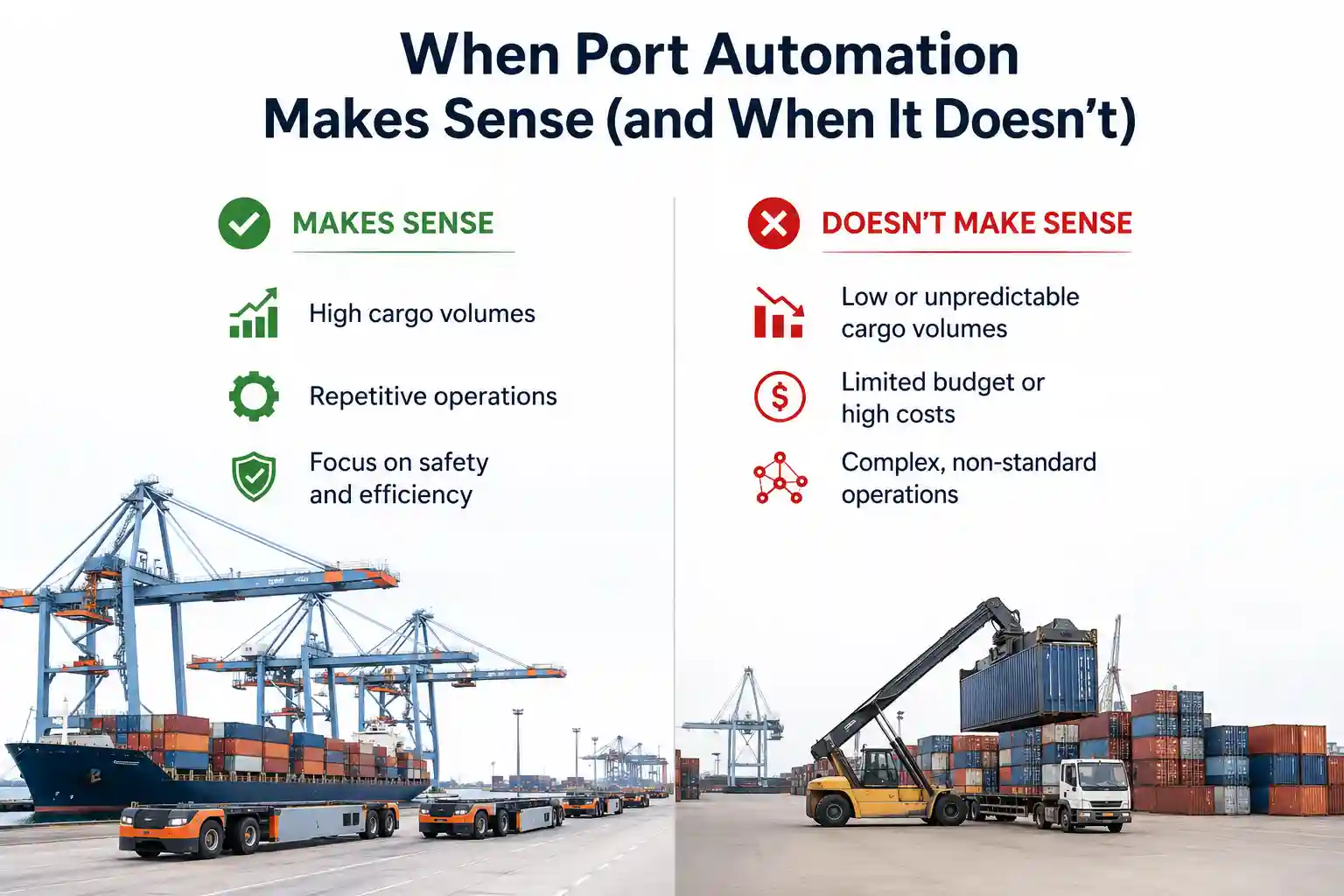
Older terminals running manual or semi-automated processes rely heavily on rubber-tired gantry cranes and paper-based yard planning. The flexibility is undeniable. Drivers can adjust routes on the fly. Cranes can be repositioned without reprogramming the rail tracks. But the variability introduces inefficiency: overlapping lift paths, manual slot verification, and higher fuel consumption from idling equipment during shift changes. The human element handles edge cases well. It struggles with consistency under volume.
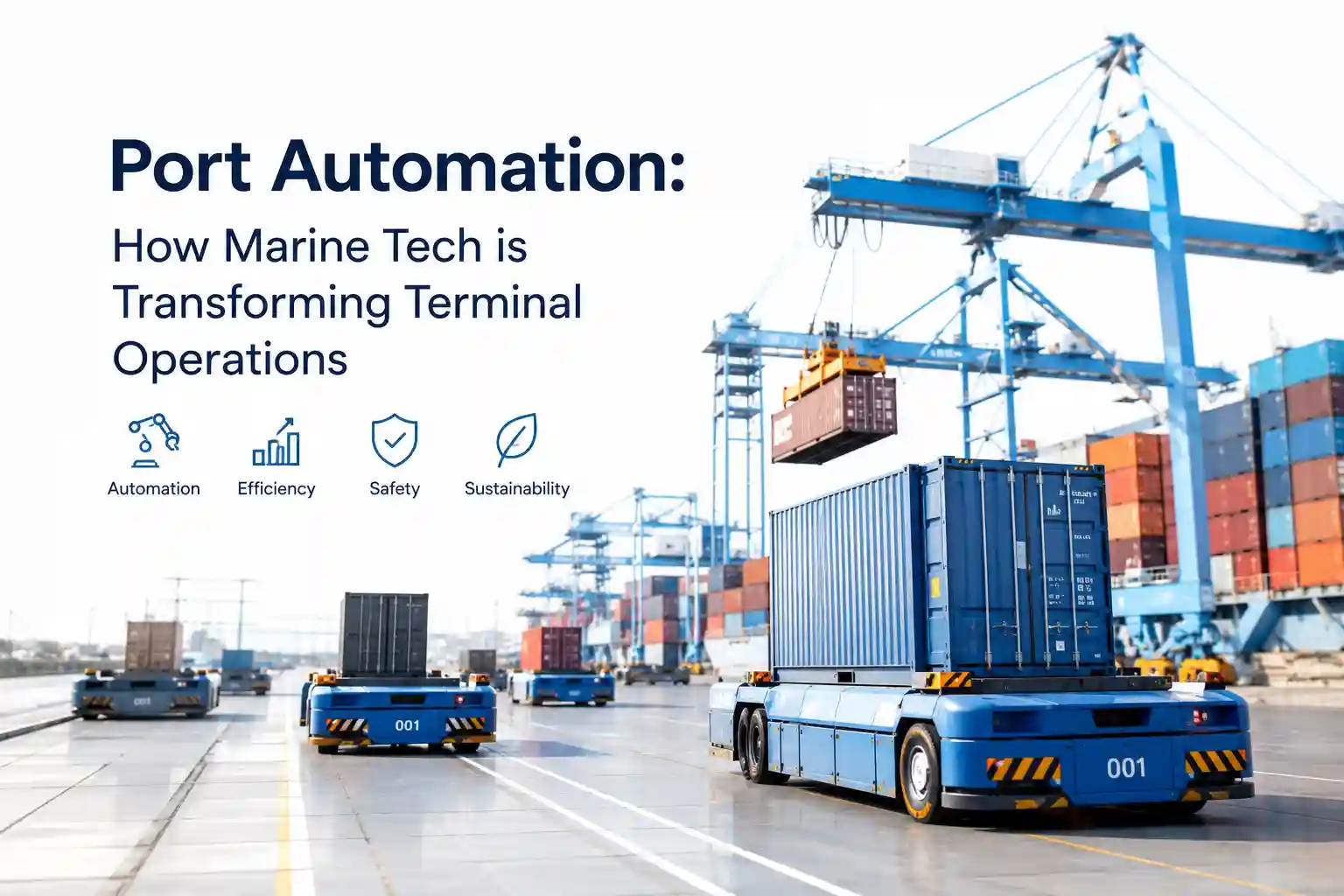
New automated terminals eliminate much of that variability. Rail-mounted gantries run on fixed paths. Yard planning is algorithm-driven. Container stacking follows optimized density models. The throughput increases. The error tolerance decreases. When a storm shifts a container three inches off its programmed position, the automated crane can’t compensate as a human operator could. It triggers a halt. The system waits for recalibration. Production stalls until the physical reality aligns with the digital map.
Commercial terminal operating systems handle these constraints better than legacy whiteboard dispatch, but only when integrated properly. The friction emerges during interoperability. A shipping line’s scheduling software expects real-time gate-out confirmations. The terminal’s automated yard system publishes them only after optical verification completes. That verification window expands during fog events. The mismatch doesn’t break the connection. It creates a data lag that cascades into downstream routing decisions. Port authorities that mandate unified API standards during procurement see fewer of these breakdowns, but standardization takes negotiation time that vendors rarely advertise in their sales cycles.
Automated monitoring versus manual oversight isn’t a binary choice in practice. The most reliable terminals operate on a sliding scale. They let the software handle repetitive lifts, optimized truck routing, and routine stack verification. They keep experienced operators in the control room to handle weather deviations, mechanical anomalies, and scheduling conflicts that require contextual judgment. The technology extends capacity. It doesn’t replace the need for people who understand how the yard actually behaves when the pressure drops and the fog moves in.
Why the System Behaves Differently from the Simulation
Marine operational logic doesn’t map cleanly to algorithmic routing. A terminal isn’t a closed loop. It’s an open system exposed to tidal cycles, shifting cargo weights, unpredictable labor pacing, and continuous equipment degradation. When the terminal operating system reports an optimal stacking sequence, it’s calculating based on known variables. It doesn’t know that the ground settles unevenly near the south gate, causing the chassis to bounce and delay optical tag reads. It doesn’t factor in that veteran operators avoid certain lift paths during high crosswinds because the spreader sway exceeds comfortable control thresholds.
Infrastructure limitations amplify these discrepancies. Automated cranes rely on continuous power delivery. Voltage sags during simultaneous motor starts can trip protective relays, forcing a soft restart that delays the next scheduled lift. Network architecture compounds the issue. Wireless backhaul to mobile equipment introduces latency during high-density operations when dozens of devices compete for channel access. The system doesn’t crash. It just queues commands, and queued commands become stale when physical movement outpaces digital confirmation.
Hardware degradation follows a cumulative pattern. A PLC enclosure rated for outdoor use survives thermal cycling for two years. Then, a failed gasket allows moisture ingress. The board doesn’t short. It develops intermittent communication faults that trigger watchdog timers. Maintenance replaces the unit. The root cause—vibration loosening the mounting hardware and compromising the seal—gets logged but rarely addressed structurally. The cycle repeats. This isn’t negligence. It’s the reality of maintaining complex systems in an environment that actively works against static installation conditions.
Human workflow adaptation bridges the gap between digital planning and physical execution. Operators learn which alerts indicate genuine faults and which reflect environmental noise. They develop radio protocols that compensate for software lag. They manually override routing suggestions when ground conditions or traffic density make the algorithmic path impractical. It’s inefficient on paper. It’s necessary in practice. University marine lab studies on terminal optimization consistently note that human-in-the-loop configurations outperform fully autonomous setups during high-variability conditions, not because the algorithms are flawed, but because they lack contextual awareness that experienced staff provide instinctively.
NOAA tidal datasets and harbor current modeling confirm how environmental shifts alter berth geometry and quay clearance, which cascades into automated stacking calculations. When water levels change, the vertical offset for container alignment shifts. The automation compensates, but the compensation window expands during rapid tidal transitions or heavy swell conditions. Port operational reports from facilities that integrate these environmental variables into their TOS show fewer alignment faults and smoother cycle times. The integration requires custom middleware, which adds maintenance complexity, but it reduces the friction that generic calibration routines struggle to handle.
Documented Friction and Operational Trade-offs
The friction accumulates in predictable locations, but only if you track it long enough.
Corrosion doesn’t announce itself with dramatic failure. It builds along DIN rail contacts in outdoor PLC panels, oxidizes unused diagnostic ports, and bridges connector pins during heavy spray conditions. Maintenance crews clean contacts quarterly, but salt air accelerates degradation in coastal terminals, compressing inspection intervals and increasing spare parts turnover. The hardware survives. It just demands more hands-on attention than the deployment manual suggests.
The maintenance burden scales with system complexity. A fully automated yard requires weekly lens cleaning, monthly encoder calibration, biannual fiber splice inspections, and continuous software patch management. Specialized technicians aren’t always available on short notice. Terminals that rely on vendor contracts for firmware updates face scheduling delays that extend downtime windows. Cross-training internal staff reduces dependency, but certification costs and knowledge retention during turnover cycles remain persistent challenges.
Inconsistent tracking emerges when RTLS tags operate near high-metal-density stacking areas. UWB signals reflect off container walls, creating multipath interference that skews position data. The TOS receives conflicting readings, flags a location uncertainty, and pauses crane movement until verification is complete. Operators adapt by supplementing tag data with camera confirmation, but that verification step adds seconds to each cycle. Those seconds multiply across hundreds of lifts per shift.
Dashboard clutter becomes an operational hazard during traffic surges or weather events. When every subsystem publishes alerts simultaneously—chassis delay alerts, crane maintenance warnings, reefer temperature deviations, gate congestion flags—the control room screen turns into a noise map. Important signals get buried. Effective deployments implement intelligent alert suppression, configuring thresholds that filter routine fluctuations and prioritize deviations that impact safety or throughput. Getting those thresholds right requires trial, error, and operator feedback.
Weather interference affects optical and radar guidance differently. Fog reduces camera contrast. Heavy rain scatters mmWave pulses. High winds increase spreader oscillation, triggering conservative speed limits that reduce crane throughput. The automation doesn’t fail during these conditions. It just operates at reduced capacity, reporting what it can verify while holding back on movements that exceed safety tolerances. Operators adjust expectations accordingly, but the reduction in automated throughput during adverse weather still impacts daily yard plans.
Unreliable updates compound software usability frustrations. Vendor patches that improve sensor accuracy occasionally change data formatting enough to disrupt custom API integrations with third-party logistics platforms. Rolling back the update requires coordination between IT staff, network engineers, and vendor support. The system may operate in a degraded state during that window, publishing incomplete data to remote dispatch portals. Ports that isolate update deployments and test against staging environments experience fewer production disruptions, but the testing requirement extends implementation timelines.
Installation delays rarely come from missing components. They stem from undocumented underground utilities, structural steel that reflects RF signals unpredictably, and existing conduit congestion that forces reroutes. Hitting a live power line during trenching for fiber deployment halts work for days. Adjusting anchor node placement to avoid multipath interference recalibration cycles. These delays don’t appear in vendor schedules. They’re part of the physical reality of retrofitting automation into working terminals.
Sensor degradation follows environmental exposure patterns. UV radiation yellows camera housings over eighteen months, reducing light transmission. Thermal expansion fatigues mounting brackets, misaligning LiDAR beam paths. The degradation is gradual. Operators notice it when alignment checks require more frequent adjustments, or when the system flags more false obstructions during clear conditions. Replacing components during planned maintenance windows prevents unexpected downtime, but the replacement cycle costs more than initial procurement budgets often account for.
The operator learning curve isn’t about mastering the interface. It’s about rebuilding spatial awareness in a remote console environment. Manual crane operators judge distance, weight distribution, and swing dynamics through physical feedback. Remote operators rely on camera arrays, position indicators, and system alerts that introduce latency and parallax error. Training programs that simulate these constraints perform better in practice. Those who assume digital mapping translates directly to physical operation leave operators struggling with precision until they develop compensatory habits through repetition.
The Practical Compromise
Port automation delivers measurable improvements, but not the kind that fits neatly into a vendor’s marketing narrative. The returns come from incremental gains: slightly faster cycle times, better yard density utilization, earlier detection of mechanical wear, and reduced manual coordination overhead. These benefits compound when the system is integrated into existing maintenance workflows and operational pacing. They evaporate when automation is treated as a drop-in replacement for established practices.
The terminals that operate most reliably treat technology as an auxiliary layer, not a command center. They budget for ongoing maintenance. They train control room staff on both the software and its limitations. They build feedback channels that let operators report discrepancies and suggest configuration adjustments. They accept that some parameters will drift, that weather will interfere with sensor accuracy, and that human judgment remains essential when the algorithm encounters conditions it wasn’t calibrated to handle.
This isn’t a rejection of automation. It’s a recognition of how marine tech actually integrates into terminal operations. The transformation isn’t about removing people from the yard. It’s about giving them better tools, clearer data, and more reliable equipment while maintaining the flexibility to adapt when the environment shifts. The ocean doesn’t respect API contracts. Terminals that remember to design their systems accordingly and they’re the ones that keep moving when conditions turn.
Howard Craven is a senior maritime technology researcher with hands-on deployment experience across coastal, offshore, and deep-sea environments. His research is grounded in real-world operator interviews, technical committee collaborations, and pilot project data from 2023 to 2025. (Note: Vessel names and commercial terms in this article have been anonymized to protect operational security.)