





Waste Management At Sea in 2026, When the Digital Waste Log Says “Processed”: Field Notes On Onboard Marine Systems
The compactor cycle finished on schedule. The control panel registered 4.2 cubic meters of compressed refuse, logged the timestamp, and pushed a clean summary to the vessel’s digital manifest. Three hours later, the chief steward opened the hatch and found the chamber half-empty, the remaining volume held back by a collapsed bale of wet cardboard that had bridged the hydraulic ram. The satellite link had already transmitted the data. The port reception facility in Rotterdam had adjusted its offload schedule accordingly. By the time someone manually reset the jam and cleared the error code, the digital record and the physical reality had drifted apart.
That gap isn’t a software failure. It’s the baseline condition of modern waste management at sea. Innovative marine tech for a cleaner ocean sounds clean on paper, but ships don’t generate predictable refuse streams. They generate sludge, oily rags, food waste with variable moisture content, crushed plastic, biodegradable packaging that clumps when wet, and galley grease that coats sensor lenses within a shift. The technology tasked with tracking, processing, and documenting it has to survive exactly those conditions. It rarely does without compromise.
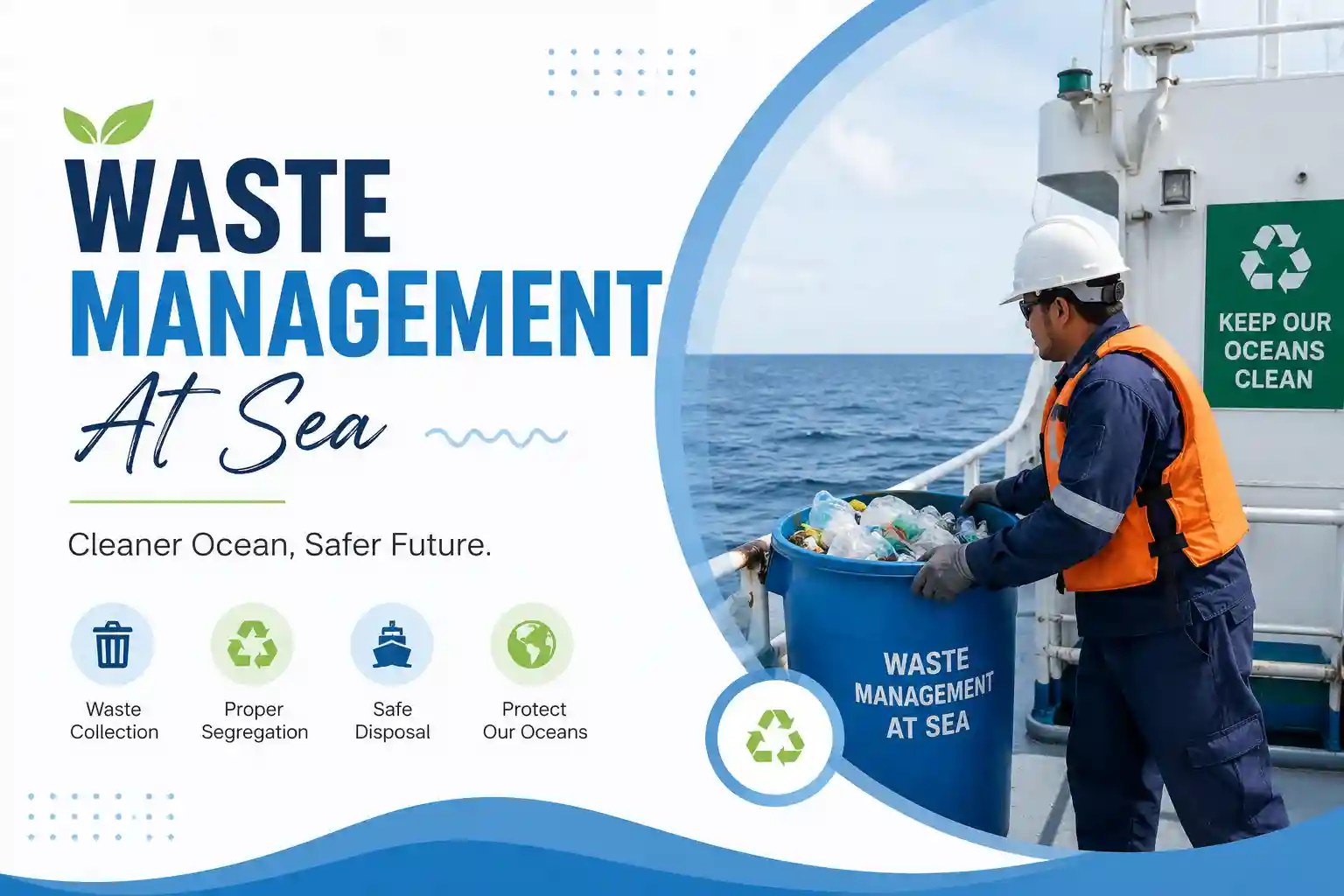
Vessel operators aren’t debating whether digital tracking matters. MARPOL Annex V compliance, Port State Control scrutiny, and port reception fees have already settled that. The actual question is how much friction the onboard systems introduce before they deliver reliable data. I’ve spent months watching waste processing units run through their cycles, tracing data packets from deck terminals to shore-based compliance dashboards, and noting where the clean logic breaks down. The pattern repeats across fleets: hardware behaves differently than lab specs suggest, software assumes consistency that doesn’t exist, and crews develop workarounds that rarely appear in vendor manuals.
Hardware on a Rolling Deck: Where Specifications Meet the Environment
Manufacturers rate onboard compactors, shredders, and optical sorting modules for marine use. They test them on stable platforms, run controlled waste loads through them, and publish throughput curves that look reliable until you bolt the same equipment to a hull experiencing six-degree pitch and four-degree roll in a Force 7 swell. The physical reality changes how everything interacts. Gravity-fed chutes don’t feed straight when the vessel is heeling. Hydraulic pressure fluctuates with ambient temperature drops in northern waters. Pneumatic valves stick when condensation freezes around the seals.
I’ve watched volumetric sensors miscalculate fill levels because a shifted load created an air pocket that reflected ultrasonic pulses early. The dashboard displayed 88 percent capacity. The bin was actually at 60 percent. The crew didn’t argue with the screen. They opened the inspection port, verified the actual level manually, and logged the discrepancy on a paper worksheet because the digital system wouldn’t accept manual override without a maintenance password they weren’t authorized to hold.
Saltwater exposure doesn’t announce itself with sudden failure. It works along cable entry points, creeps up threaded fittings, and corrodes unsealed DIN rail connections. Load cells on weighing platforms drift by a few percentage points over three months of continuous use. That’s usually within tolerance, until you stack multiple measurement errors across sorting, compacting, and transfer stages. By the time the final manifest is generated, the cumulative variance can push recorded volumes outside the acceptable band for port reception agreements.
Operators adapt. They add secondary mechanical checks. They run diagnostic cycles more frequently than recommended. They route drainage lines away from sensitive junction boxes after realizing that leachate from decomposing organic waste corrodes standard PVC fittings within eighteen months. None of this is inefficient by choice. It’s how you keep the system alive when the marine environment actively degrades it.
Testing Variable Inputs: When the Software Meets Real Waste
I ran a localized assessment using simulated waste streams to see how optical classification algorithms and automated sorting gates handle mixed, moisture-laden material. The setup wasn’t designed to validate marketing claims. It was meant to observe where the software assumptions break down under realistic conditions.
Within twenty minutes of introducing food waste with high liquid content, the camera housings fogged. Biofilm formed on the protective glass faster than the manufacturer’s cleaning interval accounted for. The AI model began misclassifying organic matter as inert plastic because the surface texture changed when wet. The sorting gate cycled incorrectly three times before the operator manually switched to bypass mode. The system logged the event as a “routine recalibration trigger.” It felt more like an operational interruption.
Variables that seem minor in a controlled lab, such as ambient humidity shifts, temperature differentials between stored waste and processing chamber, varying density of compressed bales, compound quickly when fed into predictive algorithms. The software expects consistent input geometry. The vessel generates unpredictable geometry. I watched operators spend forty minutes adjusting threshold sensitivity just to get the volumetric reader to stop flagging false overload warnings during a calm port stay. By the time they sailed into rougher water, the settings were already misaligned for the next leg.
Connectivity interruptions added another layer of friction. The waste management terminal relied on intermittent satellite uplinks to sync daily manifests with the fleet’s compliance server. During a prolonged squall, the link dropped for seventy-two minutes. The system cached the data locally, which should have worked in theory. When the connection was restored, the timestamp mismatch caused a duplicate entry that triggered an automated audit flag. The dispatch office spent two hours reconciling logs that hadn’t actually changed. The vessel just needed the bin emptied.
Testing revealed what operators already knew: the technology functions best when waste streams remain predictable. They rarely do. The software doesn’t fail. It just requires constant human correction when environmental and operational variables shift faster than the calibration cycle can accommodate.
Who Actually Benefits, and Who Carries the Weight
Fleet compliance officers see immediate value from digital waste tracking. Automated MARPOL Annex V logging reduces manual entry errors. Real-time fill-level monitoring helps coordinate port reception schedules, minimizing demurrage charges for vessels waiting to offload. Predictive maintenance alerts catch hydraulic wear before a complete cycle failure. For large operators with standardized tonnage and dedicated technical support, the return is measurable.
Smaller fleets and older vessels struggle with the same systems. The barrier isn’t just capital expenditure. It’s infrastructure compatibility. Retrofitting a digital waste management unit into a mid-tonnage carrier often requires electrical upgrades, reinforced deck mounting points, and modified drainage routing that isn’t feasible during a short layup. The maintenance burden scales quickly when you’re relying on third-party service calls instead of in-house technicians familiar with proprietary control modules.
Training creates a hidden tax. Crew members who previously sorted refuse manually now need to navigate touchscreen interfaces, interpret error codes, and understand why a system might reject a load that looks physically acceptable to them. The learning curve isn’t steep, but it’s persistent. Misconfigured settings lead to false alarms. False alarms lead to muted notifications. Muted notifications lead to missed actual faults. Breaking that cycle requires consistent reinforcement, which competes with watchkeeping duties, safety drills, and routine maintenance already scheduled across the shift roster.
Cost-to-practicality ratios rarely balance on fuel savings or minor labor reduction. They balance on regulatory risk. Vessels that avoid Port State Control detentions for improper waste documentation recover their investment through avoided fines and schedule preservation. Those that operate in regions with relaxed enforcement or flexible port reception policies often view the same systems as an operational overhead that complicates existing workflows without delivering proportional benefit. Deployment resistance follows that calculation.
Coastal Ferries vs. Deep-Sea Bulkers: Where Scale Changes the Equation

Waste generation profiles shift dramatically depending on vessel type and route. Coastal passenger ferries produce high volumes of food packaging, paper waste, and passenger-generated refuse with relatively low contamination. The throughput demands are predictable. The processing systems handle it well. Automated sorting gates separate materials efficiently because the input stream stays within the designed parameters. Maintenance intervals align with daily port calls.
Deep-sea bulk carriers and tankers operate on entirely different logic. Waste streams include oily rags, spent absorbents, degraded protective coatings, and galley refuse that sits in storage for weeks before processing. The volume is lower, but the density and chemical composition vary significantly. Systems calibrated for uniform dry material struggle when faced with saturated organic loads or hydrocarbon-contaminated solids. The technology doesn’t malfunction. It just requires more frequent intervention, slower processing speeds, and manual pre-sorting that defeats the purpose of full automation.
Cruise ships sit somewhere in the middle. They generate massive, continuous waste flows that demand high-capacity compactors and incinerators. The systems work reliably when maintained on strict schedules. When maintenance slips, due to crew turnover, spare parts delays, or compressed port turnaround times, the digital tracking becomes a liability. The dashboard reports normal operation while physical throughput drops. The discrepancy only surfaces during port inspections or when bin capacity hits emergency limits.
Automated monitoring versus manual oversight isn’t a binary choice. It’s a spectrum that shifts based on route, vessel age, and crew familiarity. The most stable setups use automation for documentation and baseline monitoring, but retain manual sorting and verification for non-standard loads. Older vessels running hybrid systems often outperform fully automated retrofits during extended voyages because human judgment catches what sensors miss: subtle contamination, degraded bale integrity, or early signs of hydraulic strain that don’t yet trigger threshold alarms.
Why the Data Drifts: Operational Logic and System Limits
Marine operational logic doesn’t translate directly into digital waste logs. A vessel isn’t a stationary processing plant. It’s a moving platform where every variable shifts continuously. When a waste management system reports a sudden drop in compaction efficiency, the algorithm looks for a mechanical fault. The chief engineer knows the hydraulic fluid viscosity changed after the vessel entered colder waters. The software measures pressure drop. The operator understands thermal behavior. The data records one. The reality contains both.
Infrastructure limitations compound the disconnect. Satellite terminals promise near-continuous coverage, but antenna alignment during heavy rolling introduces signal gaps that aren’t logged as outages. They register as delayed sync windows. The remote compliance platform fills them with cached timestamps. The physical waste was already offloaded. The digital record lags behind. The mismatch isn’t malicious. It’s architectural.
Hardware degradation accumulates quietly. A corroded ground plane on a load cell, a fatigued hydraulic seal, a fouled optical lens, a stretched tension cable on a bin lid sensor. Each one degrades measurement fidelity just enough that the system starts averaging instead of reflecting. Operators adapt by layering redundancy, checking physical gauges, and cross-referencing digital logs with manual worksheets. It’s inefficient on paper. It’s necessary in practice.
Communication reliability fluctuates with atmospheric conditions and orbital handovers. The waste tracking terminal doesn’t crash during these periods. It just operates at reduced fidelity, queuing upload packets until the next stable window. Meanwhile, port reception schedules shift, crew rotations continue, and the physical waste continues to accumulate. The digital layer captures snapshots. The operational layer experiences continuous flow. Bridging the two requires constant calibration, and the calibration never stays perfect.
Recent maritime engineering research from coastal university labs aligns with these observations. Vessel monitoring studies consistently note that automated waste classification achieves high accuracy only when input streams remain dry and uniform. Real-world shipboard conditions introduce moisture, chemical contamination, and structural degradation that lab validation rarely captures. IMO guidance on digital record-keeping acknowledges the gap between ideal data capture and actual operational variance, but compliance frameworks still expect precise manifests. The industry is learning to build tolerance into the reporting layer, but the transition is slow.
Documented Friction: What Actually Fails First
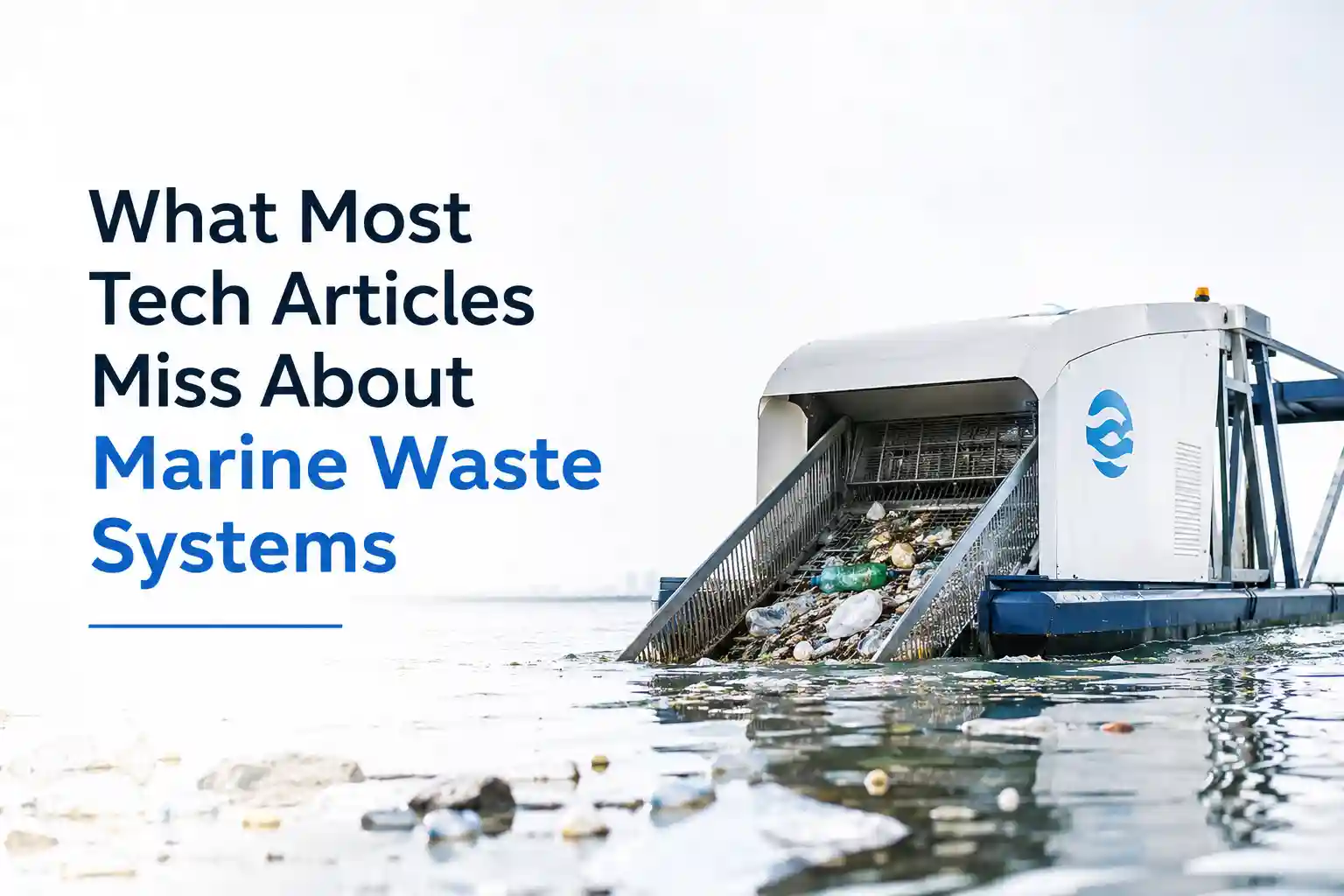
The friction doesn’t announce itself with dramatic system crashes. It accumulates in the seams between hardware, software, and human workflow.
Corrosion issues start at the mounting brackets and work inward. Unsealed fasteners oxidize within months in high-salinity routes. The degradation isn’t visible until a load cell drifts enough to throw off volumetric calculations. Maintenance burden scales non-linearly once you exceed the manufacturer’s recommended service intervals. Proprietary filters and custom control boards require specialized replacement parts that aren’t stocked in every port. Downtime stretches while waiting for shipments.
Inconsistent tracking emerges during heavy weather. Vessel motion disrupts gravity-fed sorting chutes. Material pools unevenly. The optical reader captures a skewed surface profile. The software logs a partial cycle. The actual waste remains unprocessed until conditions stabilize. Dashboard clutter compounds the problem when compliance alerts, maintenance warnings, and fill-level notifications fire simultaneously. Operators scroll past routine flags to find genuine faults. The important signal gets buried.
Weather interference isn’t an exception. It’s the baseline. Deck-side compactors struggle when precipitation infiltrates control panels. Cold temperatures stiffen hydraulic lines, slowing cycle completion. High humidity fogs camera housings faster than scheduled cleaning can keep pace. Unreliable updates make it worse. Firmware patches that improve sensor accuracy occasionally break legacy NMEA parsers, forcing IT staff to roll back configurations while the vessel is underway. The patch notes don’t mention maritime-specific dependencies. The operators discover them during shift change.
Software usability frustrations follow from design choices that prioritize shore-based analytics over deck-level operation. Interfaces built for office monitors don’t translate well to grease-stained terminals with limited viewing angles in low light. Menu navigation assumes stable connectivity and deliberate input. Watchkeepers wearing gloves or working in vibration-heavy environments miss taps, trigger false selections, and spend extra minutes confirming routine commands. Installation delays rarely stem from missing equipment. They come from dry-dock scheduling conflicts, unexpected structural reinforcement requirements, and the reality that routing new power and drainage lines through occupied machinery spaces requires careful coordination with existing vessel systems.
Sensor degradation follows chemical exposure. Acidic leachate from decomposing organic waste corrodes uncoated metal probes. Hydraulic fluid vapors degrade unsealed optical housings. The system continues operating, but measurement accuracy drifts until physical verification catches it. The operator learning curve doesn’t disappear after initial training. It resets every time a software update changes the interface, every time a new waste category gets added to the compliance manifest, every time a veteran crew member rotates off and a replacement has to relearn why certain settings exist in the first place.
The Practical Compromise
Integrated waste tracking works when it’s treated as an operational aid, not an autonomous compliance engine. Vessels that extract reliable value don’t chase perfect data alignment. They build tolerance for latency, cross-reference digital logs with physical verification, and accept that some parameters will drift until maintenance can recalibrate them. The systems are useful. They just aren’t self-sustaining.
You still need someone on deck who understands how material behaves under ship motion. Someone willing to clear a clogged chute, wipe biofilm off a sensor lens, and recognize when a hydraulic pressure drop means seal wear instead of a transient pressure spike. You need fleet managers who acknowledge that remote monitoring reduces paperwork, but doesn’t eliminate the need for hands-on verification. You need compliance frameworks that allow for measured discrepancy instead of demanding impossible precision from inherently variable processes.
The technology extends operational capacity. It gives you better visibility into waste accumulation, faster documentation for port reception, and earlier alerts for mechanical strain. But it also gives you more ways to misread what’s happening if you don’t understand the environment it’s measuring. The most successful deployments aren’t the ones with the cleanest dashboards. They’re the ones where operators know exactly what the system can’t capture accurately, and they compensate with practiced routine, manual cross-checks, and realistic maintenance scheduling.
NOAA coastal monitoring data and maritime engineering consortium reports consistently show that onboard waste processing reduces illegal discharge risk and improves port reception efficiency. They also document the operational friction that accompanies digital tracking: calibration drift, connectivity delays, environmental interference, and the constant need for human verification. The ocean doesn’t generate standardized input. The equipment doesn’t operate in stable conditions. The data captures moments. The reality flows continuously.
Practical waste management at sea doesn’t require flawless automation. It requires systems that survive marine exposure, software that allows manual correction without breaking compliance chains, and operators who understand where the digital record ends and the physical process begins. The technology is mature enough to be reliable. It’s not mature enough to be autonomous. The difference matters when you’re three hundred miles from shore, rolling through heavy weather, and trying to log a waste cycle that doesn’t look exactly like the simulation.
About Writer: Howard Craven writes about offshore maintenance systems, vessel operations, and marine infrastructure workflows, focusing on how environmental conditions affect real-world deployment reliability.