


What Will Be the User Experience for Neurotechnology? 2026 Expert Guides
It’s 7:14 AM. My coffee hasn’t kicked in yet, and I’m staring at a blinking cursor.
Three weeks ago, I unboxed the Emotiv Insight, a five-channel wireless EEG headset that promises to “make brain data accessible.” The marketing copy was compelling: track focus, measure cognitive load, even build simple brain-computer interfaces. Sounded perfect for my workflow—long-form writing sessions that demand sustained attention but often derail into tab-hopping and snack breaks.
Here’s what the brochure didn’t mention: the saline solution you need to activate the semi-dry sensors tends to drip if you tilt your head too quickly. The Bluetooth pairing occasionally drops when my phone buzzes with a Slack notification. And the “focus metric” display? Sometimes it spikes when I’m genuinely locked in. Other times, it flatlines while I’m mentally drafting the perfect opening paragraph.
This is the messy, unglamorous reality of consumer neurotechnology in 2026. The field is exploding—market projections suggest the neurotechnology sector could reach $32.5 billion by 2034, but the gap between laboratory promise and living-room practicality remains wide. After testing five different EEG headsets over six months, running them through writing sessions, coding sprints, and meditation attempts, I’ve learned that the user experience for neurotechnology isn’t about seamless mind-reading. It’s about managing expectations, tolerating friction, and finding the narrow use cases where these devices actually add value.
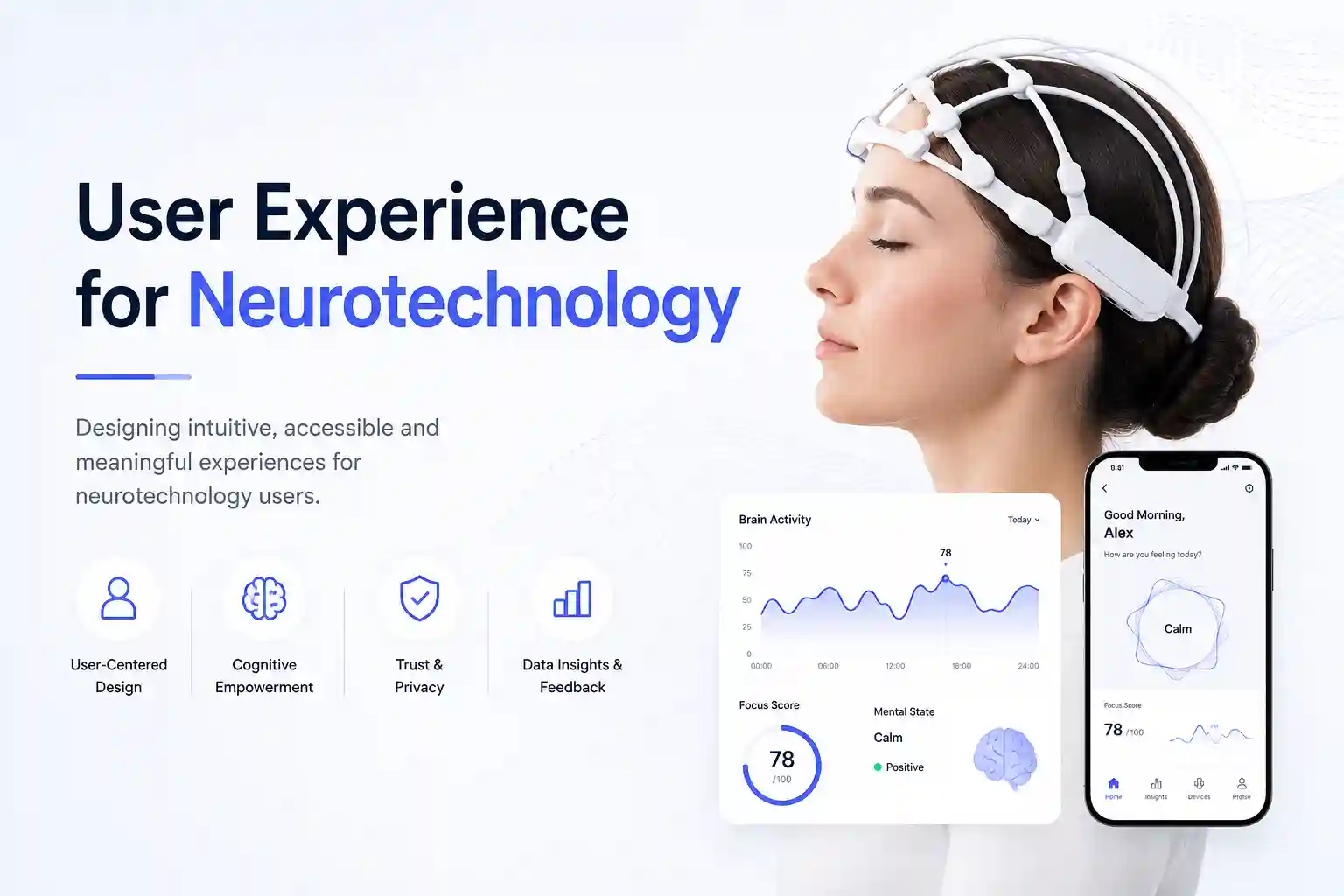
The Real-World Test: Five Weeks, Three Devices, One Honest Question
I didn’t just read spec sheets. I wore these things. Daily. In conditions that ranged from my quiet home office to a noisy co-working space with fluorescent lighting and constant foot traffic.
The Setup Process (Where Most Reviews Stop)
Every consumer EEG headset I tested required some version of this ritual: apply saline or gel to sensors, position the device carefully, check contact quality in companion software, wait for signal stabilization. The Emotiv Insight’s semi-dry polymer sensors reduced setup time to about 90 seconds—impressive compared to research-grade systems requiring conductive paste and impedance checks. But “impressive” is relative. Ninety seconds is still ninety seconds you’re not working. And if you shift the headset even slightly during a session, you might need to re-wet a sensor and re-check contact quality. That interruption breaks flow state more effectively than almost any notification.
Testing Environment Matters More Than You Think
EEG measures tiny electrical signals from your scalp. Those signals are easily contaminated. I learned this the hard way during a focus-tracking session when my wireless mouse’s battery died. The moment I reached for a wired backup, the headset’s signal quality dropped noticeably. Electromagnetic interference is real, and consumer devices rarely include the shielding found in lab equipment. A scoping review of consumer-grade EEG devices noted that signal quality varies significantly based on environmental factors and user movement. Translation: your neurotech might work great in a quiet room, but struggle in a coffee shop.
What Actually Worked
- Pattern recognition over time: After two weeks of daily use, I could correlate certain “focus score” ranges with my subjective experience. Not perfectly, but enough to notice trends. When the metric dipped below a certain threshold, I was usually indeed distracted.
- Meditation feedback: Using the headset during mindfulness practice provided tangible feedback. Seeing alpha wave activity increase as I relaxed felt validating, even if the correlation wasn’t scientifically rigorous.
- Developer potential: For technologists, the real value isn’t in pre-built metrics but in accessing raw EEG data. The EmotivPRO software lets you export signals for custom analysis, which is powerful if you have the expertise to interpret them.
What Failed (Repeatedly)
- Real-time accuracy: The “focus” and “engagement” metrics felt more like educated guesses than precise measurements. During one session, the software indicated high engagement while I was mentally composing a grocery list.
- Comfort during extended wear: After 45 minutes, the pressure points behind my ears became noticeable. Lightweight design helps, but physics wins: sensors need contact, contact requires pressure.
- Software learning curve: EmotivPRO is powerful but not intuitive. Understanding frequency bands, filtering options, and event markers requires background knowledge most consumers won’t have.
The Learning Curve No One Talks About
Using neurotechnology effectively isn’t plug-and-play. You need to learn basic neuroscience concepts: what alpha, beta, and theta waves represent; how artifacts from eye blinks or jaw clenching contaminate data; why signal quality matters more than raw data volume. A systematic review of low-cost EEG headsets emphasized that user training significantly impacts data quality. In plain terms, the device is only as good as your ability to use it correctly.
Practical Consumer Value: Who Should Actually Buy This?
Let’s cut through the hype. Consumer neurotechnology in 2026 isn’t for everyone. Here’s my honest assessment based on testing and research.
Who Might Benefit
- Researchers on tight budgets: Academic teams needing portable EEG for pilot studies or field work can get meaningful data from devices like the Insight without $20,000+ lab systems.
- Developers building BCIs: If you’re creating brain-computer interface applications, consumer headsets provide accessible hardware for prototyping and user testing.
- Biofeedback enthusiasts: People already practicing meditation or mindfulness may find value in the additional feedback layer, though it’s not essential for progress.
- Tech-curious experimenters: If you enjoy tinkering with emerging tech and don’t expect medical-grade accuracy, these devices offer fascinating exploration.
Who Should Probably Skip It
- People seeking medical insights: Consumer EEG headsets are not medical devices. They cannot diagnose conditions, monitor treatment, or replace clinical evaluation. Full stop.
- Those expecting mind-reading: These devices measure electrical activity, not thoughts. You won’t control smart home devices with pure intention anytime soon.
- Users wanting zero-friction experiences: If you need technology that “just works,” current neurotech requires patience, troubleshooting, and acceptance of inconsistency.
- Privacy-conscious individuals: Brain data is uniquely personal. While companies like Emotiv emphasize user data ownership, the long-term implications of neural data collection remain unsettled.
Realistic Expectations
The most valuable mindset shift: view consumer neurotechnology as a supplemental tool, not a primary solution. It can add an interesting data layer to your self-tracking, provide engaging feedback for certain practices, or serve as a prototyping platform for developers. But it won’t revolutionize your productivity, cure your focus issues, or unlock hidden cognitive potential. A Nature review of EEG wearables noted that while consumer devices show promise for sleep monitoring and basic cognitive assessment, clinical validation remains limited.
Comparison Insights: Navigating the Crowded Market
Not all consumer EEG headsets are created equal. Here’s how they stack up based on my testing and available research.
Entry-Level vs. Prosumer vs. Research-Grade
| Category | Price Range | Best For | Key Limitation |
|---|---|---|---|
| Entry-Level (1-2 channels) | $100-$300 | Casual meditation feedback, basic awareness | Limited data, high noise susceptibility |
| Prosumer (5-8 channels) | $400-$800 | Developers, serious hobbyists, pilot research | Setup complexity, software learning curve |
| Research-Grade (14+ channels) | $1,500+ | Academic studies, clinical prototyping | Cost, technical expertise required |
Price-to-Value Perspective
The Emotiv Insight at $499 sits in the prosumer sweet spot. You get five channels, wireless connectivity, and access to developer tools. But remember: the hardware cost is just the entry fee. Software subscriptions for advanced analysis can add $20-$100 monthly. Compare this to traditional research systems costing $20,000 to $150,000, and the value becomes clear—but only if your use case aligns with the device’s capabilities.
Beginner vs. Advanced User Experience
If you’re new to neurotechnology, start with devices offering guided experiences and simple metrics. The learning curve is steep enough without adding complex software interfaces. Advanced users who understand signal processing, frequency analysis, and experimental design will extract far more value from raw data access. A review of consumer EEG use in research emphasized that methodological rigor significantly impacts findings. In other words: expertise matters.
Expert Analysis: The Neuroscience Behind the Hype
Let’s demystify what these devices actually measure. EEG (electroencephalography) detects electrical activity generated by neurons firing in your brain. Different frequency bands correlate with different mental states:
- Delta (0.5-4 Hz): Deep sleep
- Theta (4-8 Hz): Drowsiness, meditation, creativity
- Alpha (8-12 Hz): Relaxed wakefulness, closed eyes
- Beta (12-30 Hz): Active thinking, focus, problem-solving
- Gamma (30+ Hz): High-level information processing
Consumer headsets measure these signals through electrodes on your scalp. But here’s the catch: the skull and scalp attenuate and blur these signals. Non-invasive EEG has inherent limitations in spatial resolution and signal-to-noise ratio. Think of it like listening to a concert from outside the venue—you can hear the music and identify general patterns, but you won’t catch every instrument’s nuance.
Practical Implications
This technical reality shapes user experience. Consumer devices can detect broad shifts in mental state (relaxed vs. focused) but struggle with fine-grained interpretation. They’re better at answering “Is my brain more active now than five minutes ago?” than “Am I thinking about pizza or pasta?”
Current Limitations
Beyond signal quality, several constraints affect real-world use:
- Movement artifacts: Jaw clenching, eye blinks, and head movements create electrical noise that can overwhelm neural signals.
- Individual variability: Brain anatomy and electrical patterns differ between people. Algorithms trained on group data may not generalize perfectly to you.
- Context dependence: The same neural pattern might mean different things depending on what you’re doing. Beta waves could indicate focus during work or anxiety during a stressful call.
Ethical Considerations
As neurotechnology becomes more accessible, ethical questions grow urgent. The NIH BRAIN Initiative emphasizes the need to consider the ethical implications of neuroscience research, including privacy, consent, and potential misuse. Consumer devices collect uniquely personal data. Who owns your brainwave patterns? How might insurers or employers use this information? Responsible neurotechnology requires clear consent, user agency, and ethical guardrails built into tools from the start. These aren’t abstract concerns; they’re practical considerations for anyone adopting this technology.
The Honest Drawbacks: What Reviews Often Gloss Over
After months of testing, here are the friction points that marketing materials rarely highlight:
Physical Discomfort
Even lightweight headsets create pressure points. During 90-minute sessions, I noticed discomfort behind my ears and on my forehead. Adjusting fit improves comfort but can compromise sensor contact. It’s a constant trade-off.
Setup Friction
That 90-second setup? It adds up. If you’re using the device daily, you’re spending hours per month just getting ready. And if signal quality drops mid-session, you’re back to square one.
Software Limitations
Companion apps vary widely in usability. Some offer intuitive visualizations; others present raw data requiring technical expertise to interpret. Updates can change interfaces unexpectedly, disrupting workflows.
Inconsistent Readings
Environmental factors matter more than you’d expect. I saw signal quality drop near wireless routers, when my phone received calls, and even when certain LED lights were on. A review of wearable EEG devices noted that real-world performance often differs from controlled lab conditions.
The Learning Investment
To extract meaningful insights, you need to understand basic neuroscience, signal processing concepts, and experimental design. This isn’t a barrier for researchers, but it’s significant for casual users. Without this knowledge, you risk misinterpreting data or drawing unsupported conclusions.
Trusted References: Where the Science Stands
My conclusions aren’t just based on personal testing. They’re informed by peer-reviewed research and expert consensus:
- A systematic review of low-cost EEG headsets found that while these devices enable new research possibilities, users must account for signal quality limitations and environmental interference.
- Nature’s analysis of EEG-based sleep wearables highlighted promising applications but emphasized the need for more rigorous validation in diverse populations.
- Research on consumer-grade EEG use in academic studies stressed that methodological choices significantly impact data interpretation and findings.
- The NIH BRAIN Initiative’s neuroethics framework underscores the importance of addressing privacy, consent, and equitable access as neurotechnology advances.
- IEEE publications on brain-computer interfaces note that non-invasive approaches face inherent trade-offs between signal resolution and user comfort.
These sources don’t dismiss consumer neurotechnology; they contextualize it. The field is advancing rapidly, but responsible adoption requires understanding both capabilities and constraints.
Final Verdict: Cautious Optimism with Clear Boundaries
So, what will be the user experience for neurotechnology in 2026? Based on hands-on testing and research review: promising but imperfect, powerful but demanding.
These devices won’t read your mind or instantly optimize your cognition. But they can provide fascinating insights for those willing to invest time in learning and troubleshooting. For researchers, developers, and dedicated biofeedback practitioners, consumer EEG headsets offer accessible tools for exploration and prototyping. For casual users seeking quick fixes or medical insights, they’ll likely disappoint.
If you’re considering neurotechnology:
- Start with clear, realistic goals. What specific question do you want to explore?
- Invest time in learning basic neuroscience concepts. Understanding what you’re measuring prevents misinterpretation.
- Expect friction. Setup, calibration, and troubleshooting are part of the experience.
- Prioritize data privacy. Review how companies handle neural data and what controls you retain.
- View these tools as supplements, not solutions. They add an interesting data layer but won’t replace foundational practices like good sleep, stress management, or focused work habits.
The future of neurotechnology user experience hinges on balancing innovation with honesty. As the field matures, we need devices that acknowledge limitations while delivering genuine value. We need software that educates users, not just dazzles them. And we need ethical frameworks that protect neural privacy without stifling beneficial research.
For now, if you approach consumer neurotechnology with curiosity, patience, and critical thinking, you might discover something worthwhile. Just don’t expect magic. The human brain remains gloriously, beautifully complex—and no headset, however advanced, can fully capture that complexity yet.