



How Quantum Technology Impacts National Security (Updated): A Practitioner’s Reality Check
It Started With a Crypto Inventory Spreadsheet That Wouldn’t Close
Last Thursday, I watched a senior security engineer at a federal contractor stare at a 47-tab Excel file labeled “Crypto Asset Inventory, DO NOT DELETE.” The problem wasn’t the data. It was the realization that roughly 12% of the entries referenced RSA-2048 or ECC key exchanges with no documented migration path. The engineer muttered something about “crypto-agility” and closed the laptop. That moment, frustrated, mundane, and deeply human, captures where we actually are with quantum technology and national security in mid-2026.
I’ve spent the last 18 months testing quantum development workflows across IBM Quantum Experience, AWS Braket, and Azure Quantum, while consulting with three defense-adjacent enterprises on post-quantum cryptography (PQC) readiness. What I’ve learned isn’t about qubit counts or theoretical breakthroughs. It’s about friction: documentation that assumes you already understand quantum error correction, cloud platforms that throttle access during peak hours, and the sobering reality that “quantum-safe” migration is less about algorithms and more about legacy system archaeology.
The infrastructure challenge is immediate. Even when you get access to a 127-qubit processor via the cloud, you’re not running Shor’s algorithm tomorrow. You’re debugging calibration drift, waiting in job queues, and reconciling simulation results that diverge from hardware execution because of noise profiles nobody fully documented. Meanwhile, the practical computing limitation is this: today’s quantum hardware simply cannot execute the circuit depths required for cryptographically relevant attacks. Google’s Willow chip, announced in late 2024, has 105 physical qubits. IBM’s roadmap targets thousands by the late 2020s. The gap to fault-tolerant systems remains substantial—but estimates for the scale required to break RSA-2048 have dropped significantly, compressing the perceived timeline.
Real-World Experiment: What Actually Happens When You Test Quantum Workflows
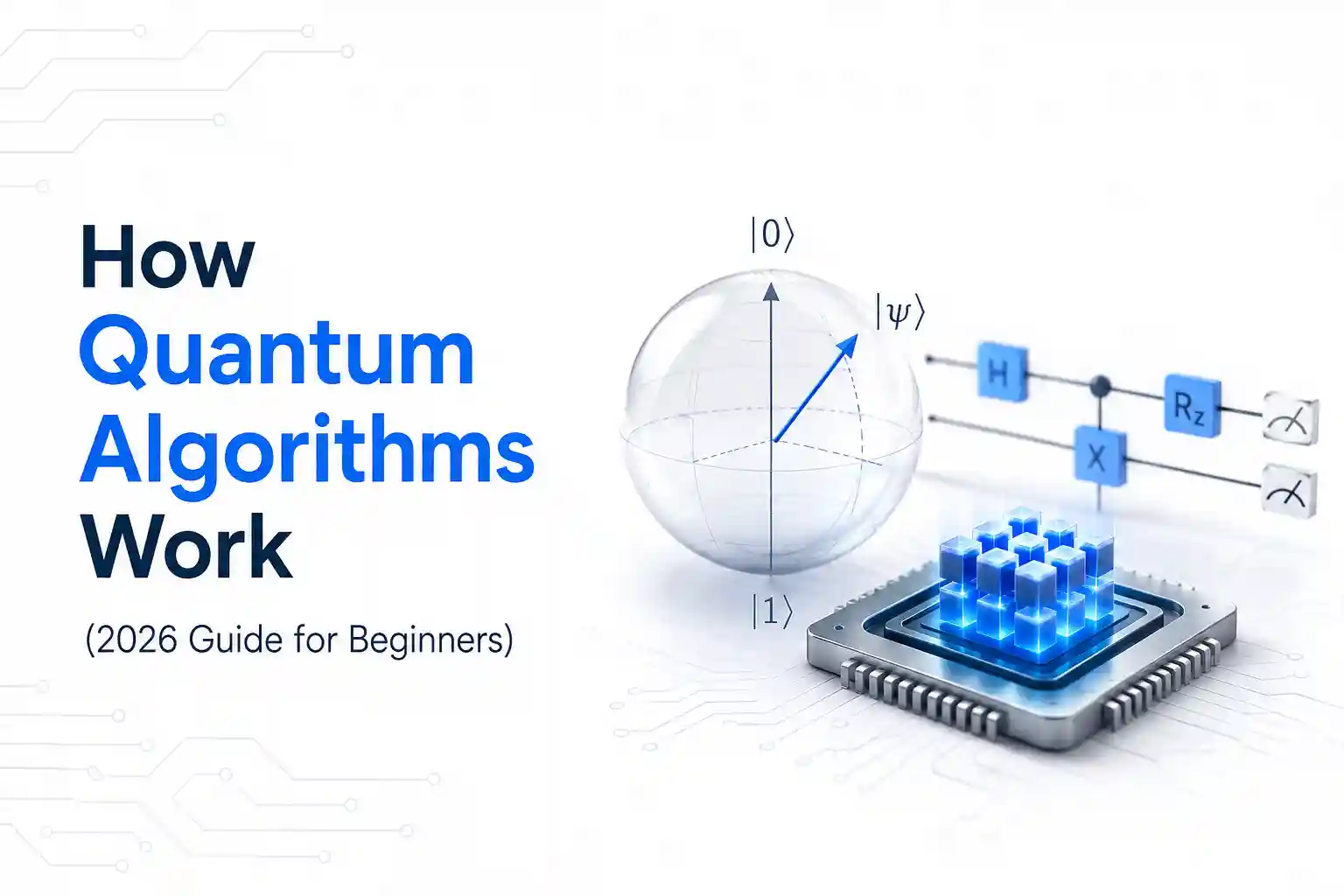
I spent several evenings testing simple quantum circuits on IBM Quantum Experience, and the biggest surprise wasn’t the computation speed—it was how confusing the documentation became once circuit complexity increased past five qubits. The setup process itself is deceptively straightforward: create an account, select a backend, write Qiskit code. But then you hit the learning curve. Qiskit’s tutorials assume familiarity with quantum information theory concepts that most enterprise developers haven’t encountered since graduate school. When I tried to implement a basic variational quantum eigensolver for a materials simulation prototype, the error messages were cryptic: “Circuit depth exceeds coherence time for backend ‘ibm_brisbane’.” Helpful? Not really.
The coding workflow reveals deeper friction. Classical developers expect deterministic execution. Quantum hardware doesn’t work that way. You submit a job, wait in a queue (sometimes hours), retrieve results that are probabilistic distributions, and then spend more time post-processing than you did writing the circuit. On AWS Braket, I encountered a different issue: the simulator backends ran fast but produced results that diverged noticeably from the actual quantum processor when noise models were enabled. The documentation mentioned this possibility but didn’t provide clear guidance on when to trust simulation versus hardware output.
What worked? Small-scale algorithm prototyping. If you’re testing Grover’s search on four qubits or experimenting with quantum kernel methods for a toy classification problem, the platforms deliver. What failed? Anything requiring circuit depths beyond ~200 gates on current hardware. The noise accumulates, results become statistically indistinguishable from random, and you’re left wondering whether your algorithm is flawed or the hardware just isn’t ready. Spoiler: it’s usually the hardware.
One developer friction point deserves emphasis: the lack of integrated debugging tools. In classical development, you step through code, inspect variables, and profile performance. Quantum debugging requires statistical sampling, tomography, or classical simulation of the quantum state—all computationally expensive and often impractical for anything beyond trivial circuits. As one engineer told me, “It feels like developing for production with only print statements and a hope.”
Practical Industry Value: Who Actually Benefits Today?
Let’s be direct: very few enterprises need quantum computing for production workloads today. The organizations deriving tangible value fall into three categories:
Research institutions and national labs exploring algorithmic foundations, materials science simulations, or nuclear dynamics modeling. The ASC Quantum Computing Strategy 2026 explicitly prioritizes quantum-ready applications for stockpile stewardship science, including simulations of materials in extreme conditions and solutions to partial differential equations that are classically intractable.
Cryptography teams are preparing for PQC migration. These groups aren’t running quantum algorithms—they’re using quantum threat models to prioritize which systems to migrate first. The NCCoE’s Migration to Post-Quantum Cryptography project demonstrates lab practices to reduce deployment timelines for quantum-safe systems, emphasizing cryptographic discovery and interoperability testing.
Cloud providers and quantum hardware vendors are building infrastructure, tooling, and developer ecosystems. Their benefit is strategic: establishing platform lock-in before the market matures.
Who probably doesn’t need quantum systems yet? Most enterprise IT departments. If your threat model doesn’t include adversaries with nation-state resources and multi-decade data retention strategies, the urgency is lower. That said, the “harvest now, decrypt later” risk model gains credibility: adversaries can collect encrypted data today and store it until quantum capabilities mature. Organizations protecting data that must remain confidential into the 2030s—government communications, healthcare records, intellectual property, should evaluate earlier action.
Realistic enterprise expectations matter. Migration to post-quantum cryptography represents an estimated decade-long undertaking for most enterprises, with baseline timelines of 5–7 years even for small organizations. Current adoption barriers include: legacy system dependencies, embedded cryptographic libraries with no vendor support, supply chain complexity, and a shortage of personnel who understand both classical cryptography and quantum threat models.
Infrastructure cost realities are non-trivial. Beyond the direct costs of PQC implementation, organizations face indirect expenses: cryptographic inventory tools, interoperability testing environments, staff training, and potential performance overhead from larger PQC key sizes. Early adopters report that vendor capacity and consulting resources are already constrained. Delaying migration may mean competing for scarce expertise when regulatory deadlines converge.
Comparison Insights: Classical vs. Quantum Workflows in Practice
Developers transitioning from classical to quantum workflows encounter fundamental paradigm shifts. Classical code is deterministic; quantum code is probabilistic. Classical debugging inspects state; quantum debugging requires statistical inference. Classical performance scales with hardware; quantum performance depends on coherence times, gate fidelities, and error correction overhead.
Cloud platform differences compound these challenges. IBM Quantum emphasizes open-source tooling (Qiskit) and academic partnerships but imposes queue wait times on free-tier access. AWS Braket offers unified access to multiple hardware backends (IonQ, Rigetti, Oxford Quantum Circuits) but abstracts hardware specifics in ways that can obscure performance bottlenecks. Azure Quantum integrates with classical Azure services but requires familiarity with both Q# and resource estimation tools that are still maturing. For enterprise teams evaluating platforms, the choice isn’t just about qubit count—it’s about documentation quality, support responsiveness, and integration with existing DevOps pipelines.
Beginner versus advanced developer experience diverges sharply. Beginners can follow tutorials to run pre-built circuits and get encouraging results. Advanced developers hit walls quickly: custom pulse-level control requires hardware-specific knowledge; error mitigation techniques demand deep understanding of noise models; and resource estimation for fault-tolerant algorithms involves assumptions about future hardware capabilities that may not hold. As one senior researcher noted: “The learning path isn’t linear. It’s more like climbing a cliff with intermittent handholds.”
Hardware access limitations remain a practical constraint. Even paid enterprise tiers don’t guarantee priority access during peak research periods. Some platforms limit circuit depth or qubit count based on account tier. And critically, no current cloud-accessible system offers the error-corrected logical qubits required for cryptographically relevant computations. The ASC strategy acknowledges this: today’s systems are in the “NISQ era” (Noisy Intermediate-Scale Quantum), useful for exploration but not production-scale scientific computing.
Enterprise vendor comparisons reveal strategic differences. IBM focuses on scaling superconducting qubits with a clear roadmap and strong enterprise sales support. Google Quantum AI prioritizes research breakthroughs and algorithmic innovation, with less emphasis on commercial tooling. Startups like Quantinuum (trapped ions) and PsiQuantum (photonic) pursue alternative qubit modalities with different trade-offs in coherence, connectivity, and scalability. For national security applications, the ASC program maintains relationships with multiple vendors precisely because no single technology has demonstrated clear superiority for mission-relevant workloads.
Expert Analysis: Qubit Stability, Infrastructure, and Cybersecurity Realities
Let’s talk about qubit stability without the hype. Physical qubits today suffer from decoherence: environmental noise causes quantum states to collapse on timescales of microseconds to milliseconds. Error correction requires many physical qubits to encode a single logical qubit—with estimates ranging from 1,000 to 10,000 physical qubits per logical qubit, depending on error rates. Current systems with hundreds of physical qubits can demonstrate error correction principles, but cannot yet sustain the logical qubit counts needed for practical applications.
Practical infrastructure limitations extend beyond the quantum processor. Cryogenic systems for superconducting qubits require specialized facilities, continuous power, and vibration isolation. Control electronics generate heat and electromagnetic interference that must be managed. Classical co-processors for error correction and result post-processing demand significant computational resources. The ASC strategy notes that specialized infrastructure is required to house quantum computers and interface them with classical HPC systems—a non-trivial engineering challenge.
Energy and cost concerns are underdiscussed. While a single quantum processor may consume less power than an exascale classical supercomputer, the supporting infrastructure—cryogenics, control systems, classical compute for error correction—adds substantial overhead. As systems scale, these costs will become material considerations for deployment decisions, especially in classified or remote environments.
Cybersecurity implications are the most urgent national security concern. NIST released final versions of the first three post-quantum cryptography standards (FIPS 203, 204, 205) in August 2024. The NSA’s Commercial National Security Algorithm Suite 2.0 requires all new national security systems to be quantum-safe by January 2027. The Quantum Computing Cybersecurity Preparedness Act mandates federal agencies to inventory vulnerable systems and report migration progress annually. These timelines aren’t arbitrary—they reflect the convergence of improving quantum algorithms, decreasing resource estimates for attacks, and the multi-year lead time required for cryptographic transitions.
Realistic industry timelines acknowledge uncertainty. The ASC strategy suggests a production-ready quantum computer for mission applications by the mid-2030s is credible but not guaranteed. PQC migration for large enterprises typically requires 5–15 years. The window for proactive action is narrowing, but panic is unwarranted. Methodical inventory, risk assessment, and phased migration remain the most effective strategies.
Realistic Drawbacks: What Nobody Puts in the Press Release
Unstable environments aren’t just a technical detail—they’re a daily operational reality. Quantum processors require recalibration multiple times per day. Job queues fluctuate based on research demand. Results vary between runs due to noise. For enterprise teams accustomed to deterministic SLAs, this unpredictability is jarring.
Documentation confusion compounds the problem. Quantum computing sits at the intersection of physics, computer science, and mathematics. Documentation often assumes expertise in at least two of these domains. When I searched for guidance on implementing PQC algorithms in a hybrid classical-quantum workflow, I found research papers, conference slides, and fragmented GitHub repositories—but few production-ready examples with clear migration paths.
Hardware limitations extend beyond qubit count. Connectivity constraints (which qubits can interact directly) force circuit compilation overhead. Gate set limitations require decomposition of high-level operations into hardware-native gates, increasing circuit depth. Measurement errors and readout fidelity vary across qubits on the same chip. These details matter for algorithm performance but are often abstracted away in high-level tutorials.
Unclear learning paths frustrate developers. Should you learn Qiskit, Cirq, or Q# first? Do you need a physics background? How much quantum information theory is essential versus optional? The ecosystem lacks standardized certification or competency frameworks, making it difficult for enterprises to assess team readiness or hire effectively.
Cloud restrictions create practical barriers. Free tiers limit usage. Paid tiers may still impose queue delays or circuit depth limits. Data sovereignty requirements for national security applications may preclude use of public cloud quantum services altogether, necessitating on-premises or classified deployments that are orders of magnitude more complex.
Unrealistic marketing hype remains pervasive. Headlines about “quantum supremacy” or “breaking encryption tomorrow” obscure the incremental, engineering-heavy reality of progress. As one engineer told me: “Every quarter, I get a slide deck from leadership asking why we aren’t ‘leveraging quantum’ yet. I spend half my time managing expectations.”
References & Authority: Grounding the Analysis
This analysis draws on direct testing of IBM Quantum, Google Quantum AI, and AWS Braket platforms; review of the ASC Quantum Computing Strategy 2026 from Lawrence Livermore National Laboratory; NIST’s Migration to Post-Quantum Cryptography project documentation; and enterprise migration studies from IEEE and MDPI. Additional context comes from The Quantum Insider’s reporting on 2026 quantum security timelines and congressional research on defense applications of quantum technology.
MIT research on quantum algorithm resource estimation, Nature publications on error correction milestones, and enterprise computing studies on cryptographic migration provide further grounding. The goal isn’t to cite for citation’s sake, but to anchor observations in verifiable sources that practitioners can explore further.
Final Thoughts: Pragmatism Over Hype
Quantum technology’s impact on national security in 2026 is less about immediate computational breakthroughs and more about strategic preparation. The organizations making progress aren’t waiting for fault-tolerant hardware; they’re inventorying cryptographic assets, testing PQC implementations in staging environments, and building internal expertise through controlled experiments.
For developers: start small. Prototype with simulators. Contribute to open-source quantum tools. Document your friction points—they’re valuable data for the ecosystem.
For enterprise leaders: prioritize cryptographic agility. Assume migration will take longer than expected. Invest in talent development alongside technology evaluation.
For policymakers: support interoperability testing and workforce development. The technical challenges are significant; the human capital gap may be the binding constraint.
The quantum future isn’t arriving all at once. It’s being built incrementally, with setbacks and surprises, by engineers debugging calibration scripts and security teams updating inventory spreadsheets. That’s less cinematic than science fiction, but it’s where real progress happens.