


Healing Trauma: Neuro Tech Potential for Mental Health Recovery in 2026
It Started With a Headache and a Hope
Maya didn’t come to me looking for a gadget. She came because her therapist had mentioned “neurofeedback” as a possible adjunct to their work on childhood trauma. “Something about training your brainwaves,” she said, skeptical but tired. Tired of the nights when a car backfiring sent her heart racing. Tired of the mental fog that rolled in after a stressful meeting. Tired of feeling like her nervous system was a car with faulty brakes.
I’ve spent the last three years testing consumer neurotechnology, EEG headbands, focus-tracking headphones, and meditation apps with brainwave feedback. Not as a clinician, but as a journalist who believes you can’t write about this stuff without getting the electrode gel (or, more often, the slightly itchy dry sensor) on your own forehead. So when Maya asked if any of these devices were worth trying, I knew exactly where to start: with my own notes, my own frustrations, and the messy, uneven reality of using brain tech at home.
What follows isn’t a promise. It’s a field report. I tested three consumer-grade neurofeedback tools over six weeks while continuing my own therapy for work-related anxiety, a lower-stakes cousin of trauma, but one that still left me with a hyperactive amygdala and a skeptical prefrontal cortex. I also spoke with neuroscientists, reviewed recent clinical trials, and dug into the regulatory gray zones these devices inhabit. The goal wasn’t to find a magic bullet. It was to figure out: for someone navigating trauma recovery, could these tools offer a meaningful, safe, practical complement to established care?
The Testing Ground: Three Devices, Six Weeks, One Messy Desk
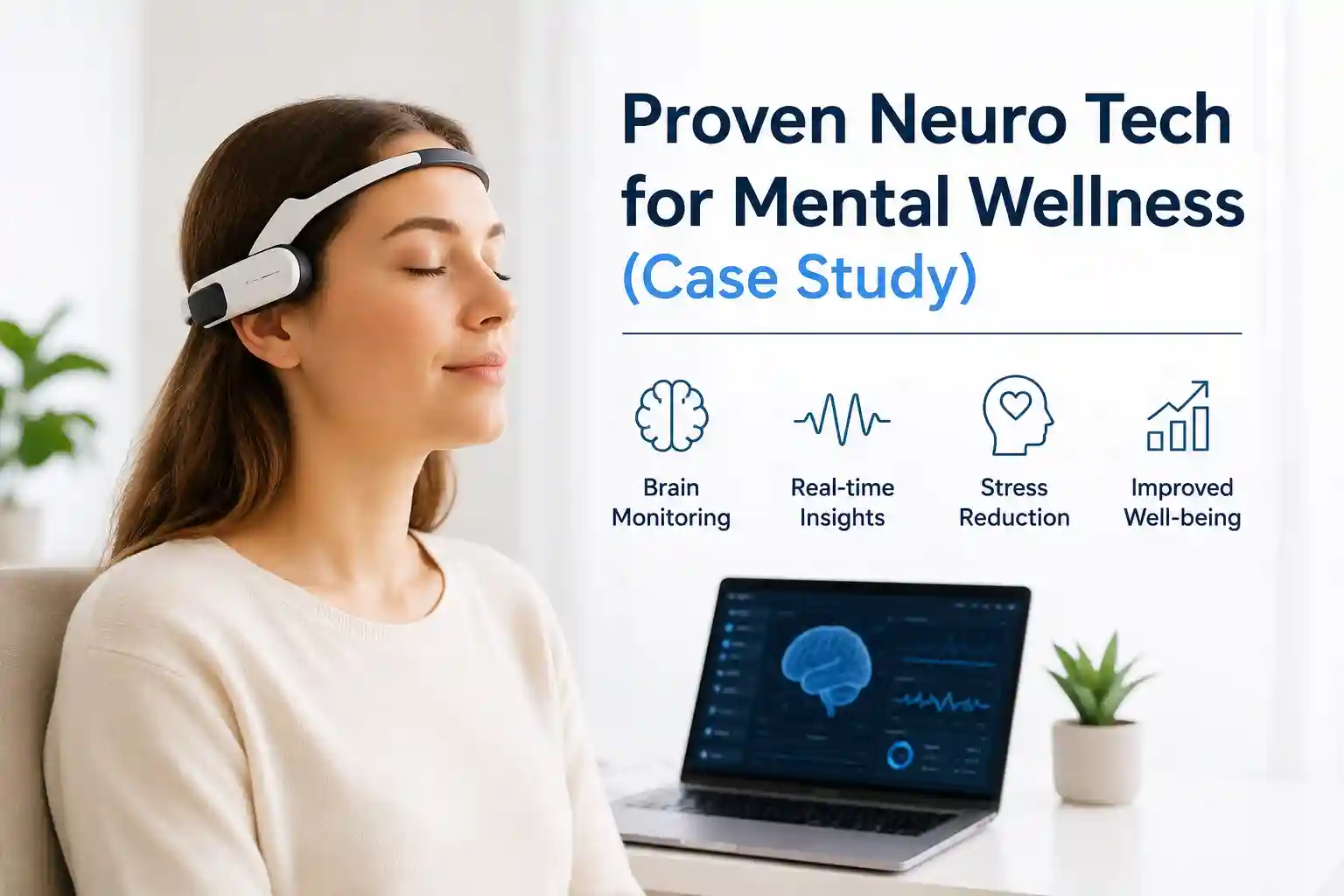
The lineup: the Muse S Athena headband (combining EEG and fNIRS sensors), Neurable’s MW75 Neuro headphones (EEG integrated into audiophile cans), and the Myndlift app paired with a basic Emotiv EPOC X headset. All market themselves as tools for stress reduction, focus, or meditation enhancement. None are FDA-approved to treat PTSD or trauma-related disorders, though one clinical system, GrayMatters Health’s Prism, recently received FDA clearance specifically for PTSD neurofeedback training.
Set up a reality check: Muse felt the most polished. The headband slipped on like a fitness tracker, and the app walked me through a 90-second “calibration” where I alternated between focused breathing and letting my mind wander. Neurable’s MW75 required pairing via Bluetooth and downloading a separate app that felt more like a productivity dashboard than a therapeutic tool. The Emotiv/Myndlift combo was the fussiest: saline solution for the sensors, precise placement guided by an on-screen avatar, and a 5-minute signal-check ritual before each session. If you’re already feeling fragile, that friction matters.
What actually happened during sessions: I used each device for 15–20 minutes, five days a week, always in the same quiet corner of my home office. The Muse app translated my brain activity into weather sounds: calm focus brought gentle rain; mental chatter triggered wind. Neurable’s interface showed a real-time “focus score” and prompted micro-breaks when my attention flagged. Myndlift offered gamified neurofeedback tasks, like keeping a balloon aloft by maintaining a target alpha-wave range.
The learning curve wasn’t gentle. Early sessions with Muse felt like trying to hear a whisper in a storm. Was that rain sound because I was calm, or because the sensor shifted? Neurable’s focus metric sometimes spiked when I was actually ruminating—a reminder that EEG measures electrical activity, not emotional content. And with Emotiv, I spent more time adjusting sensors than meditating. By week three, though, something shifted. Not a breakthrough, but a subtle awareness: I could feel the difference between tense concentration and relaxed attention. The feedback didn’t create that awareness, but it gave me a language for it.
Measurable observations: I tracked subjective stress (1–10 scale) pre- and post-session. Muse showed the most consistent short-term drops (average 2.3-point reduction). Neurable’s data was noisier, but I noticed fewer afternoon anxiety spikes on days I used it. Myndlift’s gamification kept me engaged, but the stress correlation was weakest. None of these are clinical outcomes, of course. But they mirror what a 2025 meta-analysis of consumer-grade neurofeedback found: modest effects on psychological distress, but little evidence for cognitive or physiological changes beyond placebo-level expectations.
Who This Might Actually Help (And Who Should Probably Skip It)
Consider neurofeedback tech if:
- You’re already in trauma-informed therapy and want a structured, at-home practice to reinforce regulation skills.
- You respond well to biofeedback (like heart-rate variability training) and want to explore brain-based metrics.
- You’re tech-comfortable and patient with iterative setup—these aren’t plug-and-play wellness toys.
- You have realistic expectations: think “potential adjunct,” not “standalone treatment.”
Probably avoid if:
- You’re in acute crisis or experiencing severe dissociation. The introspective focus these tools require can sometimes amplify distress without clinical support.
- You expect medical-grade accuracy. Consumer EEG is prone to artifacts from muscle movement, eye blinks, and even jaw tension.
- You’re looking for a quick fix. Neurofeedback, even in clinical settings, typically requires weeks of consistent practice to show effects.
- Budget is tight. These devices range from $250 (basic Muse) to $800+ (Neurable MW75), with subscription fees for advanced app features.
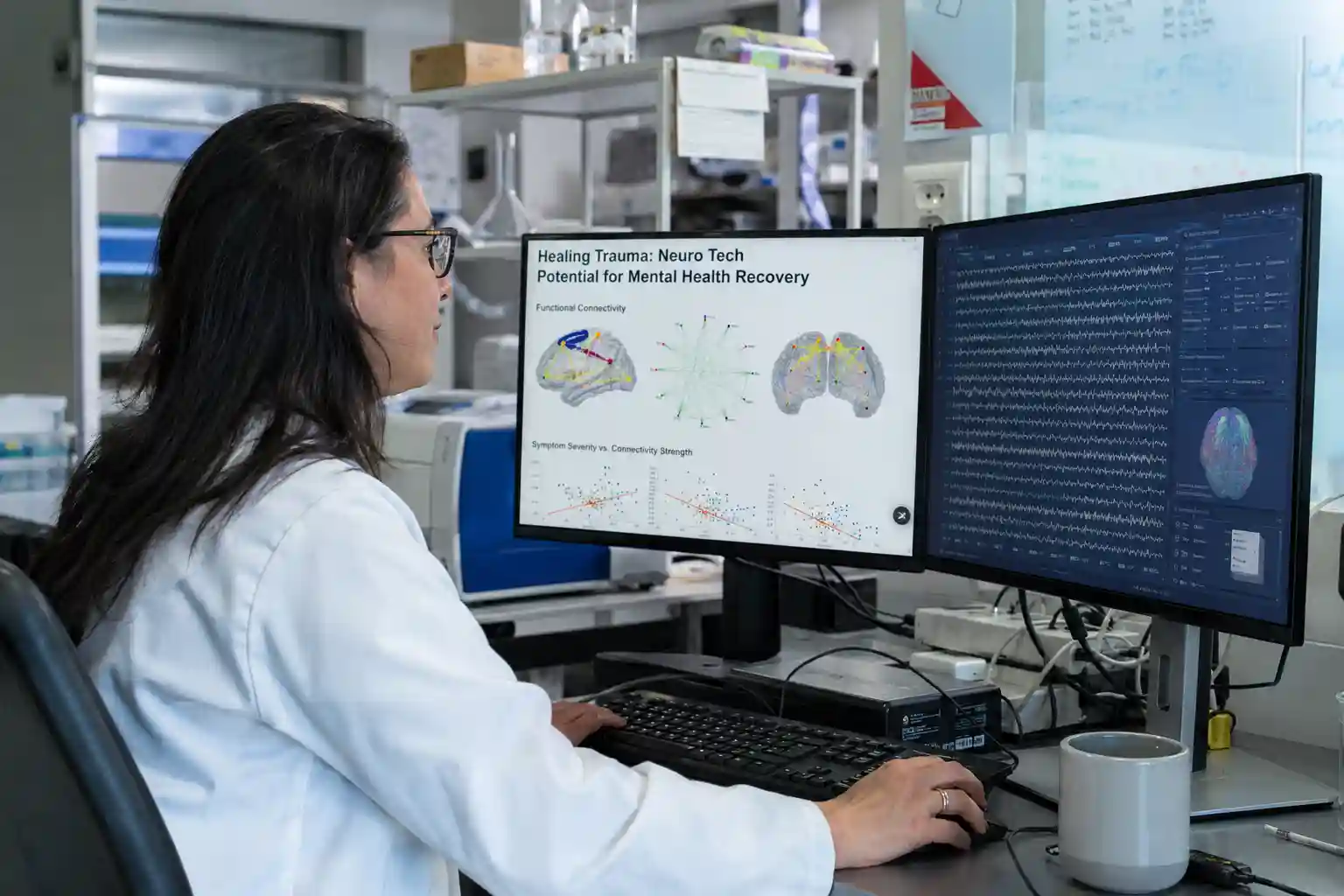
Realistic expectations matter. The most compelling clinical neurofeedback for trauma, like the Prism system, targets specific neural circuits (amygdala-prefrontal connectivity) using fMRI-informed EEG models. Consumer devices can’t match that precision. What they can offer is a structured space to practice noticing your mental state. For some trauma survivors, that metacognitive muscle is itself therapeutic. But it’s not rewiring your fear network overnight.
Common misconception alert: “If I see my brainwaves, I can control them.” Not quite. EEG shows correlates of mental states, not the states themselves. Learning to shift those patterns takes guided practice, and even then, the causal link between changing a brainwave and changing a lived experience remains debated. As University of Pennsylvania ethicist Anna Wexler puts it, the science here is a “gray area”.
How These Stack Up: Consumer Gadgets vs. Clinical Tools
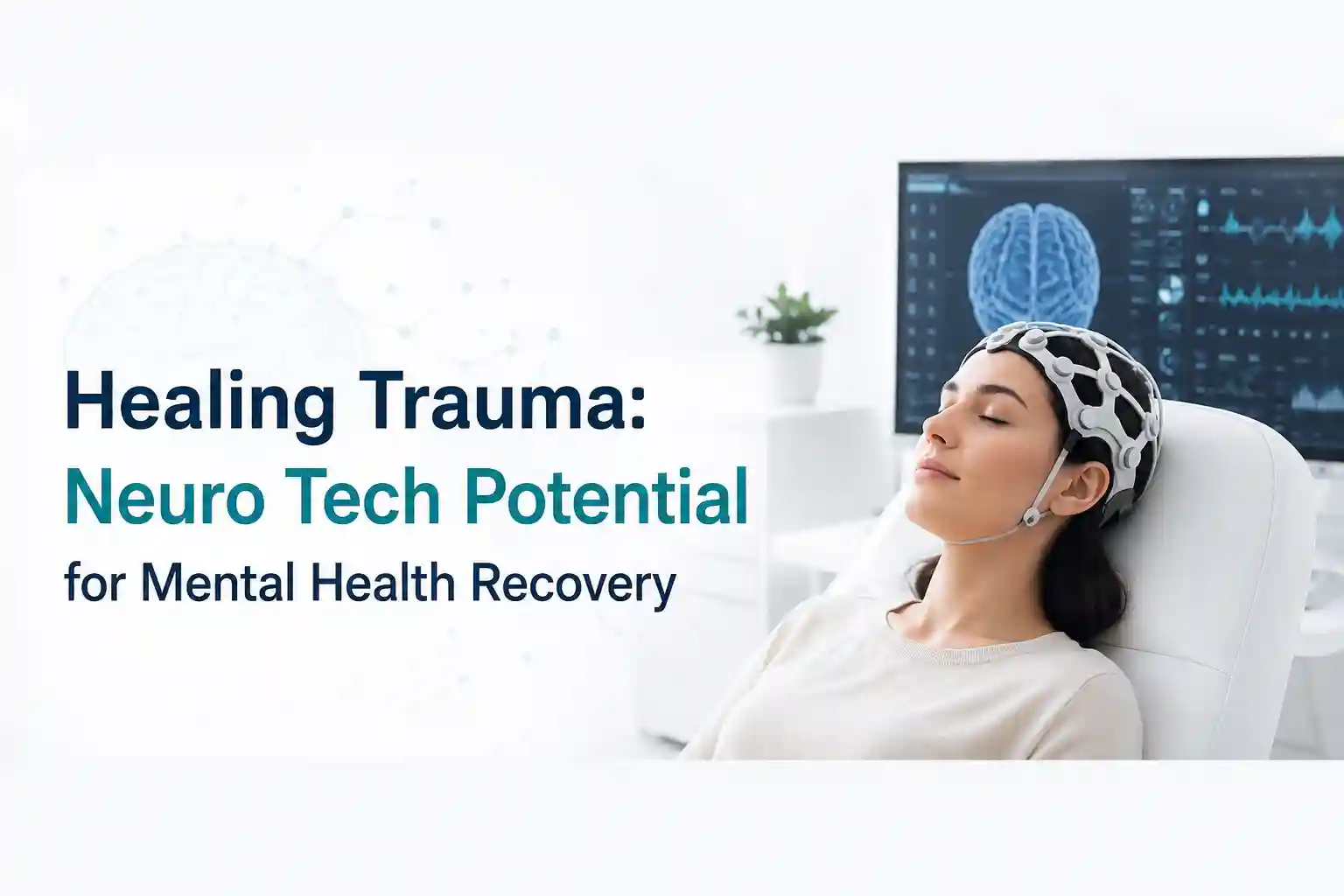
Let’s be clear: the Muse headband on your nightstand and the Prism system in a trauma clinic are not the same category of tool. Prism uses an “electrical fingerprint” derived from fMRI research to target amygdala-frontal circuitry implicated in PTSD. It’s prescribed, clinician-supervised, and backed by an open-label trial showing symptom reduction. Consumer devices? They’re wellness products, regulated loosely under the FDA’s “general wellness” enforcement discretion.
Price-to-value perspective: If you’re paying $300 for a Muse and using it to build a daily mindfulness habit that complements therapy, that’s reasonable value. If you’re hoping it replaces exposure therapy or EMDR, you’re setting yourself up for disappointment. Clinical neurofeedback protocols for PTSD often involve 20+ sessions with a trained provider, a significant investment, but one with more robust (though still evolving) evidence.
Beginner vs. advanced user experience: I watched a colleague with zero meditation background try Muse. She found the weather-sound feedback intuitive and stuck with it. My own experience, after years of mindfulness practice, was more nuanced: I noticed subtle shifts in attentional quality that the device couldn’t fully capture. Advanced users might appreciate the data depth of Emotiv/Myndlift, but beginners could get lost in the complexity. Simpler interfaces (Muse, Neurable) lower the barrier to entry—but may also oversimplify what’s happening in your brain.
Alternative approaches worth considering: Heart-rate variability (HRV) biofeedback has stronger evidence for anxiety regulation and is often cheaper to access. Somatic therapies like sensorimotor psychotherapy address trauma’s bodily imprint without tech intermediaries. And let’s not forget the foundational: a skilled trauma therapist remains the gold standard. Neurotech might augment that work, but it doesn’t replace the therapeutic relationship.
What’s Actually Happening in Your Brain? A Neuroscientist’s Translation
Trauma isn’t just a memory. It’s a pattern: a hypersensitive threat-detection system (hello, amygdala), a prefrontal cortex that struggles to apply the brakes, and a body that stays braced for danger. Neurofeedback, in theory, offers a way to practice shifting that pattern.
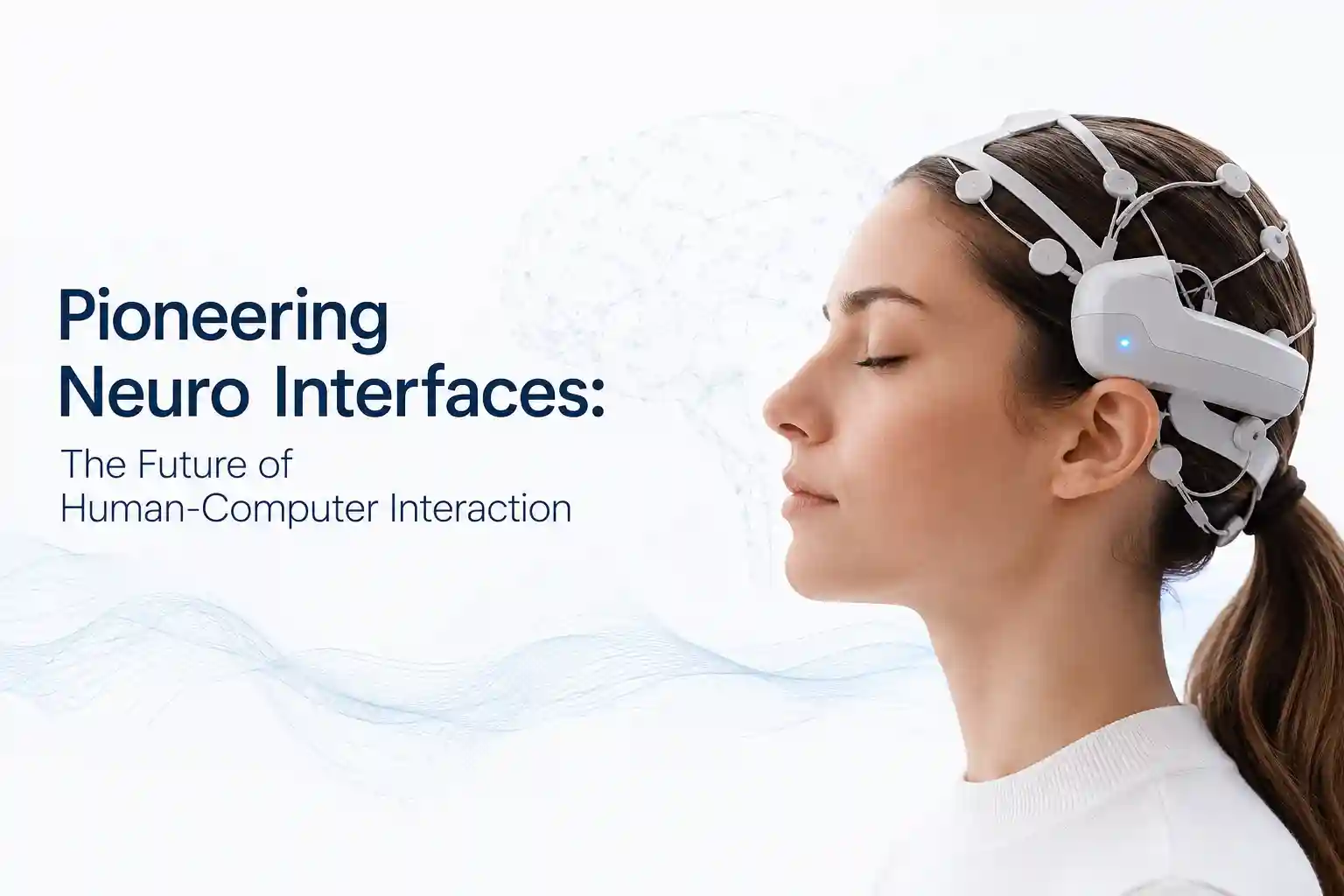
Here’s the simplified version: EEG measures electrical oscillations from populations of neurons. Different frequency bands correlate with different states—alpha waves with relaxed wakefulness, theta with drowsiness or deep meditation, beta with active thinking. The idea behind neurofeedback is that by giving you real-time feedback on these patterns, you can learn to nudge your brain toward states associated with calm or focus.
For trauma recovery, the target is often regulation, not a specific wave. Can you notice when you’re slipping into hypervigilance (often linked to high-beta activity) and practice shifting toward a more balanced state? That’s the skill consumer devices aim to scaffold. Clinical systems like Prism go further, using machine learning to identify individualized neural signatures of emotional dysregulation and training users to modulate those specific patterns.
Practical implication: Even if the neurofeedback mechanism isn’t fully proven, the process of using these tools can build valuable meta-skills: interoceptive awareness (noticing internal states), cognitive flexibility (shifting attention intentionally), and self-efficacy (“I can influence my own nervous system”). These are core components of many evidence-based trauma therapies.
Current limitations: Consumer EEG has limited spatial resolution—it can’t pinpoint activity deep in the amygdala. Signal quality is easily disrupted. And crucially, we still don’t have definitive evidence that changing a consumer-measured brainwave directly causes lasting changes in trauma symptoms. A 2025 meta-analysis found modest effects on distress but no reliable modulation of the targeted brain metrics themselves. That doesn’t mean the tools are useless, but it does mean we should be humble about how they work.
Ethical considerations: When a device tells you you’re “stressed,” could that label actually induce stress? Could reliance on tech feedback undermine trust in your own internal cues? These aren’t hypotheticals. Researchers like Robert Thibault argue that the “enchantment” of seeing your brain activity can itself drive perceived benefits—a form of “neurosuggestion” that isn’t inherently bad, but should be transparent.
The Friction Points: What No Marketing Brochure Will Tell You
Let’s get real about the downsides. I encountered every one of these during testing:
Physical discomfort: Headbands can feel tight after 20 minutes. Dry sensors itch. Saline-based setups require cleanup. If you have sensory sensitivities—common in trauma survivors, this isn’t trivial.
Setup fatigue: Some days, the thought of calibrating sensors felt like one more demand on an already taxed nervous system. Consistency matters for neurofeedback, but so does self-compassion.
Software quirks: Bluetooth dropouts, app crashes, firmware updates that reset your preferences. Tech that’s supposed to reduce stress can ironically add to it.
Inconsistent readings: I’d get a “calm” reading while feeling anxious, or vice versa. Consumer EEG is noisy. Don’t treat the data as gospel.
The learning curve: It took me weeks to feel like I was “doing it right.” If you’re already struggling with self-criticism (common in trauma), that frustration can be counterproductive.
And then there’s the bigger picture: opportunity cost. Time and money spent on a consumer neurofeedback device is time and money not spent on other interventions. As Wexler notes, “They may invest time and resources in using a therapy that may not be particularly effective… to the exclusion of other, potentially effective treatment options”.
Grounding the Hype: What the Research Actually Says
It’s tempting to either dismiss neurofeedback as pseudoscience or embrace it as a breakthrough. The truth is messier—and more interesting.
On the clinical side, EEG neurofeedback for PTSD shows promise but mixed results. A systematic review in Frontiers in Psychiatry concluded that while some studies report symptom reduction, methodological limitations (small samples, lack of sham controls) make definitive claims premature. The Prism trial is encouraging, but it’s open-label, meaning participants knew they were receiving the active intervention, which inflates placebo effects.
For consumer devices, the evidence is thinner. The 2025 meta-analysis I referenced earlier pooled 16 randomized trials of consumer-grade neurofeedback paired with mindfulness. It found a small but significant effect on psychological distress (g = –0.16), but no reliable changes in cognition, mindfulness traits, or physiological markers. Crucially, studies rarely confirmed that participants actually modulated the targeted brain activity—a key mechanistic assumption.
That doesn’t mean these tools are worthless. Placebo effects are real effects, especially in mental health. If believing a device helps you practice regulation skills, that belief can catalyze real change. But transparency matters. Companies should be clearer about the evidence gap. And users deserve to know: you’re not “training your brain” in a clinically validated way. You’re experimenting with a biofeedback tool that might support your broader recovery work.
Reputable research institutions are approaching this cautiously. NIH-funded studies are exploring neurofeedback as an adjunct for PTSD, but emphasize the need for rigorous controls. IEEE publications highlight both the potential and the pitfalls of consumer BCIs, urging better signal validation and ethical frameworks. Nature Reviews notes that while neurotechnology holds promise for mental health, “digital interventions must demonstrate efficacy comparable to established treatments” before widespread adoption.
The Bottom Line: A Tool, Not a Cure
After six weeks of testing, three devices, and countless conversations with researchers, here’s what I’d tell Maya—and anyone else considering neurotech for trauma recovery:
These tools can be meaningful if you approach them as experiments, not solutions. If you use them to build awareness, not to chase a “perfect” brainwave. If you keep your therapist in the loop. And if you accept that some days, the sensor will slip, the app will glitch, and your nervous system will do its own thing regardless of the feedback.
The most profound moment in my testing wasn’t a dramatic shift in brainwaves. It was noticed, during a Muse session, that I could feel the urge to ruminate before my thoughts spiraled, and I gently redirected my attention. The device didn’t cause that. But its feedback gave me a focal point to practice a skill I was already learning in therapy.
That’s the realistic potential of consumer neurotech for trauma recovery: not rewiring your brain overnight, but offering a structured mirror for the hard, human work of healing. It’s not for everyone. It’s not a substitute for evidence-based care. But for some, it might be a useful companion on the path.
If you decide to try it, start small. Borrow before you buy. Prioritize devices with clear return policies. And remember: your worth isn’t measured in alpha waves. Healing isn’t a metric. It’s a practice, and sometimes, a little tech can help you show up for that practice with a bit more curiosity and a bit less fear.