





What is The Importance Of The Marine Industry? Professional Insights From the Deck and Quay
The port authority’s integrated dashboard showed the approach corridor as clear. Wind speeds registered at twelve knots. Visibility was logged at four nautical miles. On the bridge, though, the watchkeeper wasn’t looking at a screen. They were watching rain smear the starboard bridge wing glass, feeling the hull shudder through a heavy starboard roll, and listening to the cadence of the main engine as it fought a cross-current pushing the bow off the intended track. The digital system reported everything correctly according to its sensors. It just couldn’t account for the way a shifting pressure front was scattering the AIS returns from inbound traffic, turning crisp targets into smeared, intermittent blips that made collision avoidance feel more like educated guesswork than calculated procedure.
When people ask what is the importance of the marine industry? Professional insights rarely point to economic aggregates or GDP percentages. They point to the physical reality of moving heavy cargo through an environment that actively works against predictability. The industry matters because it operates where margins are measured in centimeters, minutes, and millibars. It matters because it keeps functioning when communication drops, when hardware degrades, and when software interpolates data that doesn’t match the waterline. Understanding that friction is where real operational value lives.
The systems we bolt to vessels and quay walls don’t replace seamanship. They extend it. And they do so unevenly.
Hardware Behavior When the Spec Sheet Meets Salt Air

Manufacturers publish ingress protection ratings, operating temperature envelopes, and vibration tolerances tested on shaker tables. On deck, those numbers meet a different set of physics. I’ve pulled telemetry enclosures from bulkheads where the conformal coating remained pristine, but the polyurethane sealant around a single cable entry had micro-fractured from constant harmonic vibration at eighty-two percent engine load. Condensation didn’t flood the board. It bridged ground traces during a rapid thermal swing when the vessel crossed a cold front. The gateway didn’t crash. It just started dropping NMEA sentences until a cold reboot cleared the buffer.
Shore-based monitoring logged a data gap. The chief engineer logged a routine bilge check.
Installation rarely fails due to missing components. It fails due to routing constraints. You can’t run low-voltage sensor lines parallel to thruster drive cables without introducing enough electromagnetic noise to corrupt draft readings. You can’t mount ultrasonic thickness sensors near propeller wash without capturing cavitation turbulence as false depth measurements. You can’t place temperature probes on exhaust manifolds where thermal expansion exceeds the sensor housing’s fatigue limit. Every placement becomes a negotiation between ideal signal acquisition and actual vessel geometry.
Crews adapt. They don’t always follow the manual. I’ve seen junction boxes secured with marine tape and double-knot zip ties because factory brackets worked loose after four months of continuous rolling. I’ve watched radio officers reroute VHF coax away from rotating radar scanner arcs to prevent RF desense, accepting a weaker satellite lock in exchange for clean traffic comms. These aren’t violations. They’re survival tactics for keeping electronics alive in an environment that oxidizes copper and fatigues solder joints on its own schedule.
Salt exposure doesn’t announce itself with dramatic failure. It creeps along DIN rail contacts. It bridges unused test points. It degrades unshielded connectors during heavy spray conditions. Maintenance cycles that look reasonable on paper, quarterly inspections, annual recalibrations—compress rapidly when a vessel operates in sea state four or higher, sixty percent of the time. The hardware survives. It just demands more hands-on attention than deployment manuals acknowledge.
Simulated Latency, Interpolated Lines, and Operator Workarounds
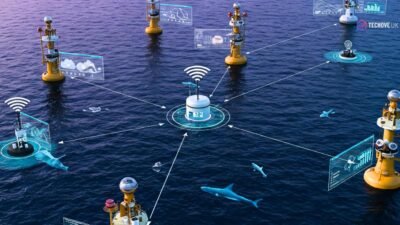
I ran a localized validation test using delayed satellite refresh intervals and buffered AIS uplink patterns to mimic degraded offshore comms. The goal wasn’t to stress-test processors. It was to observe how quickly interpolated data becomes operationally misleading when the remote interface fills transmission gaps with predictive algorithms.
Within four minutes of simulated uplink loss, the monitoring portal began extending vessel headings based on the last received vector. The vessel was actually holding a steady course against a strong lateral current, adjusting rudder angle incrementally to maintain track. The dashboard drew a smooth, automated turn. Dispatch almost issued a corrective order. I had to manually flag the data window and request a raw chartplotter screenshot before anyone acted on the interpolated line.
The discrepancy didn’t come from faulty sensors. It came from software assuming consistent motion when hydrodynamics were actively resisting it. Predictive routing works cleanly in sheltered coastal channels. It struggles when wind, swell, and current pull a hull out of its projected path faster than the uplink can report the correction.
Setting up the friction compounded the test. Getting the telemetry multiplexer to accept simulated packet drops without triggering a full diagnostic reboot required bypassing three default failover protocols. The software wasn’t broken. It just assumed connectivity was either fully present or fully lost, with little tolerance for the partial, stuttering data flows that actually dominate offshore operations. The moment we introduced realistic atmospheric attenuation models, the dashboard started flagging “minor anomalies” every forty seconds. None of them was mechanical. All of them were noise.
Who Actually Extracts Value, and Who Pays the Deployment Tax
Operators who get real returns from integrated monitoring aren’t reading vendor brochures. They’re the fleet managers cross-referencing fuel burn logs with propeller pitch adjustments, then washing those numbers against historical weather routing to identify inefficiency patterns. They understand that telemetry isn’t a command center. It’s an auxiliary layer that supports decision-making when calibrated correctly.
Crew members rarely treat dashboards as primary navigation tools unless alert thresholds match actual operational bands. If a system fires a warning every time auxiliary generator temperature fluctuates within normal working range, it gets silenced. Permanently. Implementation resistance rarely comes from stubborn captains. It comes from interfaces that demand more screen time than the watch schedule allows, and more diagnostic follow-up than the maintenance budget supports.
Training isn’t a week-long certification. It’s three to six months of tweaking alert bands, watching what actually fails under load, and accepting that half the diagnostic flags are false positives from sensor placement, not mechanical wear. You need operators who understand the difference between a genuine system anomaly and an environmental artifact. You need engineers who can trace a corrupted data packet back to a fatigued coaxial connector or a misconfigured baud-rate converter.
Infrastructure requirements scale quickly. Low-earth orbit terminals require clear sky visibility and stable antenna alignment. Older VSAT systems on charter vessels prioritize voice and email over telemetry packets, starving remote dashboards during bandwidth contention. Cellular gateways work within ten nautical miles of shore, then drop past headland interference. Hybrid architectures solve coverage gaps, but they add configuration complexity, additional failure points, and heavier maintenance burdens for onboard technical staff.
Cost-to-practicality ratios rarely break even on fuel tracking alone. Real returns come from reduced unplanned downtime, earlier detection of gradual sensor drift, and better fleet utilization data. But those benefits only materialize when the system is integrated into existing maintenance workflows, not layered on top as an afterthought.
Coastal Predictability Versus Offshore Uncertainty
Coastal operations compress the error margin. You’re within VHF range most days. Cellular signals bounce off headlands. AIS updates arrive near real-time. The telemetry system mostly sits idle, logging engine hours, tank levels, and generator cycling. Software behaves consistently. Hardware stays dry behind enclosed wheelhouse glass. Maintenance aligns with port calls.
Push past the two-hundred-mile boundary or into open currents, and the monitoring paradigm shifts. Satellite latency stretches to ninety-second intervals during constellation handovers. Wind and swell mask acoustic transducer readings. Pitch and roll introduce measurement noise that requires aggressive filtering. Older navigation systems on mid-tonnage workboats run on legacy serial protocols, which choke when you try to push high-frequency sensor arrays through aging multiplexers.
Automated alerting works well when the environment behaves predictably. Manual oversight becomes the backup plan when it doesn’t. I’ve seen hybrid setups where bridge crews keep paper logs of generator load shifts during heavy weather because automated trendlines smoothed out the spike caused by hydraulic crane cycling. The system didn’t malfunction. It just averaged data in a way that erased operational reality.
Commercial terminals handle this better than consumer-grade receivers, but only marginally. Commercial units include better error correction, redundant power inputs, and wider operating ranges. They still struggle with antenna misalignment during heavy rolling, and they still suffer firmware patches that occasionally break legacy parsers. The difference is that commercial crews know how to roll back updates while the vessel is at anchor. Smaller operators usually don’t.
Legacy infrastructure compounds the gap. Vessels built before 2010 rarely have dedicated telemetry routing channels. You tap existing monitoring lines, splice into bridge alarm circuits, and hope signal isolation holds. It usually does, until thermal expansion shifts a ground plane and introduces voltage drift. You don’t find the problem until the port survey data doesn’t match the onboard logs. By then, you’ve operated on skewed readings for weeks.
Operational Logic, Infrastructure Limits, and Human Adaptation
Marine operational logic doesn’t translate cleanly into digital dashboards. A vessel isn’t a static node. It’s a dynamic mass responding to hydrodynamics, thermal expansion, fuel stratification, and human intervention. When a monitoring system reports a sudden drop in auxiliary generator output, the algorithm searches for a fault. The engineer knows the auxiliary was manually throttled back because a hydraulic system just cycled. The software lacks context. It reports what it measures, not what it understands.
Infrastructure limitations amplify the disconnect. Satellite constellations promise constant coverage, but antenna alignment on rolling decks introduces signal dropouts that aren’t logged as outages. They register as data gaps. Remote interfaces fill those gaps with interpolated trajectories. The vessel was crabbing through a rip current. The dashboard draws a straight course.
Hardware degradation is rarely catastrophic. It’s cumulative. A corroded ground plane, a fatigued connector, a fouled flow meter, a stretched tension cable on a trim transducer. Each reduces the signal-to-noise ratio just enough that remote interfaces start averaging instead of reflecting. Operators layer redundancy, but redundancy adds weight, cost, and another set of maintenance intervals that compress during heavy weather.
Communication reliability fluctuates with atmospheric conditions. Solar activity disrupts propagation. Heavy precipitation attenuates Ku-band signals. High seas scatter antenna lobes. The system doesn’t fail during these conditions. It operates at reduced fidelity, capturing what it can while buffering the rest for the next uplink window.
Human workflow adaptation is what bridges the gap. Crews learn to read dashboards skeptically. They verify critical alerts with physical checks. They ignore routine fluctuations within normal bands. They log discrepancies manually when software smooths out reality. It’s inefficient on paper. Necessary in practice. IMO guidelines on maritime monitoring emphasize data standardization, but they don’t resolve the commercial tensions underneath. University marine labs and vessel monitoring studies consistently note that automated detection works best when calibrated to specific hull forms and operational profiles. Generic thresholds generate false positives at unsustainable rates. The ocean introduces noise that lab validation rarely captures. NOAA buoy datasets and current modeling confirm how environmental variables distort sensor readings when telemetry gates don’t filter for wave-induced pitch.
The Friction That Breaks Business Cases
The friction accumulates quietly. It’s rarely dramatic. It’s persistent.
Corrosion doesn’t wait for warranty periods to expire. It exploits every unsealed interface, every poorly routed cable tie, every mounting bracket that vibrates against painted steel. Maintenance burden scales non-linearly once you exceed recommended operating envelopes. Inconsistent tracking emerges when satellite handovers collide with heavy swell masking antenna patterns. Weather interference isn’t an exception. It’s the baseline.
Unreliable updates compound dashboard frustration. When the system refreshes every sixty seconds under cellular coverage, then drops to ninety-second intervals offshore, the remote portal displays stale route data that conflicts with the bridge plotter. Operators adapt by trusting local instruments over remote screens. It’s a rational compromise, but it undermines the original deployment purpose.
Software usability suffers from interface bloat. Vendors push every available metric to the same workspace. During traffic-heavy conditions or storm preparation, operators scroll past battery bank temperatures, trim positions, and scrubber differentials to find the single parameter that actually matters. Alert fatigue becomes an operational hazard. The system doesn’t crash. It just demands more cognitive bandwidth than a single watchkeeper can spare.
Installation delays rarely come from missing parts. They come from vessel geometry constraints, wiring congestion, and the reality of retrofitting monitoring systems onto working boats. You can’t plug in and walk away. You route cables, test isolation, calibrate baselines, and interrupt normal operations for days while technicians troubleshoot signal paths. The physical work takes longer than procurement timelines account for.
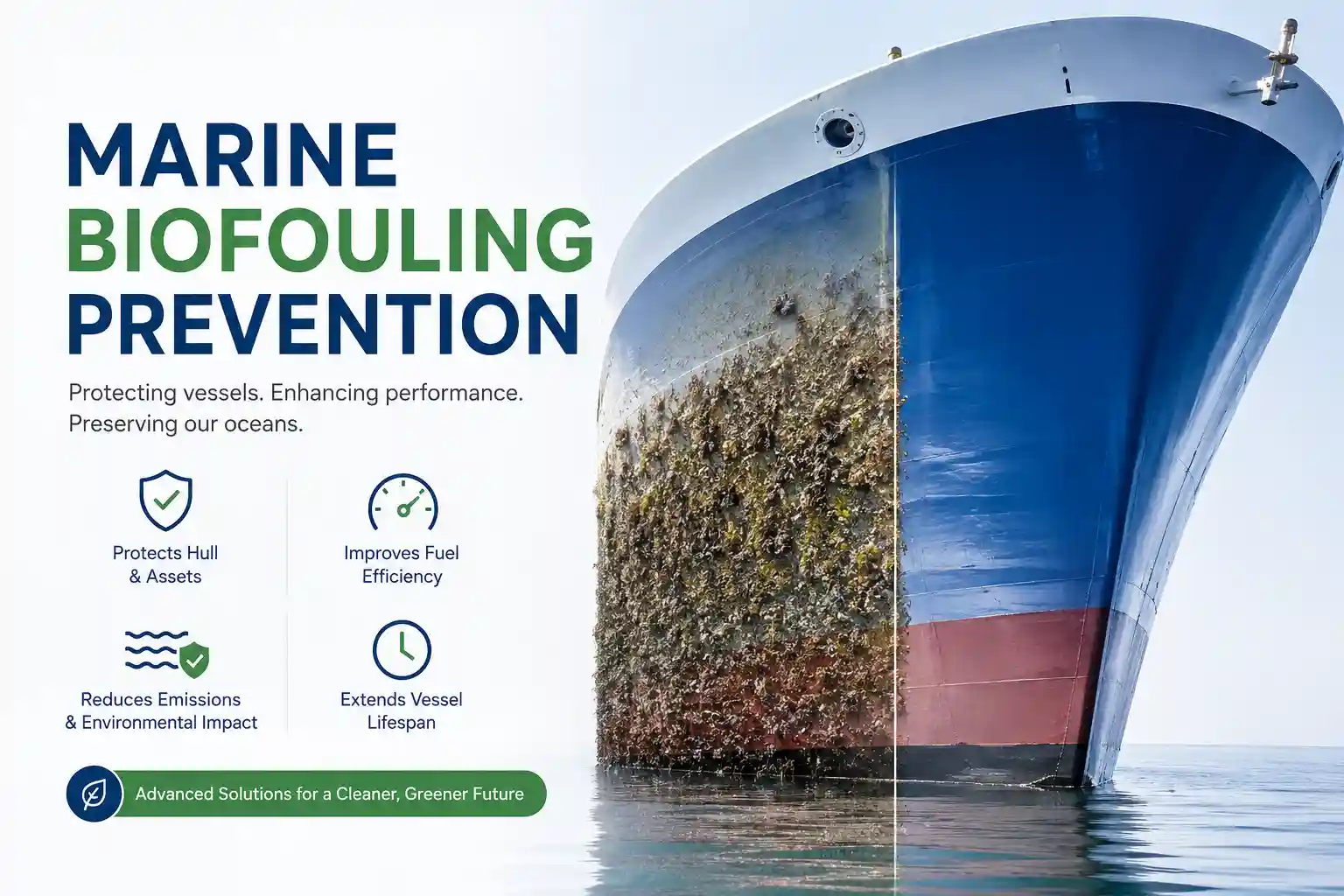
Sensor degradation shows up as gradual measurement drift. Ultrasonic draft markers lose accuracy under prolonged biofouling. Flow sensors accumulate residue in stagnant lines. Temperature probes shift tolerance after repeated thermal cycling. You only catch it during port surveys or dry-dock inspections. Until then, the platform reports confident numbers that are incrementally wrong.
The operator learning curve isn’t steep. It’s long. Crew members spend months distinguishing genuine system faults from environmental noise. They develop personal workarounds that aren’t in the manual. They learn which alarms to silence, which data streams to ignore, and which hardware quirks are permanent. That institutional knowledge takes time to build. It disappears just as fast when experienced staff rotate off.
Why the Industry Still Matters, Even When the Dashboard Lies
Integrated telemetry works when treated as an auxiliary layer, not an autonomous controller. Operators who survive deployment friction don’t chase perfect data streams. They build tolerance for latency. They cross-reference dashboard flags with physical checks. They accept that some parameters drift until maintenance catches them.
You still need someone on the bridge who recognizes a sensor glitch from a real mechanical warning. Someone willing to wipe salt off a terminal screen, trace a corrupted packet to a loose ground lug, and understand that offshore conditions rarely match calibration spreadsheets. You need fleet managers who recognize remote monitoring reduces guesswork, but doesn’t eliminate experienced judgment.
The technology extends seamanship. It provides more data to work with, and more ways to misinterpret that data if you don’t understand the environment it’s measuring. Successful deployments aren’t the ones with the cleanest interfaces. They’re the ones where operators know exactly what the system can’t see, and they compensate accordingly.
Global trade doesn’t move because algorithms optimize it. It moves because crews, engineers, and port workers keep heavy systems functioning in conditions that actively resist optimization. The infrastructure matters because it survives. Not perfectly. Consistently enough. That’s the professional insight that doesn’t fit into a press release, but keeps cargo moving through weather that doesn’t care about API contracts or projected routes.
Howard Craven writes about marine operations, offshore telemetry systems, and environmental infrastructure workflows. His work focuses on the gap between automated monitoring systems and real-world maritime operations.