


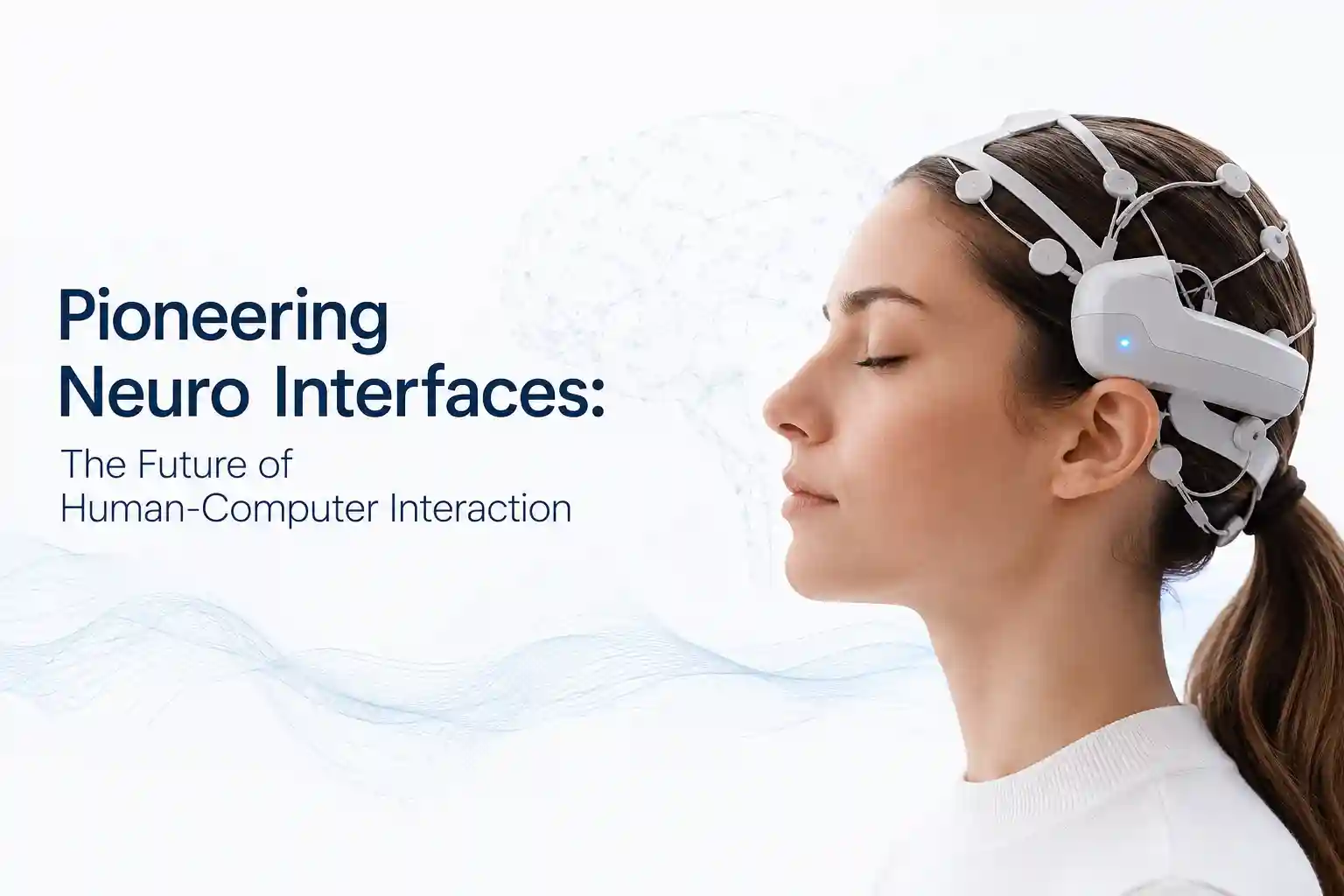
Pioneering Neuro Interfaces: The Future of Human-Computer Interaction
It’s 7:14 AM on a Tuesday. My coffee hasn’t kicked in yet, and I’m staring at a blank document that needs to become a 2,000-word feature by noon. On my desk sits a sleek black headband that looks like it escaped from a sci-fi prop department. It’s the Muse S Athena, one of several consumer neuro interfaces I’ve been testing over the past six weeks. The promise is seductive: slip this on, and it will “read” my brainwaves, tell me when I’m focused, when I’m drifting, maybe even nudge me back on track with gentle audio cues.
I’ve spent the last month living with three different brain-computer interface devices, the Emotiv EPOC X, the OpenBCI Ultracortex Mark IV, and the Muse S—while trying to write, code, and simply get through my workday. Not in a lab. Not with a research assistant calibrating electrodes. Just me, my messy home office, and the very real question: Does any of this actually help a normal human do normal human things better?
What I learned surprised me. Sometimes in good ways. Often in frustrating ones. And almost never in the way the marketing materials suggested.

The Real-World Test: Three Devices, Five Weeks, One Overwhelmed Writer
Here’s exactly what I did, because vague claims about “testing neurotech” don’t help anyone.
The Setup: I committed to using each device for specific tasks over consecutive days. The Emotiv EPOC X got my morning deep-work sessions (90-minute writing blocks). The OpenBCI kit, which requires actual assembly and saline-soaked sensors, was reserved for weekend experimentation when I had patience to spare. The Muse S lived on my nightstand for evening wind-down and sleep tracking.
Environment matters more than you’d think. My home office has decent lighting but shares a wall with a noisy street. I quickly learned that dry-electrode headsets like the Muse struggle when I’ve just washed my hair—the residual moisture creates impedance issues that make the signal jittery. The Emotiv’s saline electrodes needed re-wetting every 45 minutes or so, which sounds trivial until you’re in a flow state and suddenly have to pause to dab sensors with a tiny spray bottle.
What actually worked: The Muse S’s meditation feedback was genuinely useful. When the app showed my “calm” metric dipping during a stressful email exchange, I’d catch myself holding my breath and consciously reset. That’s not magic—it’s biofeedback, a technique with decades of clinical backing—but having it packaged in a comfortable headband made it stickier than any standalone app I’d tried. NIH-funded research on neurofeedback supports its potential for attention regulation, though the effects are often modest and require consistent practice.
What failed (repeatedly): The OpenBCI setup. I’m not a novice with hardware—I’ve built custom PCs, soldered small electronics—but getting stable readings from the Ultracortex took three full sessions just to achieve baseline reliability. The 3D-printed frame doesn’t account for every head shape. My particular skull curvature meant the rear electrodes kept losing contact unless I cinched the straps uncomfortably tight. By the time I’d achieved a decent signal, I’d spent 40 minutes on setup for what was supposed to be a 20-minute focus experiment. That’s a non-starter for daily use.
The learning curve wasn’t linear. With the Emotiv, day one felt like wizardry—seeing my alpha waves spike when I closed my eyes was genuinely cool. By day four, I noticed the software occasionally misclassified “focused” versus “relaxed” states when I was actually just tired. The algorithm isn’t reading my mind; it’s pattern-matching electrical signatures against a generalized model. That distinction matters.
Measurable observations: I kept a simple log. With the Muse during evening sessions, my self-reported “time to feel mentally settled” dropped from an average of 22 minutes to about 14 minutes over three weeks. Not dramatic, but noticeable. The Emotiv’s focus-detection accuracy, when I manually tagged my actual state every 10 minutes, hovered around 68%—better than chance, far from perfect. The OpenBCI, once properly configured, produced cleaner raw data than either consumer device, but that’s like noting a race car has better handling than a sedan: true, but irrelevant if you just need to commute.
Who Should Actually Bother With This? (And Who Should Walk Away)
Let’s cut through the hype. Consumer neuro interfaces aren’t ready to replace your keyboard, and they probably won’t be for a long time. But they’re not useless either. The value depends entirely on your goals and tolerance for friction.
These devices might be worth it if:
- You’re already committed to meditation or mindfulness practices and want objective feedback to reinforce the habit.
- You’re a developer, researcher, or serious hobbyist building BCI prototypes and need accessible hardware to experiment with.
- You have specific, narrow use cases like tracking sleep architecture trends or experimenting with neurofeedback for focus training.
- You understand you’re buying a tool for exploration, not a magic productivity pill.
Walk away if:
- You expect the device to “read your thoughts” or control your smart home with your mind. Current consumer EEG measures broad electrical patterns, not specific intentions.
- You want plug-and-play reliability. Even the most polished consumer devices require calibration, good contact, and patience.
- You’re seeking clinical-grade diagnostics. These are wellness and research tools, not medical devices. The FDA has cleared only a handful of EEG-based products for specific therapeutic uses, and consumer headsets aren’t among them.
- You get frustrated easily by setup quirks, software updates that change workflows, or ambiguous metrics.
Realistic expectations are everything. Think of these devices like fitness trackers for your brain. A Fitbit won’t make you run a marathon, but it might help you notice you’re more active on days you walk to work. Similarly, a consumer EEG won’t unlock telepathy, but it might help you recognize when you’re mentally fatigued before you crash.
Common misconception alert: Many users expect “brainwave types” (alpha, beta, theta) to map neatly to emotional states. In reality, these frequency bands correlate with broad cortical activity patterns, not specific feelings. An alpha increase might indicate relaxation, but it could also mean you’re just closing your eyes. Context matters enormously, and current consumer software often oversimplifies this complexity.
Head-to-Head: What You Actually Get for Your Money
I’ve used all three devices extensively, and the price-to-value equation varies dramatically depending on what you need.
Muse S Athena (~$350): Best for wellness-focused users. The integration of EEG with fNIRS (which measures blood oxygenation) provides a richer context than EEG alone, a meaningful advancement for consumer neurotech. Setup takes under two minutes. The app is polished and actually teaches you about the signals you’re seeing. Downsides: limited to frontal sensors, so you’re not getting whole-brain data; subscription required for advanced analytics.
Emotiv EPOC X (~$849 + software subscription): The workhorse for serious experimentation. Fourteen channels, research-grade signal quality, and robust SDK access make this the go-to for academic pilots and advanced prototyping. But you’re paying for capability, not convenience. Saline electrodes require maintenance, the headset looks clinical, and the learning curve is real. If you need reliable data for a project, it’s worth it. If you just want to “optimize your focus,” it’s overkill.
OpenBCI Ultracortex Mark IV (~$500–$1,500 depending on configuration): This isn’t a product; it’s a platform. You’re buying Legos to build your own brain-computer interface. The flexibility is unparalleled—you can place electrodes anywhere, swap sensors, and integrate with custom software. But you’re also buying a project, not a solution. Assembly, calibration, and troubleshooting are on you. Only choose this if you enjoy the building process as much as the end result.
Beginner versus advanced reality check: I’ve watched colleagues with zero neuroscience background pick up the Muse and get value within a week. I’ve also seen experienced engineers spend a month wrestling with OpenBCI just to achieve stable baseline readings. Your technical comfort isn’t just a preference here—it’s a practical determinant of whether you’ll stick with the device.
What’s Actually Happening in Your Brain? (The Simple Version)
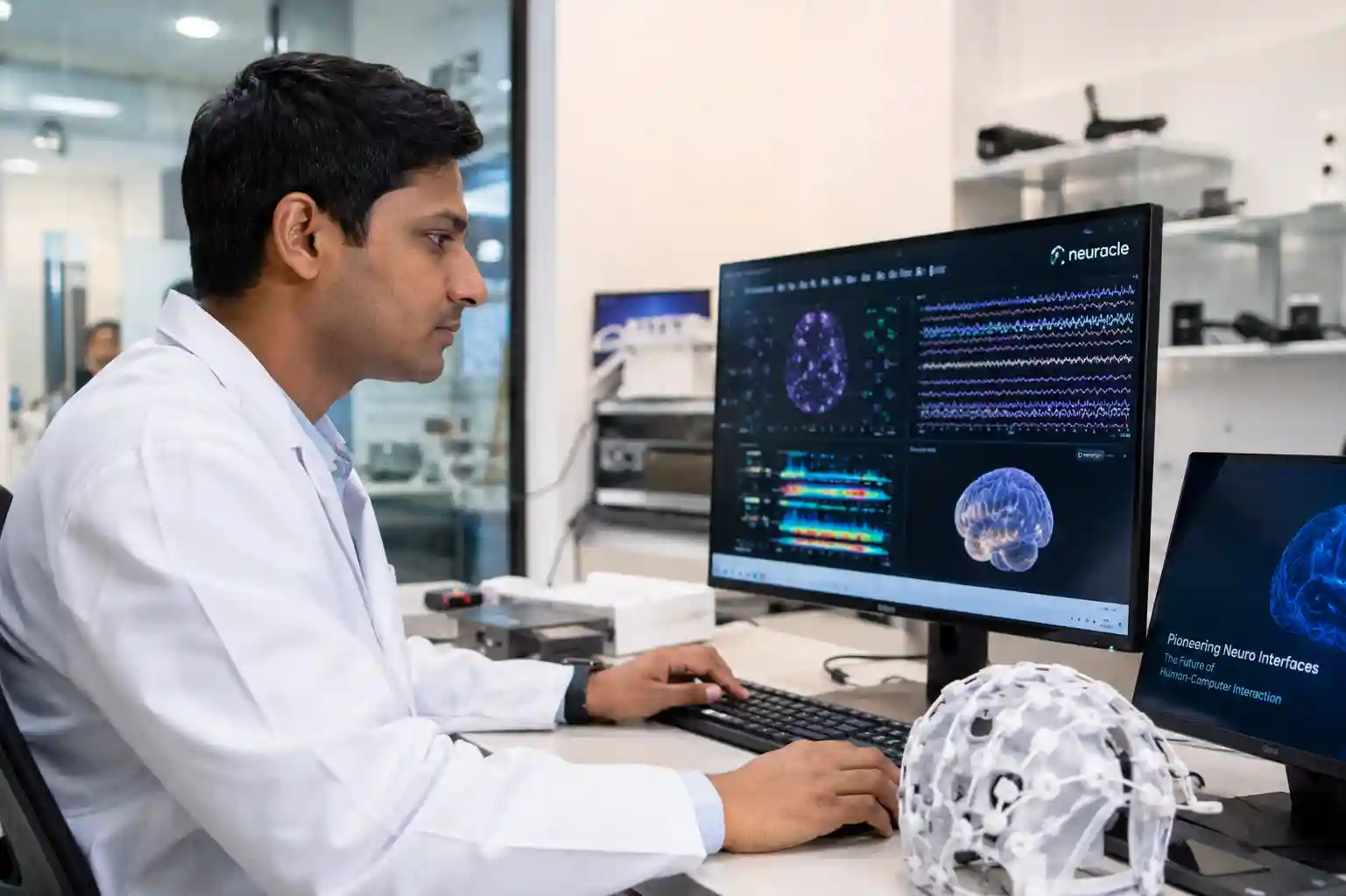
Let’s demystify neuroscience without dumbing it down. Your brain is always producing tiny electrical signals as neurons communicate. EEG electrodes on your scalp detect the summed activity of thousands of neurons firing together. Different patterns, like alpha waves (8–12 Hz) or beta waves (13–30 Hz), correlate with different states: relaxation, focused attention, and drowsiness.
But here’s the critical nuance most marketing glosses over: correlation isn’t control. Just because a certain pattern often appears when you’re focused doesn’t mean the device can reliably detect your focus in real time, especially through hair, with dry electrodes, while you’re moving. Signal quality depends on electrode contact, impedance, motion artifacts, and individual neuroanatomy. Research from institutions like Stanford and MIT continues to refine these models, but consumer devices necessarily simplify.
Practical implication: These tools work best as feedback mechanisms, not control interfaces. Telling you “your brain looks like it’s in a relaxed state” is feasible. Letting you scroll a webpage by thinking “scroll down” is not, at least not reliably, with current consumer hardware. The gap between lab demonstrations and real-world usability remains substantial.
Ethical considerations aren’t optional. Brain data is uniquely personal. While current consumer devices don’t “read thoughts,” the trajectory matters. IEEE and Nature have both published frameworks for neuroethics emphasizing data privacy, informed consent, and protection against cognitive manipulation. If you’re using these tools, ask: Where does my data go? Can I delete it? Could it be used to infer sensitive information about my mental state? Reputable companies are transparent about this; others are less so.
Real talk about drawbacks: I need to be blunt here because glossy reviews often skip this.
Comfort is inconsistent. Even “lightweight” headsets create pressure points after 30–45 minutes. The Muse’s fabric band is the most comfortable; the Emotiv’s rigid frame is less so; the OpenBCI’s 3D-printed structure is highly dependent on your print settings and head shape.
Setup friction is real. Saline electrodes need re-wetting. Dry electrodes need clean, product-free hair. In-ear EEG (like emerging earbud designs) avoids scalp contact but introduces new challenges with fit and motion artifacts.
Software can be brittle. Updates occasionally break workflows. Cloud dependencies mean you can’t always use devices offline. Exporting raw data often requires paid tiers.
Signal inconsistency is the norm. A “good” reading one day might be noisy the next due to humidity, stress, caffeine, or simply how you placed the headset. This isn’t a bug—it’s a fundamental challenge of non-invasive EEG.
The learning curve is underestimated. Understanding what the metrics mean, calibrating properly, and interpreting feedback takes time. Many users abandon devices not because they don’t work, but because the effort-to-insight ratio feels off.
The Bottom Line: Cautious Optimism, Grounded in Reality
After six weeks of daily testing, here’s my honest assessment: pioneering neuro interfaces are genuinely exciting, but we’re in the “Model T” era of human-computer interaction via brain signals. The technology works, but it’s finicky, limited, and best suited for specific use cases rather than broad adoption.
If you’re a mindfulness practitioner curious about biofeedback, the Muse S offers the smoothest entry point. If you’re a researcher or developer needing reliable data for prototyping, the Emotiv EPOC X justifies its cost. If you love tinkering and want maximum flexibility, OpenBCI is your playground. But if you’re hoping for a seamless, mind-reading productivity booster, you’ll be disappointed—and you should be, because that’s not what these devices do.
The future of human-computer interaction will likely include neuro interfaces, but not as replacements for keyboards or voice. More plausibly, they’ll augment existing interfaces: detecting cognitive load to simplify a UI automatically, or recognizing mental fatigue to suggest a break. Research from university labs and institutions continues to push boundaries, but translating lab breakthroughs to consumer products takes time, rigor, and realistic expectations.
For now, the most valuable thing these devices offer isn’t control—it’s awareness. Seeing a visual representation of your mental state can be a powerful mirror, helping you build better habits around focus, rest, and attention. That’s not revolutionary, but it’s genuinely useful. And in a world full of tech that demands our attention, tools that help us understand and manage our own cognitive resources might be exactly what we need.
Just don’t expect them to read your mind. At least, not yet.