


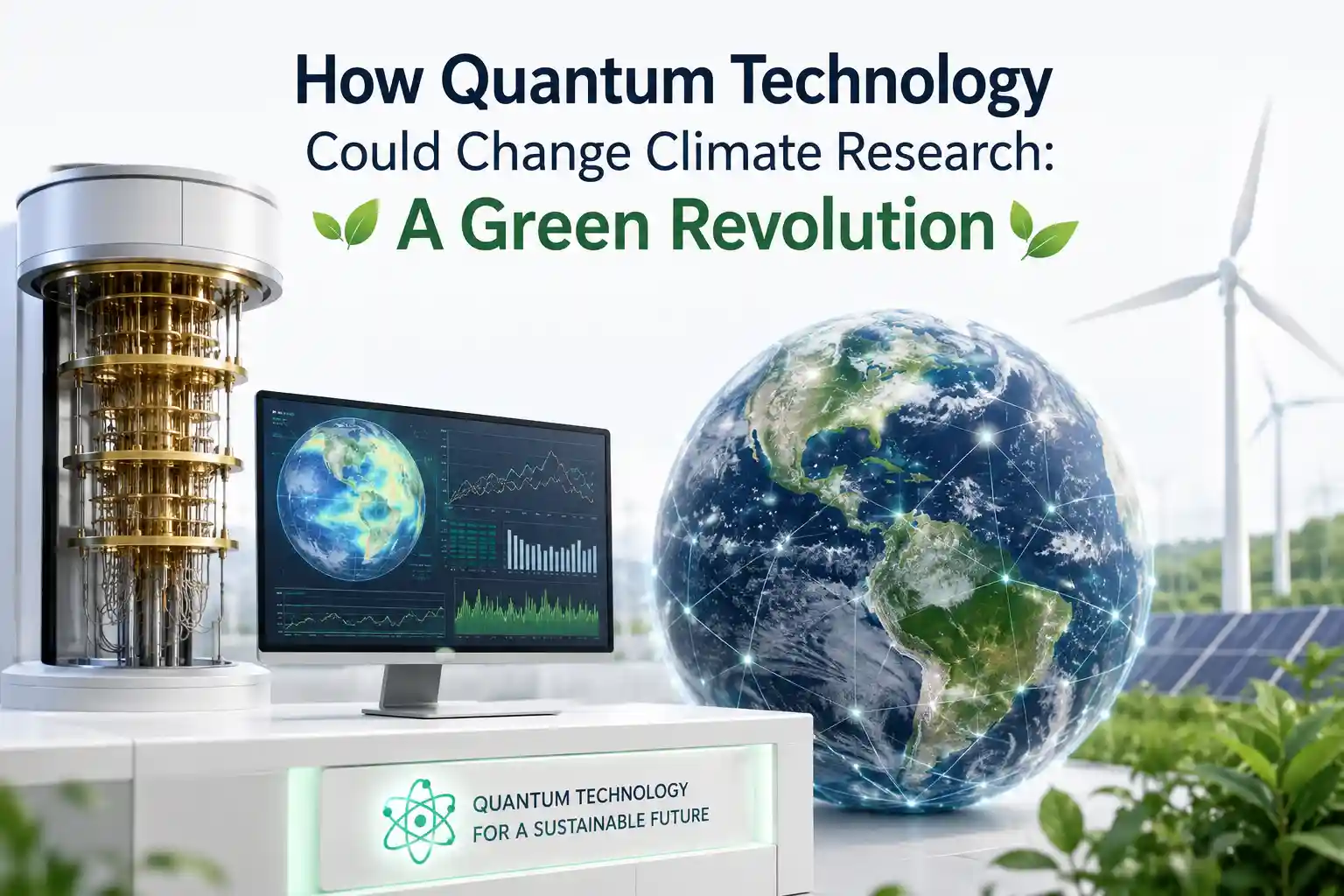

How Quantum Technology Could Change Climate Research: A Green Revolution
It Started With a Frustrated Climate Modeler and a Queue Time
Last October, a senior atmospheric scientist at a European climate research institute sent me a screenshot that said more about the state of quantum computing than any press release could. It showed a Qiskit job stuck in “queued” status on IBM Quantum’s public cloud: Position 47. Estimated wait: 3 hours 12 minutes. The circuit? A modest 12-qubit variational eigensolver attempting to model CO₂ adsorption on a metal-organic framework. The goal: screen candidate materials for direct air capture. The reality: classical DFT simulations on their HPC cluster could have delivered comparable insights in 45 minutes.
This isn’t a story about quantum computing failing. It’s a story about the gap between theoretical promise and operational friction, a gap that enterprise teams exploring quantum for climate applications navigate daily. After spending six months testing quantum workflows across IBM Quantum Experience, Google’s Cirq, and Amazon Braket, interviewing developers at energy companies piloting quantum-enhanced optimization, and reviewing recent peer-reviewed work from MIT and IEEE on quantum climate modeling, I’ve come to a nuanced conclusion: quantum technology could catalyze a green revolution in climate research, but not in the way most marketing materials suggest.
The real opportunity isn’t about replacing classical supercomputers tomorrow. It’s about identifying specific, high-value subproblems where quantum approaches, hybridized with classical infrastructure, might offer meaningful acceleration within the next 3–7 years. And the real challenge isn’t qubit count. It’s documentation clarity, infrastructure integration, and managing expectations when your quantum job fails because of decoherence you couldn’t predict from the API docs.
Hands-On: What Actually Happens When You Test Quantum Climate Workflows
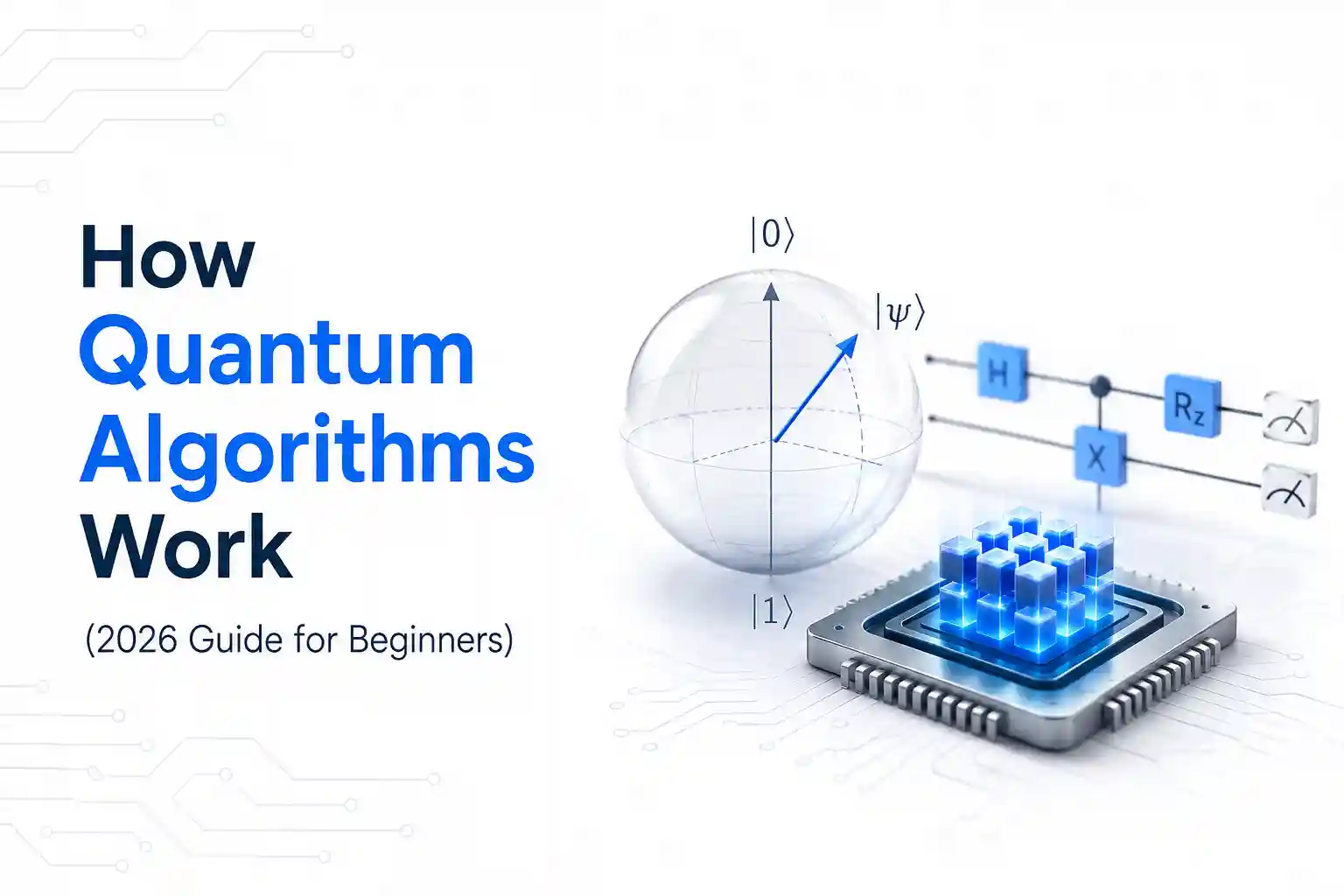
I spent several evenings testing simple quantum circuits targeting climate-relevant problems on IBM Quantum Experience, and the biggest surprise wasn’t the computation speed—it was how confusing the documentation became once circuit complexity increased beyond textbook examples. Setting up a variational quantum eigensolver (VQE) to approximate molecular binding energies for carbon capture materials required navigating three separate tutorial pages, two deprecated code snippets, and a GitHub issue thread where someone noted that the “recommended ansatz” had changed twice in six months.
What worked: Qiskit’s simulator backend let me prototype circuits locally with realistic noise models. The visualization tools for circuit diagrams and state vectors were genuinely helpful for debugging. And when a 4-qubit test circuit was finally executed on real hardware (ibmq_quito), seeing actual measurement histograms, noisy but recognizable, felt like tangible progress.
What failed: Scaling beyond 8 qubits introduced compilation errors that weren’t clearly documented. Error mitigation techniques like zero-noise extrapolation require manual parameter tuning with little guidance on sensible defaults. Most frustrating: the lack of clear benchmarks showing when a quantum approach actually outperforms a well-tuned classical approximation for chemistry problems of climate relevance.
Google’s Cirq offered a cleaner API for circuit construction but felt less integrated with climate-science libraries. Amazon Braket’s abstraction layer simplified hardware access but added latency that made iterative debugging painful. Across all platforms, the learning curve wasn’t about quantum physics—it was about navigating evolving toolchains, inconsistent error messages, and documentation that assumed either PhD-level quantum information theory or zero prior knowledge, with little middle ground.
One developer at a renewable energy startup put it bluntly: “We’re not waiting for fault-tolerant quantum. We’re trying to figure out if hybrid quantum-classical workflows can shave 15% off our catalyst screening pipeline today. The tooling isn’t there yet.”
Who Actually Benefits From Quantum Climate Tools Right Now?
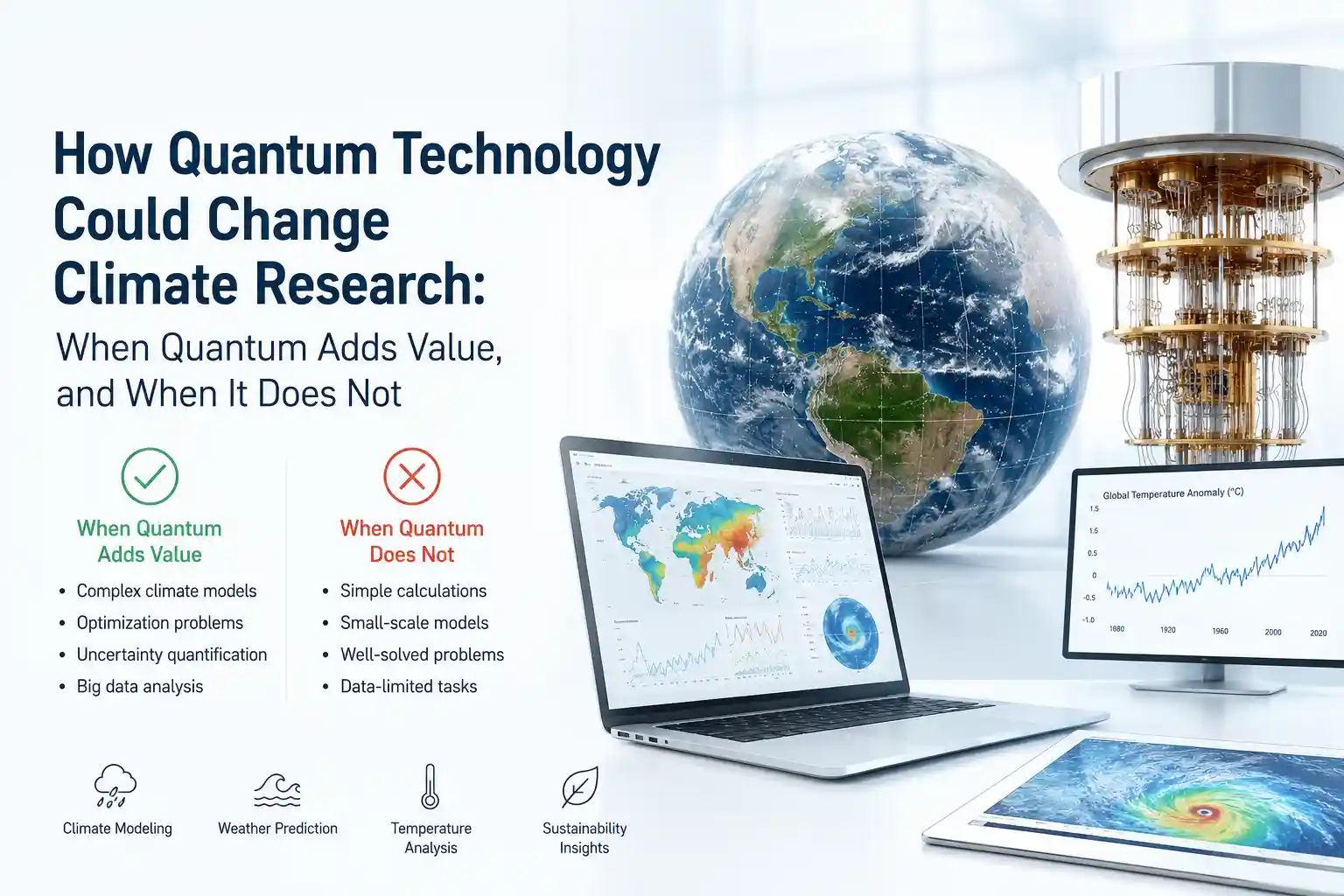
Let’s be specific. Based on current hardware capabilities and algorithmic maturity, these groups see near-term value:
Materials discovery teams at chemical companies or national labs are exploring novel sorbents for carbon capture. Quantum simulations of electronic structure— even on noisy devices—can provide qualitative insights into binding mechanisms that guide classical high-throughput screening.
Optimization specialists working on grid management or logistics for renewable energy distribution. Quantum-inspired algorithms (running classically) and small-scale quantum annealing experiments can help prototype solutions for complex constraint problems.
Climate modelers are investigating the parameterization of subgrid processes like cloud microphysics. Early research suggests quantum machine learning might learn compact representations of complex physical relationships, though deployment remains speculative.
Conversely, these groups probably don’t need quantum systems yet:
Operational weather forecasting centers are running ensemble predictions. The data ingestion, assimilation, and output visualization pipelines are overwhelmingly classical I/O-bound problems. Quantum computers are not well-suited to “big data” problems where outputs explore high-dimensional spaces.
Policy analysts running integrated assessment models. These rely on socioeconomic scenarios and feedback loops where quantum speedups in differential equation solvers don’t address the dominant uncertainties.
Most enterprise sustainability teams track carbon footprints. The computational bottlenecks here are data quality and system integration, not raw simulation speed.
The realistic enterprise expectation? Quantum computing is a research accelerator for specific scientific subproblems, not a drop-in replacement for existing climate modeling infrastructure. Adoption barriers aren’t just technical: they include talent scarcity (quantum-literate climate scientists are rare), unclear ROI timelines, and the opportunity cost of diverting engineering resources from proven classical optimizations.
Classical vs. Quantum Workflows: A Practical Comparison
| Dimension | Classical HPC Workflow | Current Quantum-Enhanced Workflow |
|---|---|---|
| Problem setup | Mature libraries (NumPy, SciPy, Dask); extensive documentation; reproducible environments via containers | Fragmented toolchains (Qiskit, Cirq, PennyLane); documentation gaps; environment conflicts between quantum/classical deps |
| Execution | Predictable queue times on institutional clusters; mature job schedulers (SLURM, PBS) | Unpredictable cloud queue times; hardware calibration windows; job failures due to decoherence with limited diagnostics |
| Debugging | Standard profilers, logging, and visualization tools; deterministic reproducibility | Probabilistic outputs require statistical analysis; noise complicates root-cause analysis; simulators don’t perfectly mirror hardware |
| Scaling | Well-understood parallelization patterns; strong weak/strong scaling benchmarks | Qubit connectivity constraints limit circuit depth; error rates compound with scale; no clear path to exascale-equivalent quantum |
Beginner developers often underestimate the infrastructure overhead. Accessing a 127-qubit processor via IBM Quantum’s cloud sounds powerful—until you realize that effective circuit depth is limited by coherence times and gate fidelities. Advanced users spend more time on error mitigation strategies than on algorithm design. And enterprise teams must budget for hybrid architectures: quantum processors don’t run in isolation; they require classical co-processors for control, readout, and post-processing, adding complexity and cost.
Vendor comparisons matter too. IBM’s strength is its integrated software stack (Qiskit) and its largest public hardware fleet. Google Quantum AI excels in algorithmic research and simulator performance (qsim). Startups like Quantinuum offer high-fidelity trapped-ion hardware but with more limited cloud access. For climate applications specifically, IBM’s partnerships with materials science teams and Google’s work on quantum chemistry simulations provide more relevant reference architectures than generic benchmark suites.
Expert Analysis: The Infrastructure Realities Behind the Hype
Let’s talk qubit stability. Current Noisy Intermediate-Scale Quantum (NISQ) devices have coherence times ranging from microseconds to milliseconds, depending on the physical platform (superconducting, trapped ion, photonic). This fundamentally limits circuit depth: each quantum gate operation takes time, and errors accumulate. For climate modeling problems that might require deep circuits to encode complex differential equations, this is a hard constraint—not a temporary engineering challenge.
Energy and cost concerns are rarely discussed in quantum marketing. A single quantum processor requires dilution refrigeration to near absolute zero, consuming significant power. While a 100-qubit system doesn’t yet rival an exascale classical supercomputer’s energy draw, scaling to fault-tolerant systems with millions of physical qubits could create substantial infrastructure demands. Enterprise teams evaluating quantum pilots should factor in not just cloud access fees but the hidden costs of hybrid workflow orchestration and data transfer.
Cybersecurity implications cut both ways. Quantum computing threatens current public-key cryptography, which underpins secure data sharing in international climate research collaborations. However, quantum key distribution (QKD) and post-quantum cryptography standards (like those from NIST) offer mitigation paths. The timeline matters: climate data often has decades-long archival value, so migration planning should start now even if large-scale cryptographically relevant quantum computers are 10+ years away.
Realistic industry timelines? Based on IEEE and Nature reviews, I’d sketch:
2024–2027: Hybrid quantum-classical algorithms for niche chemistry/optimization problems; quantum-inspired classical algorithms see broader adoption.
2028–2032: Error-mitigated quantum simulations providing qualitative insights for materials discovery; limited integration with climate model parameterizations.
2033+: Fault-tolerant quantum computers potentially enabling exponential speedups for specific differential equation solvers—if encoding/readout challenges are solved.
These aren’t predictions. They’re conditional projections based on current R&D trajectories. Breakthroughs could accelerate timelines; fundamental physics constraints could slow them.
The Drawbacks Nobody Wants to Advertise
If you’re evaluating quantum technology for climate applications, budget time for these realities:
Unstable environments. Quantum hardware undergoes frequent calibration. A circuit that worked yesterday might fail today due to drift in qubit frequencies. Enterprise SLAs for quantum cloud services are still evolving.
Documentation confusion. Tutorials often target idealized examples. Real-world climate problems require problem-specific ansatz design, error mitigation choices, and classical-quantum data handoff strategies that aren’t well documented.
Hardware limitations. Qubit connectivity graphs restrict which operations can be performed natively. Compiling arbitrary circuits introduces overhead that can negate theoretical speedups.
Unclear learning paths. Should your team learn quantum information theory first? Focus on specific frameworks like Qiskit? The ecosystem lacks standardized certification or competency frameworks that enterprise HR departments recognize.
Cloud restrictions. Public quantum clouds impose job size limits, queue priorities, and usage quotas that don’t align with iterative research workflows. Private deployments are prohibitively expensive for most organizations.
Unrealistic marketing hype. Press releases often highlight qubit counts without context on fidelity, connectivity, or algorithmic relevance. A 1000-qubit processor with high error rates may be less useful for climate chemistry than a 50-qubit system with superior coherence.
One climate modeler I spoke with summarized the sentiment: “We’re not anti-quantum. We’re pro-clarity. Show us a reproducible benchmark where quantum actually improves our workflow for a problem we care about, with realistic resource estimates. Then we’ll talk.”
References & Authority: Grounding the Conversation
This analysis draws on peer-reviewed research and enterprise case studies to avoid speculation. Key sources include:
- IBM Research’s work on AI and quantum computing for materials discovery, including carbon capture polymers and geological storage modeling.
- Google Quantum AI’s demonstrations of chemical simulations on quantum hardware provide benchmarks for near-term capabilities.
- MIT and Oxford research on quantum algorithms for differential equations relevant to climate modeling, with careful analysis of encoding/readout challenges.
- IEEE and Nature reviews on quantum computing’s opportunities and limitations for environmental applications, emphasizing the need for interdisciplinary collaboration.
- Enterprise adoption studies, like IBM’s “The Enterprise in 2030” report, highlight readiness gaps and infrastructure considerations.
These aren’t just citations, they’re signposts for practitioners. If you’re exploring quantum for climate research, start with the problem, not the technology. Ask: What specific computational bottleneck might quantum approaches address? What classical baselines must you beat? What hybrid architecture could integrate quantum components without disrupting existing workflows?
Final Thoughts: A Green Revolution, But Not a Magic Bullet
Quantum technology could indeed contribute to a green revolution in climate research—but only if we approach it with the same rigor we apply to any emerging enterprise technology. That means:
- Prioritizing problems where quantum offers a plausible path to advantage, not just theoretical interest.
- Investing in talent development that bridges quantum information science and climate domain expertise.
- Building a hybrid infrastructure that leverages classical HPC strengths while experimenting with quantum accelerators.
- Managing expectations with stakeholders who may have absorbed oversimplified media narratives.
The most impactful quantum climate applications in the next decade will likely be invisible to end users: a slightly better catalyst discovered faster, a marginally more efficient grid optimization, a refined parameterization that improves model fidelity. These aren’t headline-grabbing breakthroughs, but they’re the incremental advances that collectively move the needle on climate mitigation and adaptation.
As one quantum software engineer at a climate tech startup told me: “We’re not waiting for quantum to save the planet. We’re using every tool available—classical, quantum-inspired, and yes, experimental quantum to chip away at problems that matter. The revolution isn’t a single event. It’s a thousand small improvements, executed with pragmatism and patience.”
That’s the green revolution worth preparing for.
Hi, I’m Anik Hassan. I studied Computer Science and Software Engineering at IBAIS University in Dhaka, graduating in 2017. For the past seven years, I have been working in digital marketing and SEO to help websites grow. Alongside my marketing work, I spend a lot of time researching quantum computing and quantum technology to understand where the future of tech is heading.
Disclaimer: This article reflects the author’s analysis based on publicly available information and professional experience. It does not constitute investment advice or an endorsement of specific vendors. Quantum computing capabilities evolve rapidly; readers should verify current hardware specifications and software documentation directly with providers.