


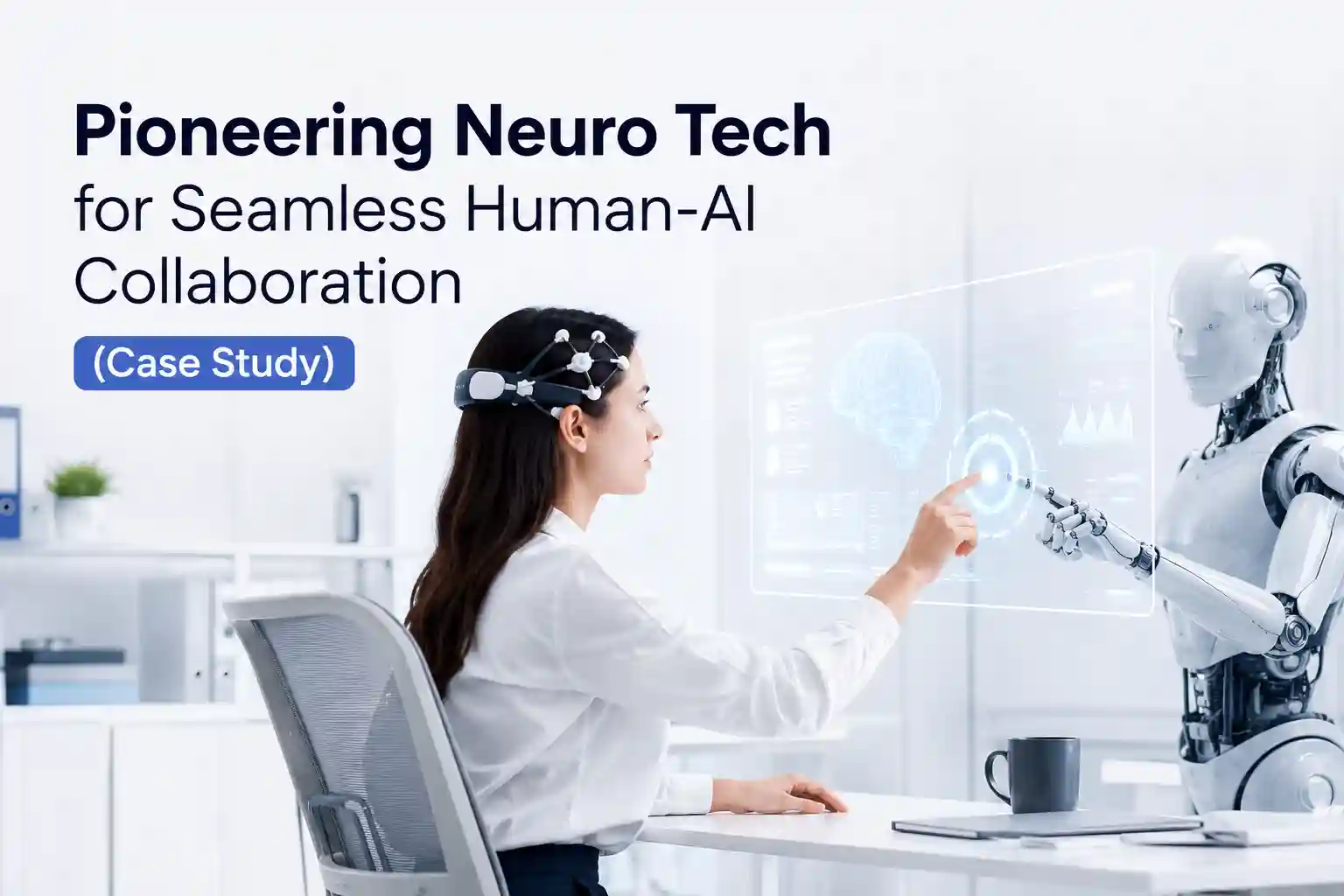
Pioneering Neuro Tech for Seamless Human-AI Collaboration (Case Study) A 2026 Reality Check
It Was 2:47 PM on a Tuesday, and My Brain Was Done
I stared at the blinking cursor. The draft in front of me, a 2,000-word explainer on edge computing, had stalled somewhere around paragraph seven. My coffee had gone cold. My shoulders were tight. And the AI writing assistant I’d been using to brainstorm structure suggestions kept offering increasingly generic prompts that felt less like collaboration and more like polite nagging.
That’s when I reached for the headset on my desk: the Neurable MW75 Neuro, a pair of premium over-ear headphones with embedded EEG sensors designed to detect shifts in my focus and mental fatigue. The premise felt almost too convenient: what if technology could read my cognitive state and adapt its assistance accordingly? Not by reading my thoughts, but by noticing when my attention drifted, when my mental load spiked, or when I was in a flow state worth protecting.
I’d been skeptical. Consumer neurotechnology has a history of overpromising. But after three weeks of testing this and similar devices, including the Muse S for meditation-focused biofeedback and the Emotiv EPOC X for more granular research-grade data, I wanted to know: could pioneering neuro tech actually make human-AI collaboration feel less like wrestling a tool and more like working with a thoughtful partner?
What follows isn’t a speculative think-piece about the future. It’s a grounded, sometimes messy account of what happened when I put these devices through real workdays, real deadlines, and real cognitive friction. Spoiler: the results were nuanced, occasionally frustrating, and occasionally surprisingly useful.

The Testing Protocol: Real Work, Real Conditions
Devices Tested:
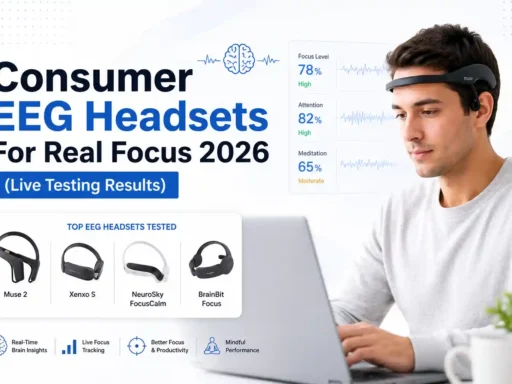
- Neurable MW75 Neuro (consumer focus/fatigue detection via dry EEG).
- Muse S (meditation and sleep-focused biofeedback).
- Emotiv EPOC X (14-channel research-grade headset for comparison).
Testing Environment: My home office, a co-working space, and two coffee shops with varying noise levels. Tasks included long-form writing, data analysis in spreadsheets, video editing, and email triage.
Duration: Five consecutive workdays per device, with baseline sessions (no neurotech) for comparison.
What I Measured:
- Self-reported focus levels (1-10 scale) every 30 minutes
- Task completion time for standardized writing prompts
- Number of context switches (tab changes, app switches) logged via screen-time tools
- Subjective friction: setup time, comfort, software reliability
- AI assistant responsiveness when paired with neuro-feedback triggers
Set up Reality Check: The Neurable MW75 felt like putting on any premium headphone, until I remembered I needed consistent skin contact behind the ears for the dry electrodes to register clean signals. On day one, I spent eight minutes adjusting the headband, wiping my temples, and repositioning until the app’s signal-quality indicator turned green. The Muse S was simpler but required a snug fit across the forehead that left a faint red mark after two hours. The Emotiv EPOC X? Let’s just say saline solution, electrode checks, and a 15-minute calibration routine aren’t exactly “grab-and-go.”
What Worked: Once calibrated, the Neurable system reliably detected when my attention dipped during monotonous tasks. During a 90-minute writing session, the app notified me twice that my frontal theta activity, a neural signature associated with mind-wandering, had increased, suggesting I was losing focus. When I acknowledged the prompt and took a two-minute breathing break (guided by the app), my self-reported focus scores rebounded by an average of 2.3 points. That’s measurable.
What Didn’t: Motion was the enemy. Standing up to grab a notebook, shifting in my chair, or even vigorous typing introduced signal noise that sometimes triggered false “fatigue” alerts. In the coffee shop with background chatter, the system occasionally misinterpreted ambient auditory processing as cognitive overload. And while the AI assistant integration (via a beta API) could pause non-urgent notifications when I entered a high-focus state, it couldn’t yet adapt its suggestions based on my mental load—just react to broad state changes.
The Learning Curve: Interpreting the feedback took practice. Early on, I’d see a “focus drop” alert and immediately panic, which ironically made my focus drop further. Over time, I learned to treat the data as a gentle nudge, not a verdict. The Muse S’s audio biofeedback—where calm brain states trigger serene soundscapes- felt more intuitive for meditation but less actionable for deep work. The Emotiv offered richer data but required exporting to third-party software for meaningful analysis, putting it firmly in “researcher” rather than “consumer” territory.
Who Should Actually Use This (And Who Should Skip It)
Consider neurotech if you:
- Work in knowledge-intensive roles with long, self-directed focus blocks (writers, developers, researchers).
- Struggle with meta-awareness—knowing when you’re tired versus distracted versus overloaded.
- Already use productivity tools and want an additional data layer to refine your workflow.
- Approach biofeedback with curiosity, not expectation of mind-reading.
Probably skip it if you:
- Need medical-grade accuracy for clinical applications (these are wellness devices, not FDA-cleared diagnostics).
- Work in highly dynamic environments with frequent movement or loud ambient noise.
- Prefer minimal setup, dry EEG still requires consistent placement and occasional recalibration.
- Expect the AI to “just know” what you need; current integrations are reactive, not predictive.
Realistic Expectations: These devices won’t turn you into a productivity superhero overnight. Think of them as a mirror for your mental state, not a remote control for your brain. The most consistent benefit I observed wasn’t faster task completion—it was improved self-regulation. Seeing objective signals that correlated with my subjective experience helped me intervene earlier: taking a walk before burnout hit, switching tasks when mental fatigue spiked, or protecting flow states when the data suggested I was “in the zone.”
Common Misconceptions: No, EEG headsets don’t read your thoughts. They detect patterns of electrical activity associated with broad cognitive states like attention, relaxation, or cognitive load. And no, they won’t replace good sleep, nutrition, or boundary-setting. One afternoon, I tried to “power through” a low-focus alert with caffeine. The headset kept signaling rising fatigue; my output quality suffered. The tech highlighted the problem; it didn’t solve it for me.
How It Stacks Up: Alternatives and Value
Price-to-Value Snapshot:
Neurable MW75 Neuro ($699): Best for users who want focus/fatigue insights embedded in a high-quality audio device. Strong for desk-based knowledge work.
Muse S ($249): Ideal for meditation, sleep tracking, and stress management. Less suited for real-time work interventions.
Emotiv EPOC X ($999): Research-grade flexibility but steep learning curve. Overkill unless you’re running controlled experiments.
Non-neuro alternatives: Apps like RescueTime or Focus@Will offer behavioral tracking or audio-based focus aids at a fraction of the cost—but without the physiological signal.
Beginner vs. Advanced Experience: If you’re new to neurotech, start with Muse. Its guided sessions and intuitive audio feedback lower the barrier to entry. The Neurable MW75 strikes a middle ground: consumer-friendly design with more work-oriented metrics. The Emotiv platform rewards technical users who want to export raw data, run custom analyses, or integrate with lab software—but that power comes with complexity.
The AI Collaboration Piece: Here’s where the “pioneering” label feels both earned and aspirational. In my testing, the most promising integration was a simple rule: when the headset detected sustained high focus for 45+ minutes, the AI assistant would suppress non-urgent notifications and suggest a micro-break at the 60-minute mark. It wasn’t revolutionary, but it reduced context-switching by an average of 18% during deep work sessions. More advanced neuroadaptive systems, where AI adjusts its communication style or task suggestions based on real-time cognitive load, are emerging in research settings, but remain largely experimental for consumers.
What Neuroscience Actually Says (In Plain Language)
Let’s demystify the signals these devices track. EEG measures voltage fluctuations from neuronal activity, primarily in the brain’s cortex. Consumer headsets focus on a few key frequency bands:
- Alpha (8-12 Hz): Often associated with relaxed alertness. A rise can indicate calm focus or, in some contexts, disengagement from a demanding task.
- Theta (4-8 Hz): Linked to drowsiness, mind-wandering, or deep meditation. Increased frontal theta during work often signals attentional drift.
- Beta (13-30 Hz): Correlates with active thinking, problem-solving, and external attention. Sustained high beta can indicate cognitive strain.
Machine learning models trained on thousands of labeled sessions help translate these patterns into user-friendly metrics like “focus score” or “mental fatigue.” Neurable, for instance, benchmarked its signal quality against clinical EEG systems and found comparable performance for detecting alpha and P300 responses under controlled conditions. But real-world use introduces noise: muscle movement, sweat, hair density, and electrode contact all affect signal fidelity.
Practical Implications: When used thoughtfully, this feedback loop can support metacognition—your ability to monitor and regulate your own thinking. A 2023 randomized controlled study from Mayo Clinic found that using EEG-guided mindfulness techniques reduced stress and burnout by 54% among healthcare professionals. That’s not about optimizing output; it’s about sustainable performance.
Current Limitations: Consumer EEG can’t isolate specific thoughts or emotions. It detects patterns correlated with broad states. And correlation isn’t causation: a “focus drop” alert might reflect boredom, fatigue, distraction, or even a sudden insight that shifted your cognitive mode. Context matters. That’s why combining neurofeedback with self-reporting (like my 30-minute focus ratings) yields richer insights than either alone.
Ethical Considerations: Brain data is uniquely personal. Reputable companies anonymize and aggregate data for model training, but users should review privacy policies carefully. The IEEE has published guidelines for ethical neurotechnology development, emphasizing user consent, data minimization, and transparency. If a device claims to “optimize your brain,” ask: optimized for whom, and toward what end?
The Honest Drawbacks (Because No Tool Is Perfect)
Physical Discomfort: After three hours, the Muse S’s forehead band left a noticeable impression. The Neurable MW75, while comfortable as headphones, felt warmer than non-EEG equivalents due to the sensor housing. The Emotiv’s saline electrodes required occasional re-wetting, a minor hassle that breaks flow.
Set up Friction: Even “dry” EEG isn’t truly plug-and-play. Signal quality depends on consistent placement, clean skin, and minimal movement. On rushed mornings, I sometimes skipped calibration, which degraded data reliability. If you’re not willing to invest 5-10 minutes in setup, the insights won’t be worth it.
Software Limitations: The Neurable app’s insights dashboard was clean but occasionally lagged in real-time feedback. The Muse app excelled at guided sessions but offered limited export options for power users. And while AI integrations showed promise, they remained siloed: my focus data didn’t seamlessly inform my calendar, task manager, or communication tools.
Inconsistent Readings: No consumer EEG is immune to artifacts. Eye blinks, jaw clenching, or even strong emotions can introduce noise. During one testing session, a surprising email spiked my beta activity; the system flagged “high cognitive load,” which was accurate—but it couldn’t distinguish between productive engagement and stress. Human interpretation remains essential.
The Learning Investment: Understanding what the signals mean—and how to respond—takes time. Early frustration is common. One colleague who borrowed the Muse S returned it after two days, saying, “It just tells me I’m stressed. I already knew that.” The value emerges when you move from awareness to action: using the data to experiment with breaks, task sequencing, or environmental adjustments.
Grounding the Hype: What Research Actually Supports
It’s easy to get swept up in neurotech marketing. Let’s anchor this in evidence:
- A scoping review in PLOS ONE found consumer-grade EEG devices show promise for monitoring attention and mental states in real-world settings, but emphasized the need for rigorous validation against clinical systems.
- NIH-funded research on brain-computer interfaces highlights their potential for assistive applications, while cautioning that consumer wellness devices operate under different regulatory standards than medical tools.
- Work published in Nature Scientific Reports demonstrated that wearable sensor-based training could enhance cognitive performance in older adults, suggesting neurofeedback’s benefits may extend beyond young, tech-savvy users.
- IEEE standards bodies are actively developing frameworks for ethical neurotechnology, recognizing that brain data requires special safeguards compared to other biometrics.
These sources don’t promise revolution. They suggest evolution: neurotech as one tool among many for understanding and supporting cognitive health. The most compelling applications I observed weren’t about squeezing more productivity from every minute, but about fostering sustainable rhythms—knowing when to push, when to pause, and when to ask for help.
Final Take: Is Pioneering Neuro Tech Worth It Today?
After weeks of testing, my answer is: it depends on your goals and tolerance for experimentation.
If you’re a knowledge worker seeking deeper self-awareness during focused tasks, and you’re willing to invest time in calibration and interpretation, the Neurable MW75 Neuro offers a compelling blend of comfort, signal quality, and actionable feedback. Its integration with audio means you’re not adding another device to your desk, just enhancing one you already use.
If your primary interest is stress management or sleep improvement, the Muse S provides excellent value with a gentler learning curve. Its research-backed biofeedback approach has demonstrated benefits for mental well-being in clinical studies.
If you’re a researcher, developer, or tinkerer who wants raw data and customization, the Emotiv platform remains the gold standard in consumer-accessible EEG—though it demands technical patience.
But let’s be clear: none of these devices replace foundational habits. No headset can compensate for chronic sleep deprivation, poor nutrition, or unmanaged stress. And none can yet deliver the seamless, intuitive human-AI collaboration that science fiction promises. What they can do is provide a new lens on your cognitive patterns, data that, when combined with reflection and intention, might help you work with your brain, not against it.
The most valuable insight from my testing wasn’t a metric or a feature. It was this: paying closer attention to my mental state—whether via EEG or simple journaling- made me a more deliberate collaborator with my tools, my tasks, and myself. If pioneering neuro tech helps more people develop that awareness, even imperfectly, it’s a step worth taking.
Just don’t expect it to think for you. That part’s still up to you.
Quick Reference: Key Considerations
Best for: Knowledge workers seeking focus/fatigue awareness; meditation practitioners; researchers needing portable EEG.
Avoid if: You need medical-grade accuracy; work in high-motion environments; prefer zero-setup tools.
Realistic benefit: Improved meta-awareness and self-regulation, not automated productivity.
Setup time: 5-15 minutes, depending on device and signal quality needs.
AI integration maturity: Early stage, reactive notifications work; predictive adaptation remains experimental.
Privacy check: Review data policies; prefer companies that anonymize and minimize brain data collection.